From Page to Plastic
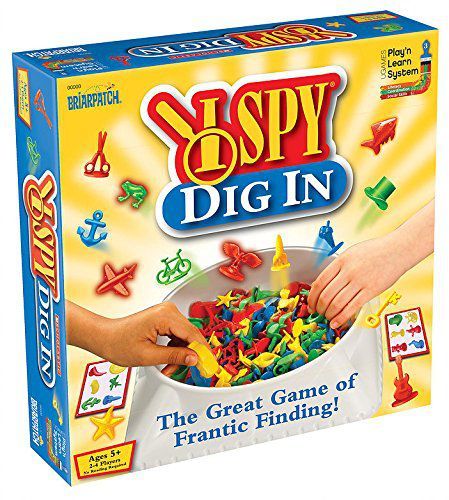
Most parents grew up with the I Spy books—those lush, cluttered photographs that could keep a kid quiet in a waiting room for twenty minutes. Dig In takes that exact aesthetic and dumps it into a physical bowl. The transition works because it taps into a kid's natural desire to rummage. There is something fundamentally rewarding about the 'clink' of plastic objects as you sift through them.
The 'All In' Mechanic
The game adds a bit of structure to the chaos with its 'All In' phase. Once players find the six objects on their cards, everyone gets a chance to find one final shared object. It’s a smart way to keep everyone engaged until the very last second, preventing the 'I'm done, I'm bored' slump that happens when one kid finishes significantly faster than the others.
Durability and Loss
Let’s be real: you are going to lose pieces. The game comes with 128 objects, and they are small. The good news is that the game is robust enough that losing a couple of plastic spoons or miniature dogs doesn't break the mechanics. You can easily supplement the bowl with your own small trinkets (LEGO accessories, beads, tiny toy cars) to keep the game fresh.
Why it beats the screen
In 2026, it's easy to hand a kid a tablet for a matching game. But Dig In requires depth perception, fine motor control, and social navigation. You have to negotiate space around the bowl, handle the physical frustration of a piece slipping through your fingers, and celebrate a win with people, not an animation. It’s a high-value 'filler' game that earns its spot on the shelf.