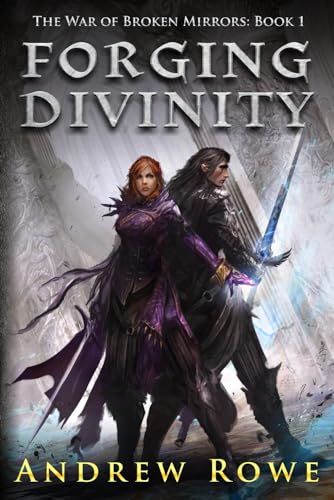
The King of Hard Magic
In the world of modern fantasy, there's a growing subgenre called 'Progression Fantasy,' and Andrew Rowe is one of its most important architects. Forging Divinity is where a lot of that logic-first storytelling began. Unlike Harry Potter, where magic is often a whimsical solution to a plot problem, magic here is a science. It has costs, limits, and specific rules that the characters have to exploit to survive.
Lydia Hastings isn't a warrior; she’s a 'knowledge sorcerer.' Her ability to pull information from her environment makes the book feel more like a supernatural detective story than a standard epic fantasy. This is a huge win for kids who prefer cleverness over combat.
Why it sticks
The city of Orlyn is a fascinating setting because it treats divinity as a commodity. It forces the reader to think about the intersection of religion, power, and money. While the pacing can occasionally slow down for a 'lecture' on how a specific spell works, those moments are what make the book stand out. It’s basically 'STEM fantasy'—it encourages the reader to categorize information and think through the mechanics of the world.
If your kid has already burned through Brandon Sanderson’s Mistborn or is starting to get into LitRPG (books that read like video games), Forging Divinity is the logical next step. It’s smart, it doesn't talk down to the reader, and it rewards people who pay attention to the details.