The Power of the Wordless Page
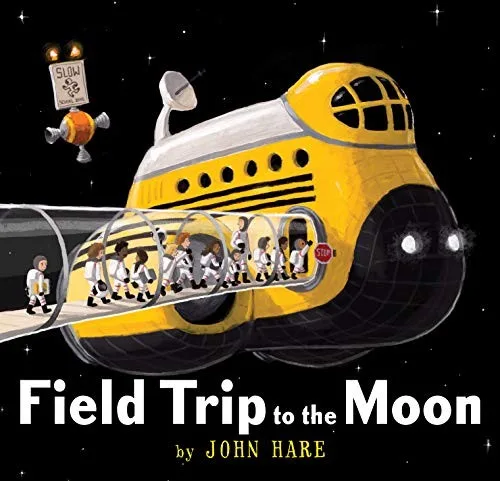
In the world of early literacy, we often get hyper-focused on decoding—the 'eyes on text' part of reading. But wordless books like Field Trip to the Moon are doing heavy lifting on the other half of the Reading Rope: language comprehension. When a child 'reads' this book to you, they are practicing syntax, vocabulary, and narrative logic. They aren't just looking at pictures; they are constructing a world.
John Hare’s artwork is the star here. The moon isn't a cold, dead rock; it’s a playground of grey tones that feels cozy rather than desolate. The protagonist is a small, space-suited figure who remains calm and observant, a great model for kids who might otherwise find the idea of being 'lost' terrifying.
Why Crayons?
The choice of crayons as the bridge between species is brilliant. It positions art as a universal language. There’s something deeply satisfying about seeing a grey moon slowly filled with the bright, waxy colors of Earth. It’s a subtle nudge toward the idea that we bring our own color to the places we visit.
If your kid is a fan of Aaron Becker’s Journey trilogy or any of the Quest books, this is in that same top-tier category of visual storytelling. It’s short enough for a quick bedtime read but rich enough to support a 20-minute deep dive into 'what happens next.'