How to Use a DBT Workbook Without Making It Feel Like Homework
Dialectical Behavior Therapy was originally developed to help people navigate intense, overwhelming emotions. Its core modules—mindfulness, distress tolerance, emotion regulation, and interpersonal effectiveness—are exceptionally useful for teenagers navigating high school stress, social friction, and emotional swings.
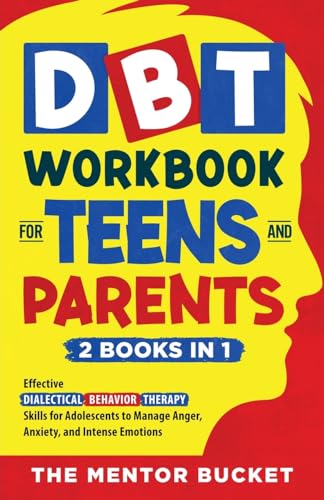
The challenge with any self-help workbook, including this set by The Mentor Bucket, is implementation. If you hand a 240-page mental health workbook to a struggling 14-year-old and say "fill this out," you will likely trigger the exact defiance or shutdown you are trying to solve.
The value of a two-in-one guide lies in parallel growth: parents work through their strategies while teens work through theirs, creating shared vocabulary without turning home into a therapy clinic.
Parallel Workspaces
The split format gives both sides dedicated territory. Parents can learn how to validate emotions without immediately jumping into fix-it mode, while teens pick up concrete tactics (like the TIPP skills or grounding techniques) to regulate panic or anger before it explodes.
If you choose to use this guide, treat it as a tool menu rather than a textbook. Pick one exercise or prompt per week to discuss over dinner or in the car, rather than expecting page-by-page completion.