The 'Chocolate-Covered Broccoli' Balance
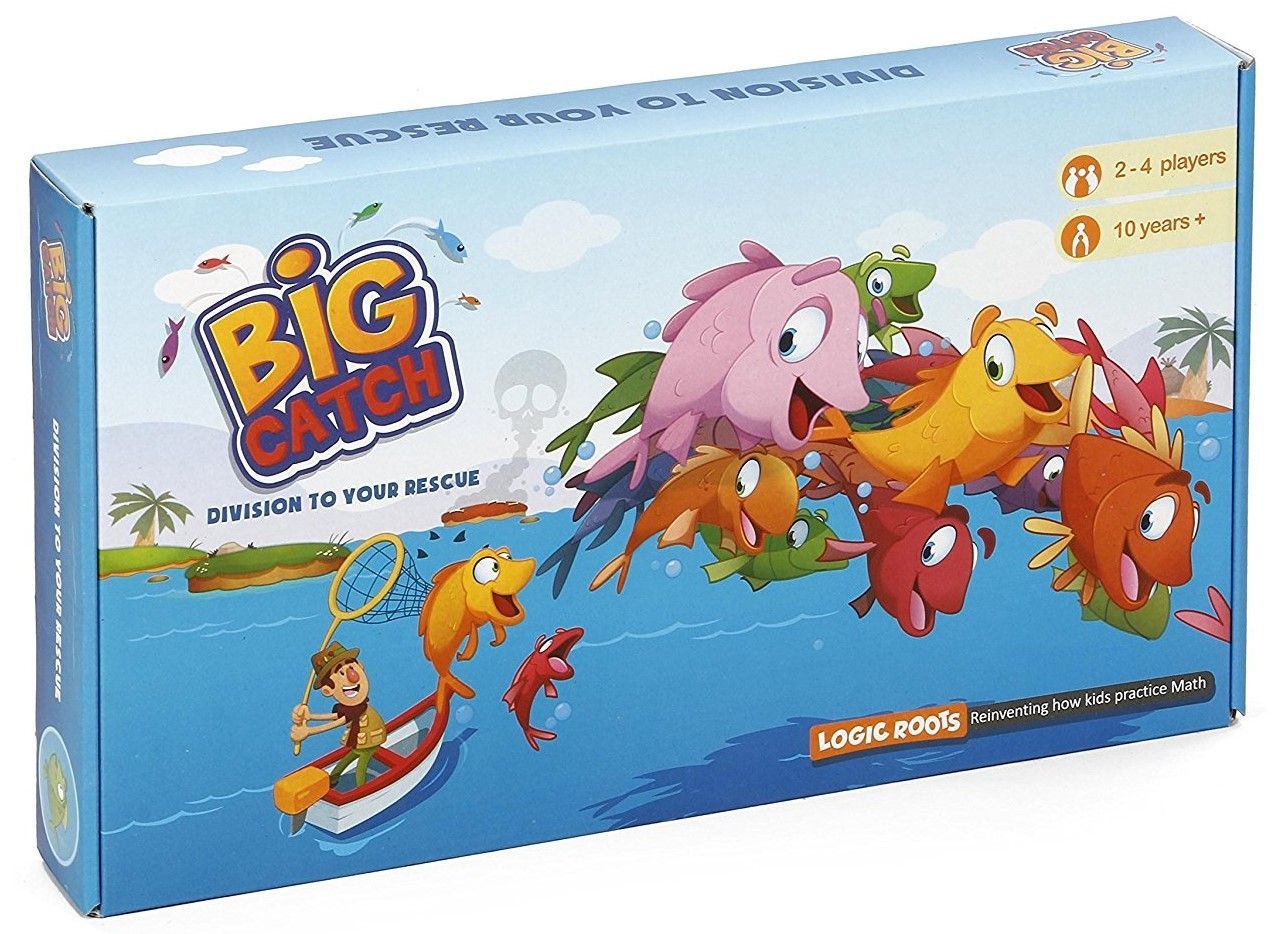
Most educational games fall into the trap of being all education and no game. You roll a die, you answer a question, you move a space. Big Catch tries a little harder by introducing an area-control element. The numbers aren't just hurdles; they dictate how you interact with the board.
The publisher, Logic Roots, specializes in this specific niche. They don't try to make 'lifestyle' games that adults will play for fun on their own; they make targeted tools for specific math milestones. In this case, it's the transition from basic division to understanding what to do with the leftovers (remainders).
Why the Remainder Mechanic Works
In a standard classroom, the remainder is often treated as a nuisance—a little bit of 'trash' at the end of the problem. In Big Catch, those remainders are saved and used to move between islands. This shifts the kid's perspective: suddenly, a 'messy' division problem is a strategic opportunity. This kind of conceptual shift is exactly what helps math stick.
Practical Classroom vs. Home Use
While designed for home use, this is a frequent flyer in homeschooling circles and 'math centers' in schools. The game supports 2 to 4 players, making it a solid choice for siblings close in age. If you have a 3rd grader and a 5th grader, the 5th grader will likely dominate the math, so you might need to house-rule some handicaps to keep it competitive.