

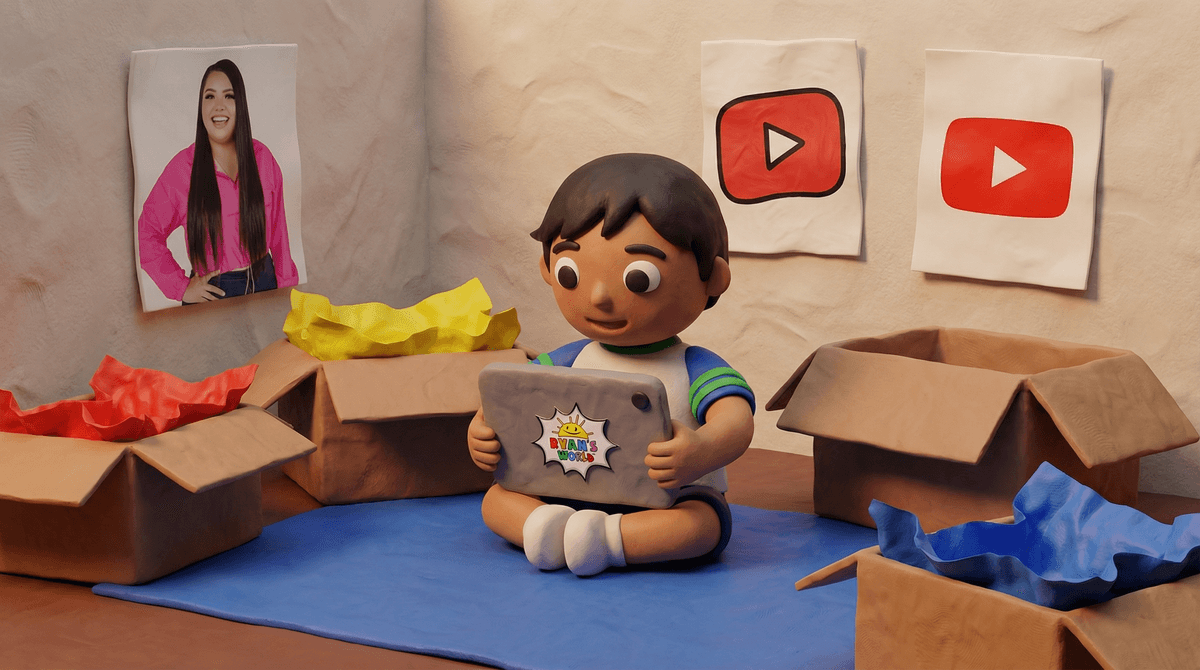
You know that moment when your kid gasps and says "Mom, I NEED the new Squishmallow advent calendar" even though it's March? Yeah, they probably saw it in an unboxing video.
Unboxing videos are exactly what they sound like: someone opens a product on camera while narrating the experience. Sometimes it's a toy haul from Target. Sometimes it's a $500 LEGO set. Sometimes it's literally just opening blind bags for 20 minutes straight. The format is hypnotic—the crinkle of packaging, the reveal of what's inside, the exaggerated reactions. It's like QVC for the iPad generation, except the hosts are often other kids or enthusiastic twenty-somethings who've perfected the art of making a Happy Meal toy look like buried treasure.
The biggest channels in this space—like Ryan's World, Karina Garcia, and countless others—rack up millions of views per video. And it's not just toys. There are unboxing videos for everything: tech gadgets, snacks from other countries, mystery boxes, even rocks (yes, really). If it comes in packaging, someone's filming themselves opening it.
Let's be real: unboxing videos are designed to be addictive. They tap into the same psychological reward system as opening a present yourself. There's anticipation (what's inside?), surprise (oh, it's the rare one!), and vicarious satisfaction (look how excited they are!).
For younger kids especially, watching someone else experience joy triggers mirror neurons—their brain lights up like they're the one getting the toy. Add in bright colors, fast cuts, and hosts who speak in that particular YouTube cadence (you know the one), and you've got content that's incredibly hard to click away from.
There's also the parasocial relationship factor. Kids watch the same creators over and over, and it starts to feel like hanging out with a friend. When that "friend" says a toy is cool, it carries weight. More weight than, say, a TV commercial that your kid knows is trying to sell them something.
Here's where it gets tricky. Unboxing videos aren't technically ads (though many are sponsored—more on that in a sec). But they function like ads. Really, really effective ads.
Research shows that kids under 8 have trouble distinguishing between entertainment and advertising. Even older kids can struggle to recognize when they're being marketed to, especially when the "ad" looks like their favorite creator just genuinely loves this product.
The pipeline works like this:
- Kid watches unboxing video
- Kid forms emotional attachment to product through repeated exposure
- Kid adds product to mental (or literal) wishlist
- Kid asks parent for product, often by name, sometimes with the exact Amazon link
Parents report that their kids' birthday and holiday lists have gotten way more specific since YouTube became a thing. It's not "I want LEGOs," it's "I want the LEGO Friends Heartlake City Shopping Mall set, the one with the smoothie bar."
Some of this is just... how media works now. But the volume and intensity matter. When a kid watches 45 minutes of unboxing content daily (not uncommon), that's a LOT of exposure to products framed as desirable.
Many unboxing videos are sponsored, meaning the creator was paid or given free products to feature them. YouTube requires disclosure, but it's often buried in the description or mentioned quickly at the start ("Thanks to [Brand] for sending this!"). Kids scrolling on tablets aren't reading video descriptions.
Even when disclosure is present, research shows kids don't really understand what it means. A 9-year-old might know the creator got the toy for free but not grasp that this creates bias, or that the creator is essentially being paid to make the toy look appealing.
And plenty of unboxing content isn't technically sponsored—creators buy products themselves because they know unboxing videos get views. But that doesn't make them neutral. The entire format is built on generating excitement about stuff.
This isn't about banning unboxing videos entirely (though if that works for your family, cool). It's about helping kids develop critical thinking skills around content that's designed to make them want things.
Some practical approaches:
Talk about it directly. Next time you're watching together, ask questions: "Why do you think they're so excited about this toy? Do you think they'd be this excited if they paid for it themselves? What do you think happens to all these toys after the video?" Help them see the performance aspect.
Set expectations around wishlists. Make it clear that seeing something in a video doesn't mean it's happening. Some families have a "you can add three things to your birthday list" rule. Others do a monthly "YouTube request" where the kid can pick one thing they saw online to potentially get (if it's reasonable and fits the budget).
Teach the economics. Older kids (8+) can understand that creators make money from views, and that unboxing videos are popular, so creators make them even if they don't personally care about the product. This is a good entry point into talking about how "free" content isn't really free .
.
Watch for the asks. Pay attention to whether your kid is asking for more stuff than usual, or if their requests are getting more expensive or specific. That's a sign the content is having an outsized influence.
Offer alternatives. Channels like Brains On! or Crash Course Kids provide that same "watching someone enthusiastic talk about stuff" experience without the consumerism angle. Science experiment channels, art tutorials, and building/crafting content can scratch the same itch.
Ages 3-6: At this age, kids are most vulnerable to the influence because they can't distinguish entertainment from advertising at all. If they're watching YouTube, stick to curated playlists or YouTube Kids with strict content filters. Even then, be aware that toy-focused content will create requests.
Ages 7-10: They're starting to understand persuasion but still need help connecting the dots. Co-viewing is your friend here—watch together and talk about what you're seeing. This is a great age to start teaching media literacy explicitly.
Ages 11+: They can handle more nuanced conversations about influencer culture, sponsorships, and manufactured desire. Ask them how they feel when they watch unboxing videos—does it make them want stuff? Do they feel satisfied or more restless afterward? Help them notice their own responses.
Unboxing videos aren't inherently evil. They're entertaining, and honestly, some of them are pretty well-produced. The problem is the sheer volume of exposure and the fact that they're essentially commercials that don't feel like commercials.
Your job isn't to eliminate all commercial influence (impossible) but to help your kid develop a healthy skepticism about content designed to make them want things. That's a life skill that'll serve them way beyond YouTube.
And look, if they really want that thing they saw in the video? Sometimes the answer is yes. Sometimes it's "add it to your birthday list." Sometimes it's "let's look at reviews from actual users, not just unboxing videos." The goal is thoughtful consumption, not deprivation.
- Set up co-viewing time for YouTube content, especially for kids under 10
- Have a conversation about how creators make money and why that matters
- Establish a wishlist system that puts space between "I saw it" and "I need it"
- Explore alternative content that's engaging but less product-focused
- Check your own habits—kids notice if you're also constantly buying stuff you saw online
Want to dig deeper? Learn more about YouTube's algorithm and why it pushes certain content, or read about setting up better parental controls.