

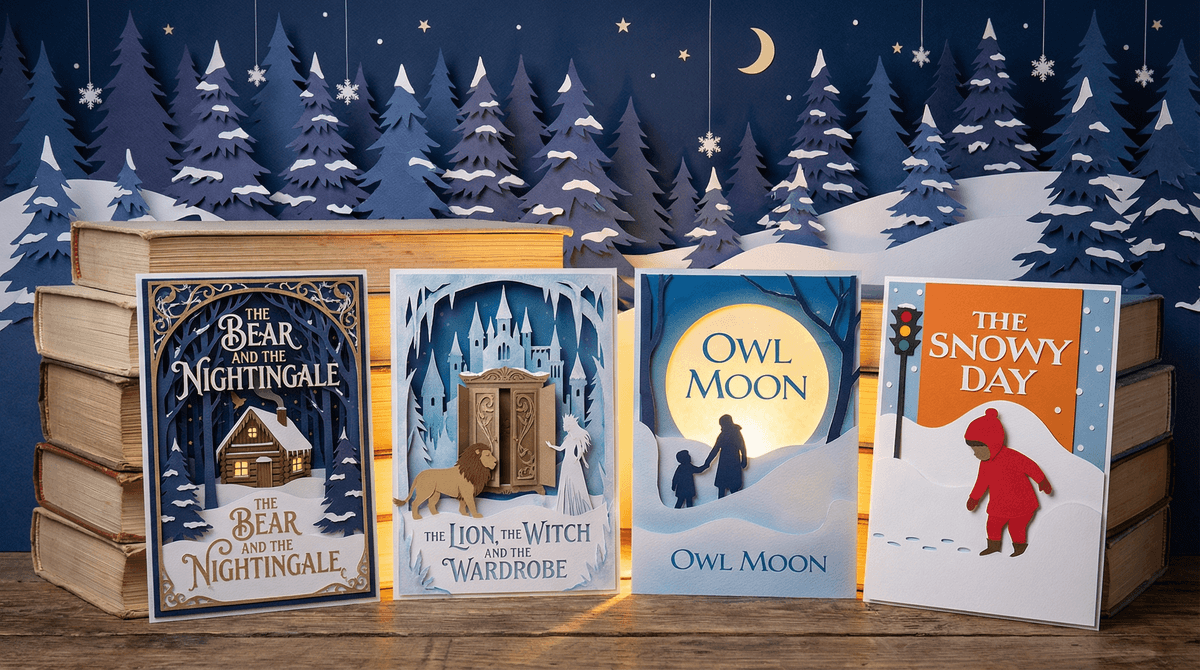
Winter books aren't just books that happen to mention snow. They're the cozy, atmospheric reads that make kids want to burrow under blankets with a flashlight instead of doomscrolling through YouTube Shorts. Think magical snowstorms, holiday adventures, survival stories, and mysteries that unfold during the darkest months of the year.
The best winter books create that hygge feeling (yes, we're using the Danish word because English doesn't have anything better) that makes reading feel like an event rather than homework. And here's the thing: winter is actually the perfect season to rebuild reading habits that may have gotten demolished by summer camps, fall sports, and the general chaos of the school year.
Let's be real: kids are reading less. Like, significantly less. The average teen now reads for pleasure about 4 minutes per day, while spending 8+ hours on screens. And winter break? That's when reading habits either get completely obliterated by Roblox marathons and Netflix binges, or it's when you can actually rebuild some momentum.
Winter has natural advantages for reading:
- It gets dark at 4:30pm (thanks, seasonal depression!)
- It's too cold for outdoor distractions
- Holiday breaks create actual downtime (rare!)
- Cozy vibes are peak right now
The competition isn't other activities—it's TikTok, YouTube, and Discord. So you need books that can actually compete with the dopamine hits of infinite scroll.
For Early Readers (Ages 5-8)
The Snowy Day by Ezra Jack Keats is the classic for a reason—it captures that pure joy of fresh snow before kids learn to associate winter with slushy parking lots and wet socks. Short enough that you won't lose their attention.
Owl Moon by Jane Yolen has this quiet, contemplative vibe that's basically the opposite of Cocomelon. It's about a kid going owling with their dad on a winter night, and the illustrations are stunning enough to compete with iPad games.
The Mitten by Jan Brett is perfect for kids who love detailed illustrations they can get lost in. The borders alone have more going on than most picture books' entire pages.
For Middle Grade Readers (Ages 8-12)
This is the danger zone where kids either become readers or they don't. Choose wisely.
The Lion, the Witch and the Wardrobe by C.S. Lewis is always winter but never Christmas in Narnia, which is somehow both cozy and terrifying. Yes, there's Christian allegory, but mostly it's just a fantastic adventure story. If your kid loved the Percy Jackson books, this hits similar notes.
Hatchet by Gary Paulsen isn't exclusively winter, but the survival elements hit different during cold months. Kids who think they're "too cool" for reading often get sucked into this one because it's genuinely tense. Fair warning: they will start asking about survival gear.
A Christmas Carol by Charles Dickens might seem like an obvious choice, but hear me out: get an illustrated version or a slightly adapted one for modern readers. The story absolutely slaps, but Victorian prose can be a barrier. The Muppet Christmas Carol movie is also a legitimate gateway drug to the book.
The Wild Robot by Peter Brown has winter survival elements and is absolutely beautiful. It's also been huge since the movie came out, so kids actually know about it and want to read it. Use that momentum.
For Teens (Ages 12+)
The Hunger Games by Suzanne Collins isn't a winter book, but it has survival elements and dystopian vibes that work well during dark months. Plus, with the new prequel movie, it's having a resurgence. Kids who claim they "don't read" will read this.
To Build a Fire by Jack London is a short story, not a novel, which makes it perfect for reluctant readers. It's also genuinely harrowing—a guy vs. nature story that will make your teen feel grateful for central heating.
The Bear and the Nightingale by Katherine Arden is technically YA/adult crossover, but mature 13+ readers who love fantasy will devour this. Russian folklore, winter magic, and a protagonist who refuses to be married off. It's like if Frozen was actually good and had real stakes.
Here's what actually works:
Create a cozy reading environment. Sounds basic, but it matters. String lights, blankets, hot chocolate—make it an aesthetic. Kids are on Pinterest and TikTok seeing "cozy winter reading nook" content. Lean into it.
Audiobooks count. If your kid will listen to Diary of a Wimpy Kid on audiobook while building in Minecraft, that's still reading. Don't be a purist about it.
Let them reread favorites. Kids rewatch the same YouTube videos 47 times. Let them reread the same book. Rereading is actually cognitively valuable and builds fluency.
Read aloud together, even with older kids. Family read-alouds during winter break can be genuinely nice. Try The Phantom Tollbooth or Howl's Moving Castle—books with enough wordplay and depth that adults won't be bored.
Don't make it homework. No book reports, no forced discussions, no "what did you learn?" Just let them read for pleasure. The goal is to rebuild the habit, not to optimize every minute for educational outcomes.
Yes. Absolutely yes. Dog Man, Amulet, Heartstopper—all legitimate reading. The "graphic novels aren't real books" debate is over. We lost. Move on.
Winter reading isn't about forcing kids away from screens entirely—it's about creating an alternative that's genuinely appealing. The goal isn't "no screens ever," it's "sometimes books instead of the 47th Skibidi Toilet video."
Focus on books that match the season's vibe: cozy, atmospheric, maybe a little magical. Make the reading environment actually pleasant. And remember that any reading is better than no reading, even if it's the same graphic novel for the third time.
If you can get your kid through winter break having read even one book they genuinely enjoyed, that's a win. The alternative is them emerging from break having exclusively consumed YouTube content about Minecraft parkour and whatever fresh hell is trending on TikTok.
Start with one book. Don't build an entire winter reading curriculum. Pick one book that matches your kid's interests and reading level, and see if it sticks.
Visit your library. Librarians are criminally underutilized resources who actually know what kids are reading right now. They can recommend books that compete with screens because they see what's getting checked out.
Consider a family reading challenge. Not competitive, just collective. "Everyone reads for 20 minutes after dinner" creates a screen-free zone without singling anyone out.
And if your kid still chooses YouTube over books most nights? That's fine. You're not failing. Modern parenting is hard, and screens are designed by billion-dollar companies to be addictive. Learn more about how to think about screen time in context rather than beating yourself up about it.
But on those nights when they do choose the book? That's magic. That's the goal. That's enough.