

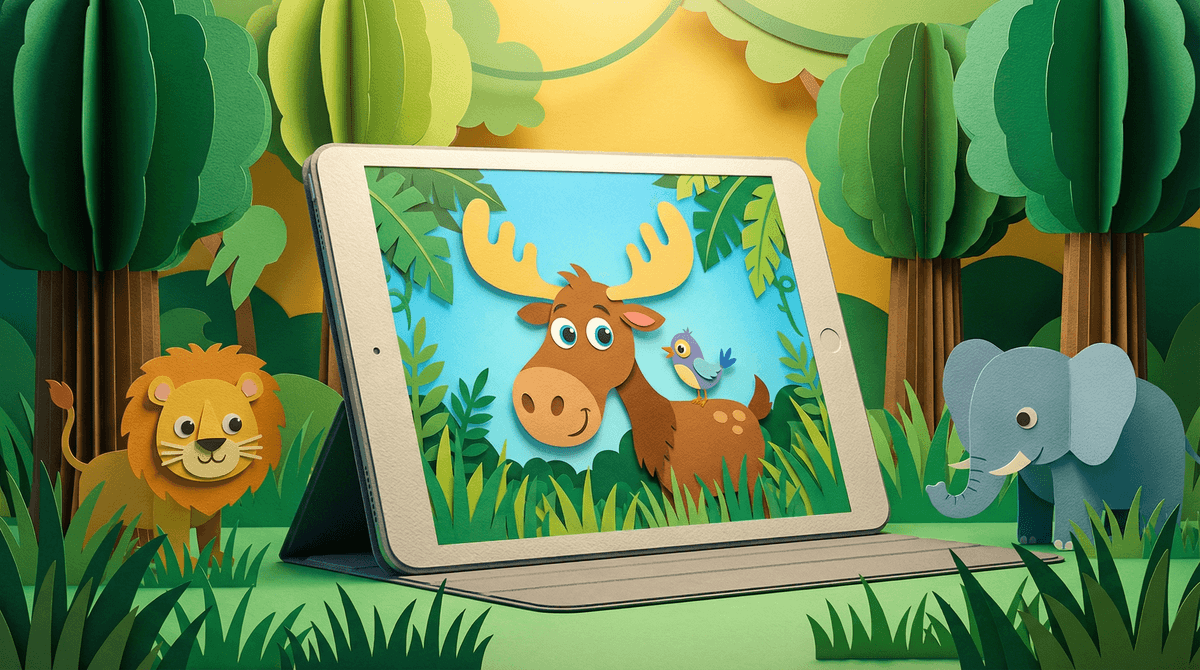
Duck Duck Moose Reading: What Makes This Zoo-Themed Phonics App Stand Out
If you're hunting for a truly educational literacy app for your preschooler through first grader, Duck Duck Moose Reading is one of the rare apps that actually delivers on its promise. Created by educational app veterans (now owned by Khan Academy), it teaches phonics systematically through a zoo-themed adventure that feels like play but is secretly rigorous curriculum work.
Best for: Ages 3-7
Cost: Free (Khan Academy acquired them and made everything free)
The catch: It's genuinely educational, which means some kids find it less instantly gratifying than Roblox or YouTube. That's actually the point.
Duck Duck Moose started as an independent studio creating high-quality educational apps for young kids back when the App Store was still new. In 2016, Khan Academy (yes, the nonprofit behind all those math videos) acquired them and made their entire catalog free.
Duck Duck Moose Reading is their flagship literacy app, and it's built around a systematic phonics curriculum where kids help zoo animals while learning letter sounds, blending, and early reading skills. Think of it as a digital version of what a good kindergarten teacher does during literacy centers, but with better animation and infinite patience.
It Follows Actual Reading Science
Here's the thing that separates Duck Duck Moose from 90% of "educational" apps: it's based on structured literacy principles. The app teaches:
- Letter-sound correspondence (phonics fundamentals)
- Blending skills (sounding out words)
- Sight word recognition (high-frequency words)
- Phonemic awareness (manipulating sounds)
This isn't some gamified flashcard system or a glorified coloring book with the word "learning" slapped on it. The progression is intentional and research-backed. Kids can't just button-mash their way through—they actually have to engage with the phonics concepts.
The Pacing Respects How Kids Actually Learn
One of the smartest design choices: the app doesn't rush. Each zoo section focuses on specific letter sounds and blends, and kids practice them in multiple contexts before moving forward. There's repetition without feeling repetitive, which is honestly hard to pull off.
Compare this to apps like ABCmouse, which throws 10,000 activities at kids in a overwhelming dashboard. Duck Duck Moose keeps it focused: you're at the zoo, you're helping animals, you're learning to read. That's it.
It's Actually Free (No Tricks)
When Khan Academy acquired Duck Duck Moose, they made everything free. No in-app purchases, no subscription tiers, no "unlock the full version for $9.99/month." This is legitimately free, high-quality educational content, which is basically a unicorn in the app ecosystem.
For context: Homer Reading costs $60/year. ABCmouse is $13/month. Hooked on Phonics is $10/month. Duck Duck Moose? Zero dollars.
The parent reviews are consistently positive, but here's what stands out:
"It held my 4-year-old's attention better than I expected." This is the key tension with educational apps—they're competing with YouTube and games designed by teams whose only job is to hijack attention. Duck Duck Moose won't win that battle every time, but it does a surprisingly good job of keeping kids engaged through genuine game design (not just reward manipulation).
"My kindergartener learned to blend sounds here." Multiple parents report their kids having "aha moments" with blending in this app. That's the holy grail of early literacy—when a kid suddenly gets that letters make sounds and sounds make words.
"It's not flashy, but it works." This comes up a lot. The app isn't trying to be Minecraft or Fortnite. It's pleasant, well-designed, and focused on teaching. Some kids love it, some tolerate it, but it does what it promises.
It's Not Going to Replace Reading Together
No app—not this one, not any of them—replaces the magic of sitting with your kid and reading actual books together. Duck Duck Moose is a supplement, not a substitute. It can help with phonics skills and letter recognition, but it can't teach comprehension, vocabulary in context, or the pure joy of getting lost in a story.
If you want book recommendations that pair well with phonics practice, check out early reader books for kindergarteners.
Some Kids Find It "Boring"
If your kid is used to the dopamine firehose of YouTube or the instant gratification of Toca Boca apps, Duck Duck Moose might feel slow. That's not a bug, it's a feature—but it means you might need to frame it differently.
One strategy: make it part of "learning time" rather than "fun screen time." Kids are surprisingly good at understanding different types of activities serve different purposes.
The Interface Can Feel Dated
Duck Duck Moose was designed in the early 2010s, and while it's been updated, it doesn't have the slick polish of newer apps. Some parents find this charming (less overwhelming), others find it a bit clunky. Your mileage may vary.
Ages 3-4: Great for letter recognition and beginning sounds. Don't expect them to master blending yet—that's developmentally normal.
Ages 5-6: This is the sweet spot. Most kindergarteners will be ready for the full curriculum and can work through the app with increasing independence.
Ages 7+: If your first grader is already reading fluently, this app will feel too basic. But if they're struggling with phonics or need remedial practice, it's a judgment-free way to build skills.
vs. Homer Reading: Homer has more content variety (stories, songs, drawing activities) but costs money and can feel scattered. Duck Duck Moose is more focused on systematic phonics.
vs. ABCmouse: ABCmouse covers more subjects (math, art, science) but the interface is overwhelming and the reading curriculum less structured. Duck Duck Moose does one thing really well.
vs. Starfall: Starfall is similar in philosophy (systematic phonics) and also has free content. They're honestly comparable—try both and see which your kid prefers.
vs. Endless Alphabet: Endless Alphabet is charming and teaches vocabulary, but it's not a systematic reading curriculum. It's more of a vocabulary builder.
For more options, check out alternatives to ABCmouse or best educational apps for preschoolers.
Set Expectations About "Educational" Screen Time
There's a difference between passive consumption (watching Cocomelon for two hours) and active learning (working through phonics activities). Duck Duck Moose is active learning, but it's still screen time.
Most experts suggest 15-20 minutes of educational app time is plenty for preschoolers, maybe 30 minutes for kindergarteners. Quality over quantity.
Use It As Part of a Literacy Routine
Duck Duck Moose works best when it's one tool in a bigger toolkit:
- Reading physical books together
- Playing word games in the car
- Pointing out letters and sounds in the real world
- Writing practice (yes, with actual pencils)
The app can reinforce what kids are learning elsewhere, but it shouldn't be the only thing.
Don't Force It
If your kid genuinely hates it, that's okay. Some kids learn better with physical manipulatives, some need more social interaction, some just aren't ready yet. There's no app that works for every child, and that's fine.
Duck Duck Moose Reading is one of the rare educational apps that actually earns the label. It's built on solid literacy research, it's free, it's well-designed, and it works for a lot of kids in the 3-7 age range.
It's not magic, it won't replace real books and real teaching, and some kids will find it less exciting than YouTube Kids. But if you're looking for a screen time option that's actually educational (not just "educational"), this is one of your best bets.
Try it for a week and see if your kid engages with it. If they do, great—you've found a free, high-quality literacy tool. If they don't, no big deal—there are plenty of other ways to teach reading.
- Download Duck Duck Moose Reading (it's free on iOS and Android)
- Try it for 15 minutes and see how your kid responds
- Check out other Duck Duck Moose apps—they have math and creativity apps too
- If you want more reading app options, explore best phonics apps for kids
- Balance app time with actual books—here are best picture books for kindergarteners
And remember: no app is going to teach your kid to read by itself. But a good app, used intentionally as part of a bigger literacy routine? That can actually help.