

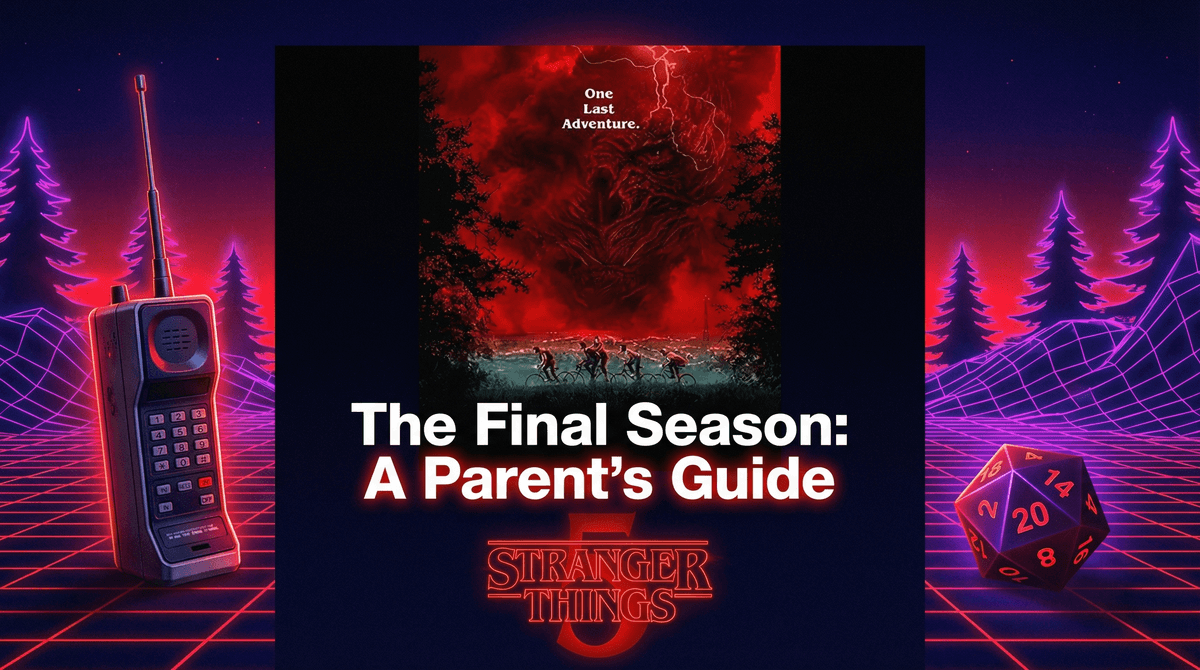
Who Dies in Stranger Things Season 5: What Parents Need to Know Before the Final Episodes
TL;DR: Season 5 hasn't aired yet (expected late 2025), so we don't know who dies. But based on the Duffer Brothers' track record and what we know about the final season, parents should prepare for major character deaths, intense violence, and emotional goodbyes. If your kids have made it through seasons 1-4, they can handle season 5 — but this is the right time to talk about grief, closure, and how stories end.
Season 5 of Stranger Things is still in production as of early 2025, with a release expected sometime in late 2025. Netflix and the Duffer Brothers have been characteristically tight-lipped about plot details, but here's what's confirmed:
- It's the final season — 8 episodes that will wrap up the entire story
- There will be a time jump — picking up after the events of season 4
- The stakes are higher than ever — Vecna is still a threat, the Upside Down is bleeding into Hawkins
- Major character deaths are expected — the creators have said "not everyone will make it out alive"
So when kids are Googling "who dies in Stranger Things season 5," they're doing what we all do: trying to emotionally prepare for what's coming. They're not spoiling themselves — they're bracing for impact.
The fact that kids (and let's be honest, adults) are already searching for death spoilers tells us something important: Stranger Things has become emotionally significant media for this generation.
These aren't just characters — for kids who started watching in middle school, they've grown up alongside the Party. They've watched Mike, Eleven, Dustin, Lucas, Will, and Max navigate friendship, first love, trauma, and literal monsters. The show has dealt with real themes: bullying, grief, PTSD, disability, family dysfunction, and what it means to be different.
When a 14-year-old asks "who dies," they're not being morbid. They're asking: "How much emotional preparation do I need to do?"
If you're wondering whether your kid can handle season 5, look at what they've already processed:
Season 1: Barb dies (off-screen but devastating), Eleven "dies" (she doesn't, but still)
Season 2: Bob Newby, superhero, gets brutally killed by Demodogs while saving everyone
Season 3: Billy Hargrove's redemptive death scene, Hopper's "death" (he's fine, but the emotional impact was real)
Season 4: Eddie Munson's heroic death (absolutely gutting), Max's near-death and coma (arguably worse than death for many viewers)
The pattern? The show kills beloved characters in heroic, meaningful ways — but it doesn't shy away from showing the grief and aftermath. Max's trauma from watching Billy die, Joyce's devastation over Bob, the Party's collective PTSD — the show treats death seriously.
Based on narrative structure, fan theories, and what the Duffer Brothers have said, here's who might not survive:
High Risk:
- Steve Harrington — he's been in increasingly dangerous "protector" situations, and his character arc feels complete
- Jonathan or Nancy — the love triangle needs resolution, and death is one way to do it
- Murray — comic relief characters often get sacrificial endings
- One or more parents — Joyce, Hopper, or Karen Wheeler could go out protecting their kids
Medium Risk:
- Will Byers — he's connected to the Upside Down in ways we don't fully understand; a sacrificial ending would be devastating but narratively satisfying
- Max — she's already in a coma; her death could happen off-screen between seasons or early in season 5
- Eleven — losing her powers to save everyone would be a "death" of sorts
Lower Risk (But Not Zero):
- Mike, Dustin, or Lucas — killing a core Party member would be bold, but the show has protected them so far
- Erica — too young, probably safe
- Robin — fan favorite, but not narratively essential
Want to dig deeper into fan theories? Explore Stranger Things season 5 predictions
Ages 10-12: If they've watched seasons 1-4, they can handle season 5, but watch together. The violence will likely be more intense, and character deaths will hit harder because of the cumulative emotional investment. Be ready to pause and talk.
Ages 13-15: They can probably handle it on their own, but check in afterward. This age group tends to process grief through social media and group chats — make sure they have friends to debrief with.
Ages 16+: They're fine. They might be more emotionally wrecked than you are.
The real question isn't "can my kid handle death in a TV show?" — it's "can my kid handle grief, closure, and the end of something they love?" That's actually a useful life skill.
Unlike gratuitous violence in shows like The Walking Dead or Game of Thrones, Stranger Things treats death with narrative weight. Characters don't die for shock value — they die heroically, protecting others, making choices that matter.
Bob Newby wasn't a main character, but his death devastated viewers because it was heroic and unnecessary and heartbreaking. Eddie Munson became a fan favorite in one season, and his death felt like losing a real friend. Billy Hargrove's redemption arc made his death meaningful even though he'd been a villain.
The show also doesn't shy away from showing the aftermath. When someone dies, the characters grieve. They have PTSD. They struggle. Max's entire season 4 arc was about grief and depression and suicidal ideation — heavy stuff, but handled with care.
Before Season 5 Airs:
"I know you're worried about who might die. Me too. What would help you feel prepared?"
Some kids want spoilers. Some don't. Some want to watch together. Some want to process alone first and then talk. Ask what they need.
After Watching:
"That was intense. Want to talk about it?"
Don't force it, but create space. Some questions to consider:
- "Which death hit you the hardest?"
- "Do you think it was a good ending for that character?"
- "How are you feeling about the show ending?"
If They're Really Struggling:
If your kid is genuinely distraught about a character death for more than a few days, that's actually normal — but it's worth exploring. Parasocial relationships with fictional characters are real, especially for kids who've grown up with a show.
Questions to ask yourself:
- Are they processing normal grief over a story ending?
- Or are they struggling with real grief/loss and this is triggering it?
- Do they have other emotional outlets and support systems?
Stranger Things isn't just a monster show — it's a story about friendship, loyalty, and being different in a world that punishes difference. The Party are nerds, outcasts, weirdos. Eleven is literally a lab experiment. Max is dealing with an abusive home. Will is struggling with his identity. Steve is trying to figure out who he is beyond high school popularity.
For kids who feel like outsiders, this show says: "Your weirdness is your superpower. Your friends are your family. You can save the world."
That's why character deaths hit so hard. It's not just losing a fictional person — it's losing a representation of something they identify with.
If your kid loves Stranger Things, try:
- The Umbrella Academy — dysfunctional family with powers, similar emotional stakes
- Locke & Key — mystery, magic, family dynamics
- His Dark Materials — epic fantasy with coming-of-age themes
- Avatar: The Last Airbender — if they somehow haven't seen it, perfect for the "found family saves the world" vibes
Avoid (or wait on):
- Squid Game — way more violent, nihilistic tone
- The Last of Us — excellent but brutal, different emotional register
- The Boys — extremely graphic, cynical about heroism
We don't know who dies in Stranger Things season 5 yet. But we know it's going to be emotional, intense, and probably devastating in the best way.
If your kid has made it through four seasons of monsters, trauma, and grief, they can handle the finale. The real question is: can you?
Here's what to do now:
- Ask your kid what they need — spoilers or no spoilers, watch together or alone, talk immediately or process first
- Prepare for emotional fallout — this is the end of a show that's been part of their lives for years
- Use it as a conversation starter — about grief, closure, how stories end, what makes a "good death"
- Have tissues ready — for them and for you
And remember: it's just a show is technically true, but also misses the point. Stories matter. Characters matter. Grief over fictional deaths is practice for real grief. Let them feel it.
When season 5 finally drops, we'll update this guide with actual information about who dies and how to talk about specific scenes. Until then, we're all just waiting and speculating together.
See how to prepare your kid for Stranger Things season 5 The Screenwise list maker can help you think through your specific family's needs.