

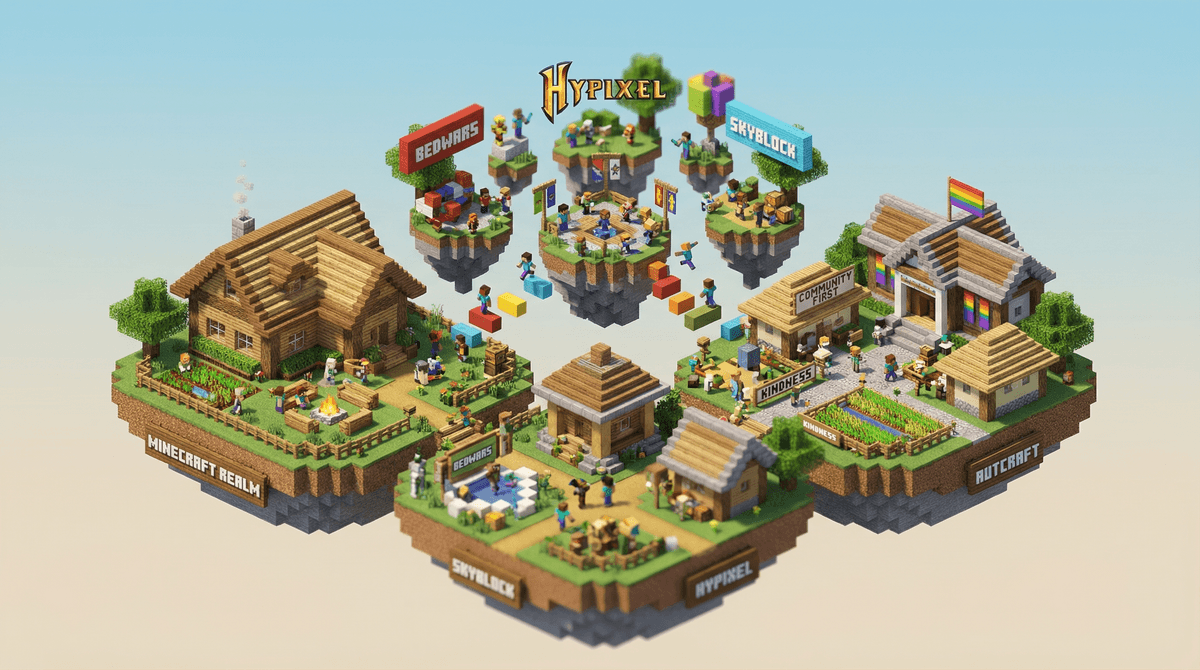
TL;DR: Moving from solo Minecraft to a multiplayer server is the digital equivalent of your kid asking to go to the mall alone for the first time. It’s a huge step for social development, but it opens the door to unmoderated chat and "griefing" (people breaking your stuff). For a safe start, stick to Minecraft Realms for small friend groups or highly moderated "whitelist" servers like Autcraft. Avoid "Anarchy" servers like the plague.
Get a list of kid-safe Minecraft servers
If your kid has been playing Minecraft for a while, they’ve likely been playing in "Single Player" mode. This is the sandbox where they are the god of their own little blocky universe. No one can touch their diamond stash, and no one can blow up their replica of the Eiffel Tower.
A server is just a shared version of that world that lives on the internet 24/7. It allows multiple people to build, fight, and hang out together in real-time. Think of it as moving from playing with Legos in your bedroom to playing on a giant, infinite Lego table at a crowded community center.
The jump from solo play to servers usually happens because of YouTube. They see creators like MrBeast or the Hermitcraft crew playing together, pulling pranks, and building massive economies.
For kids, servers offer:
- Social Validation: Showing off a build to a real person hits different than showing it to an NPC villager.
- Collaboration: Working together to slay the Ender Dragon or build a massive city teaches actual project management skills (even if they don't realize it).
- Mini-Games: Many servers aren't even about building; they’re about "BedWars" or "SkyWars"—competitive, fast-paced games that feel more like Fortnite than a sandbox.
Not all servers are created equal. In fact, some are digital cathedrals of creativity, while others are essentially the Wild West with more swearing.
This is the "Parental Easy Button." A Realm is a private server hosted by Microsoft. You (the parent) pay a monthly subscription, and your kid is the owner. They have total control over who is invited.
- The Good: No strangers. If someone is being a jerk, your kid can kick them. It’s a closed loop.
- The Bad: It costs money, and it’s limited to 10 players.
- Best for: Ages 6-11 and tight-knit friend groups.
If Minecraft is a playground, Hypixel is Disney World. It is the largest server in the world. It’s professionally managed, has strict chat filters, and features hundreds of mini-games.
- The Good: Incredible variety. It’s where most "pro" Minecrafting happens.
- The Bad: It’s crowded. While there are filters, the sheer volume of players means some toxicity can leak through.
- Best for: Ages 10+ who want competition.
This is one of the most beautiful corners of the internet. It’s a server specifically for children and adults with autism and their families. It is "whitelisted," meaning you have to apply to get in, and the moderation is legendary.
- The Good: Zero tolerance for bullying or griefing. A truly safe space.
- The Bad: There is an application process (which is actually a "good" for safety).
- Best for: Neurodivergent kids who need a structured, kind environment.
Learn more about finding moderated Minecraft communities
If you want to sound like you know what’s going on at the dinner table, you need to know these four terms. If your kid mentions these, your ears should perk up.
- SMP (Survival Multi-Player): This is the standard "let's build a world together" mode. Most servers are SMPs.
- Griefing: This is the act of intentionally destroying another player's work or stealing their items. In the Minecraft world, a "griefer" is the ultimate villain.
- Anarchy Servers: Red Flag Alert. These are servers with no rules. No chat filters, no protection against griefing, and often a lot of "edgy" or hateful content. If your kid asks to join a server like 2b2t, the answer is a hard "No."
- Ranks and Crates: This is where the Roblox style monetization creeps in. Servers often sell "Ranks" (like MVP status) for real money. Some of these can cost $100+. It’s mostly cosmetic, but the peer pressure to buy them is real.
The biggest risk on a Minecraft server isn't "stranger danger" in the way we thought about it in the 90s. It’s not usually a predator; it’s usually a 14-year-old from another time zone teaching your 8-year-old new and creative ways to use profanity.
The Chat Problem
Most large servers have automated filters that star out bad words, but kids are clever. They’ll use "leetspeak" or creative spacing to get around them.
- The Move: If your kid is on a public server, the computer should be in a common area. Period.
The Discord Connection
Many Minecraft servers have an associated Discord server. This is where the real community (and the real lack of moderation) happens.
- The Move: Unless your kid is 13+, they shouldn't be on a server's Discord. It’s the easiest way for them to stumble into conversations they aren't ready for.
Toxic "Griefing"
Having a project you spent three weeks on blown up by a stranger is a genuine emotional hit for a child. It can lead to real tears and massive frustration.
- The Move: Ask the server owners (or check the "About" page) if they have "Land Claims" or "Grief Protection." This allows kids to "lock" their builds so others can't touch them.
Check out our guide on managing digital frustration and gaming rage
Instead of being the "No Police," try to be the "Chief Technology Officer" of your house. Use these prompts to get them talking:
- "Who are the 'regulars' on this server? Do you actually know them or are they just screen names?"
- "What happens if someone breaks your stuff? Is there a moderator you can talk to?"
- "Show me the coolest thing someone else has built. How did they do that?" (This pivots the conversation to engineering and creativity).
- "If someone starts saying weird or mean things in the chat, do you know how to 'mute' them?" (Most servers have a
/mute [username]command—make sure they know it).
- Ages 6-9: Stick to Minecraft Realms with school friends or siblings. The risks of public servers outweigh the rewards at this age.
- Ages 10-12: Highly moderated public servers like Autcraft or the "Creative" lobbies of Hypixel are generally fine, provided you've had "the talk" about internet trolls.
- Ages 13+: They’re likely going to explore larger SMPs. This is the time to focus on Digital Wellness and recognizing when a community is becoming toxic.
Minecraft servers can be a fantastic way for kids to learn digital citizenship. They learn about property rights, community rules, and the joy of a shared goal.
However, don't just "set it and forget it." If your kid is moving into the world of servers, you need to move with them. Start small, start private, and only "level up" to big public servers when they’ve shown they can handle the inevitable jerk who wants to pour lava on their diamond house.
Next Steps:
- Check if your kid's friends already have a Realm they can join.
- If they want a public server, research "Whitelisted Kid-Safe Servers" together.
- Set a "Chat Rule": If the chat gets weird, they tell you immediately, no questions asked, and no punishment for what they saw.