

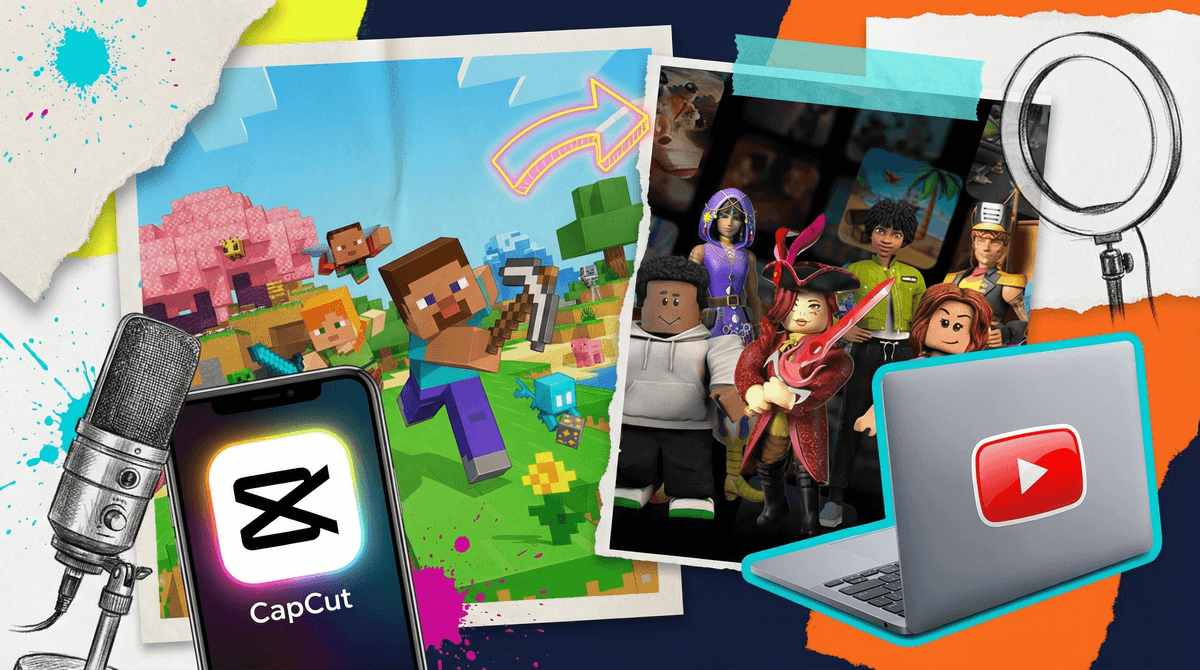
So your kid just announced they want to be a YouTuber. Maybe they're filming themselves playing Minecraft, narrating their Roblox gameplay, or doing unboxing videos of their birthday presents. Welcome to one of the most common career aspirations of the current generation—and honestly, one that makes total sense when you think about it.
According to recent surveys, "YouTuber" or "content creator" ranks among the top career choices for kids ages 8-12, often ahead of traditional dreams like astronaut or doctor. And why wouldn't it? The creators they watch seem to have fun all day, make their own schedules, connect with millions of people, and yes—some make serious money doing it.
But here's the thing: behind every successful YouTube channel is a business operation, and when it's your kid, you're suddenly the unpaid manager, legal department, and privacy protection team all rolled into one.
Let's be real—the YouTuber dream isn't just about fame. Kids are drawn to content creation for some genuinely valid reasons:
They want to share what they love. Your kid has spent 500 hours mastering Fortnite or building elaborate worlds in The Sims. They want to share that expertise and passion. That's actually... pretty healthy?
They see it as achievable. Unlike becoming a movie star, YouTube feels democratized. They watch creators who started in their bedroom with a phone. The barrier to entry looks low (spoiler: it's not, but we'll get there).
It teaches real skills. Video editing, thumbnail design, audience engagement, consistency, handling criticism—these are legitimate skills. Some kids are accidentally learning entrepreneurship, marketing, and resilience.
Their role models are creators. Whether it's MrBeast, Aphmau, or smaller gaming channels, the people they admire most are YouTubers, not traditional celebrities.
Before we talk about how to handle this, let's acknowledge what your kid probably doesn't know:
The algorithm is brutal. Most channels never break 1,000 subscribers. Getting monetized requires 1,000 subscribers AND 4,000 watch hours in 12 months. That's a lot of content that likely goes nowhere.
It's actual work. Successful YouTubers spend 20+ hours per week on content: filming, editing, thumbnail creation, responding to comments, staying current with trends. It's not just playing games—it's running a small business.
Privacy is permanent. Once something is online, it's essentially forever. Your child's face, voice, home details, school information—all potentially public and searchable.
The comment section is Lord of the Flies. Even wholesome kid content attracts trolls, predators, and just generally mean people. Is your 10-year-old ready to read strangers saying cruel things about them?
You're now in the child labor business. Legally and ethically, you need to understand COPPA regulations , child performer laws in your state, and how to protect any money earned.
Ages 5-8: Private Practice Mode
At this age, the answer is pretty straightforward: no public YouTube channel, period. But you can still honor their interest:
The goal here is skill-building without exposure. They're learning storytelling and technical skills, but nothing leaves the house.
Ages 9-12: The "Maybe, But..." Years
This is where it gets nuanced. Some kids this age have the maturity and family support to create content safely. Most don't. Here's a framework:
If you're considering allowing it:
- Start with an unlisted or private channel that only approved family/friends can view
- You control all account credentials (YouTube requires 13+ anyway, so it's technically your account)
- Establish strict rules: no face on camera, no real name, no identifying information (school name, city, sports team logos)
- You review and approve every video before it goes up
- Consider voice-only content, screen recording only, or animation-style videos
- Set a time limit: 3 hours per week maximum for filming/editing combined
- Make it a learning project with a defined end date (summer project, semester-long, etc.)
Red flags to say no:
- Your kid wants to do it "to get famous" or "make money"
- They're already struggling with screen time boundaries
- They want to show their face/use their real name and won't compromise
- You don't have time to properly supervise and review content
- They're dealing with anxiety, self-esteem issues, or social struggles (the internet will make these worse)
Ages 13+: Cautious Green Light with Training Wheels
At 13, kids can technically have their own accounts (though you should still maintain access). This is where you can start treating it more like a real hobby or even a business venture, but with heavy parental involvement:
- Discuss digital footprint seriously—colleges and future employers will see this
- Set up proper privacy settings and teach them about online safety
- Consider niche content that doesn't require showing their face: gaming tutorials, art timelapses, commentary videos
- Teach them about copyright, fair use, and using royalty-free music
- Have honest conversations about parasocial relationships and the pressure to constantly produce
- Monitor comments and teach them how to handle negativity
- If money gets involved, teach them about taxes, saving, and the business side
Here's something most parents don't realize: the creator economy is real, and it's not going anywhere. Dismissing your kid's YouTube dreams entirely might be like parents in 1995 saying "the internet is just a fad."
That said, the path to actually making a living as a creator is incredibly narrow. Think of it like wanting to be a professional athlete—yes, some people do it, but having a backup plan is essential.
Better framing: Instead of "I want to be a YouTuber," help them think about "I want to create content" or "I'm interested in digital media." That opens up related careers: video editor, social media manager, marketing, game designer, filmmaker, journalist.
The compromise many families land on: Treat YouTube like any other hobby—soccer, piano, art class. It gets dedicated time, parental support, and maybe even some investment in equipment, but it doesn't take over their life or compromise their privacy, education, or wellbeing.
If you do allow any form of content creation, these are the hills to die on:
✓ No personal information: Real full names, ages, school names, city/location, addresses, phone numbers, email addresses visible in videos
✓ No identifiable locations: Film in generic rooms, blur out windows, don't show street signs or landmarks
✓ No revealing routines: "Every day after school I..." gives predators your schedule
✓ Comment moderation: Either turn off comments entirely or you review every single one
✓ No collaborations with strangers: Other "kid YouTubers" might be adults pretending
✓ Regular privacy audits: Google your kid's channel name and username monthly to see what information is discoverable
✓ Exit strategy: Have a plan for taking everything down if needed
Instead of just saying "no" or "maybe later," try this approach:
"I love that you want to create content and share what you're passionate about. Let's figure out how to do that in a way that's safe and actually teaches you skills. What if we..."
Then offer alternatives that honor their interest while protecting them:
- Create a private family channel where grandparents and cousins can watch
- Make videos for 6 months that never get posted, just to learn the skills
- Start a blog or TikTok with heavy restrictions instead (different risks, but potentially less permanent)
- Join a digital media class or summer camp where they learn professional skills
- Create content for a specific audience (like tutorial videos for their younger sibling)
- Focus on one aspect they love: if they like editing, help them edit family videos; if they like performing, try theater
There are scenarios where supporting this dream makes total sense:
- Your kid is genuinely passionate about teaching others something they're good at
- They're willing to do it without face/name exposure and accept that growth will be slow
- They show consistency and follow-through (not just excited for a week then done)
- You have the time and interest to be actively involved
- They're developing genuine skills: video editing, graphic design, public speaking
- It's replacing passive consumption—they're watching less and creating more
- They handle constructive feedback well and aren't devastated by low view counts
Real talk: Some kids do build impressive portfolios this way. A 16-year-old with a modest but consistent YouTube channel about game design or coding tutorials has something genuinely interesting for college applications.
Your kid wanting to be a YouTuber isn't automatically a red flag or a silly phase to dismiss. It's a reflection of the world they're growing up in, where content creation is a legitimate form of expression and even career path.
But—and this is crucial—it needs to be age-appropriate, heavily supervised, and focused on skill-building rather than fame-seeking.
Most kids who want to be YouTubers are really saying: "I want to share what I love, connect with people who get me, and be seen as someone with valuable ideas." Those are beautiful desires. Your job is to help them do that safely, or redirect that energy into something that serves those needs without the risks.
If you're considering allowing content creation:
- Start with a 30-day "practice period" where they create videos that don't get posted—see if they stick with it
- Set up a family media plan with specific rules and time limits
- Research privacy settings together and make decisions as a team
- Explore alternative creative outlets that might satisfy the same needs
- Check out kid-safe video platforms designed specifically for young creators
If you're saying no for now:
- Explain your reasoning clearly—it's about safety and development, not dismissing their interests
- Offer a timeline: "When you're 13, we can revisit this"
- Support their interest in other ways: film-making classes, helping with family videos, learning editing software
- Stay open to the conversation—this probably won't be the last time it comes up
Remember: you're not crushing their dreams by setting boundaries. You're teaching them that creating content responsibly requires maturity, planning, and protection. That's actually the most valuable lesson you could give an aspiring creator.
And hey, if they're still passionate about it at 16 and have learned to do it safely? You might just have a kid with genuinely marketable skills in a growing industry. Stranger things have happened.