

TL;DR: Just because your 4th grader can technically decode The Handmaid’s Tale doesn't mean they should. We’re seeing a massive rise in "precocious readers" hitting emotional walls because their Lexile score (reading level) is 1200, but their life experience is still firmly in the "I still need help finding my soccer cleats" stage. Between the BookTok pipeline and the rise of "spicy" romantasy, parents are flying blind.
Quick Picks for Advanced Young Readers:
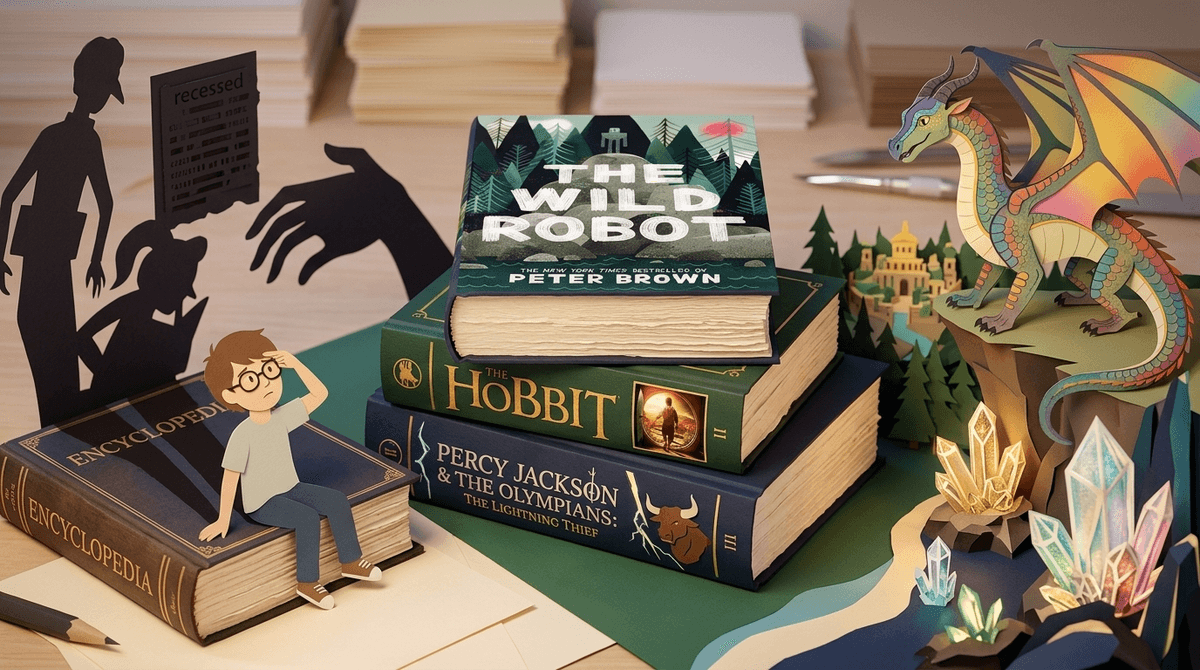
- The Wild Robot by Peter Brown (High concept, safe themes)
- Wings of Fire (Complex world-building, age-appropriate stakes)
- Percy Jackson (The gold standard for "fast and smart")
- Keeper of the Lost Cities (Massive page count, middle-grade emotional level)
Find a reading list based on your kid's specific interests
It’s the ultimate humble brag at the playground: "Oh, Maya is already reading at a 10th-grade level."
We get it. It’s exciting when your kid is a "word nerd." But here is the no-BS reality: reading level is a measure of vocabulary and syntax, not emotional maturity.
A child can have the technical skill to read a 500-page novel about a messy divorce or a dystopian regime where children are forced to hunt each other, but they lack the "mental furniture" to house those concepts. When the technical ability outpaces the emotional capacity, we see "High Lexile, Low Life Experience" syndrome.
This usually manifests in two ways:
- The "Spicy" Pipeline: They end up reading adult romance because it’s the only thing "challenging" enough in the library.
- The Existential Dread Loop: They read heavy, dark themes (climate collapse, terminal illness, war) and end up with anxiety that they aren't equipped to process.
If your kid has a phone or even just spends time at a Barnes & Noble, they are being marketed to by BookTok.
The problem? BookTok doesn't care about age ratings. It cares about "vibes" and "tropes."
Right now, the biggest trend is "Romantasy"—a mix of romance and fantasy. Titles like A Court of Thorns and Roses (ACOTAR) by Sarah J. Maas are everywhere. To a 12-year-old who loves Harry Potter, the cover looks like a cool fairy story.
The Reality Check: ACOTAR is essentially "smut with a plot." It features explicit sexual content, graphic violence, and themes of sexual coercion. It is not for middle schoolers.
The same goes for the "CoHo" (Colleen Hoover) craze. Books like It Ends With Us or Verity deal with domestic abuse, graphic trauma, and very adult psychological manipulation. These are "New Adult" or purely "Adult" books. If your 6th grader is asking for them because "everyone in my grade is reading it," they are likely being influenced by the "Ohio" of the book world—viral trends that aren't actually meant for them.
There is a subgenre called dark romance that is currently trending with younger and younger readers.
These books often feature "morally gray" characters, but in this context, "morally gray" usually means "the love interest is a kidnapper or an abuser." For a precocious reader who understands the words but doesn't understand the red flags of a toxic relationship, this content can be genuinely damaging to their developing view of consent and healthy boundaries.
Pro-tip: If the book cover has a cartoonish, pastel, "cute" illustration but the back blurb mentions "shattering secrets" or "spicy" encounters, do a vibe check. Authors like Hannah Grace (who wrote Icebreaker) often have covers that look like Young Adult (YA) fiction but contain content that is strictly 18+.
For some kids, the problem isn't "spice"—it's the weight of the world.
Gifted kids are prone to "asynchronous development." They might be able to understand the complex geopolitics of a book like 1984, but then they can't sleep for a week because they’re terrified of government surveillance.
We see this a lot with "Climate Fiction" or "Dystopian YA." These books are great for building critical thinking, but if your kid is already prone to anxiety, reading about the end of the world can be a one-way ticket to a panic attack.
How to handle the "Dread"
- Co-read: If they want to read something heavy, read it with them.
- The "Vibe Check" Question: Ask them: "How does this book make your stomach feel?" If they say "tight" or "weird," it might be time to pivot to something lighter.
- Balance the Diet: For every "heavy" book, require one "palate cleanser"—something funny or light like Wings of Fire or even a graphic novel like Big Nate.
If your kid is bored with "baby books" but you aren't ready for them to read about faerie fertility rites, try these:
The "World Builders" (Ages 9-13)
These series have complex plots and huge page counts but keep the emotional stakes manageable.
- Keeper of the Lost Cities: It’s like Harry Potter meets X-Men. The books are massive (great for fast readers) but the romance is very "innocent crush" level.
- The Wild Robot: Beautifully written, high-concept science fiction that explores what it means to be alive without being traumatizing.
- Wings of Fire: There are 15+ books in this series. It has war, politics, and complex characters, but they’re all dragons. It provides a safe distance from "human" trauma.
The "Smart & Safe" Classics
- The Hobbit: Challenging vocabulary, epic adventure, zero "spice."
- The Chronicles of Narnia: Classic for a reason. High-level language with clear moral boundaries.
The "Fast-Paced" Middle Grade
- Percy Jackson and the Olympians: Rick Riordan is the king of this. It’s smart, funny, and respects the reader's intelligence without exposing them to adult themes.
Check out our full guide on "Cozy Books" for advanced readers
If your kid is a voracious reader, you probably can't keep up. You can't read every 400-page book they pick up.
Here’s the Screenwise strategy:
- Check the Wise Score: Use our app to see what other intentional parents are saying about the "emotional load" of a book.
- The "Middle Page" Test: Flip to a random page in the middle of the book. If you see words like "throbbing," "lust," or "shattered," or if there's a graphic description of a murder, it’s probably a "not yet."
- Use Common Sense Media: They are great for "the stats" (how many swear words, how much violence).
- Talk about BookTok: Ask your kid, "What books are trending on your feed right now?" If they mention Fourth Wing or anything by Colleen Hoover, that's your cue to step in.
When you have to say "not yet" to a book, don't make it a "ban." Precocious kids hate being told they aren't "smart enough" for something.
Try this: "I know you can read all the words in this book, but the themes in here are for people who have navigated adult relationships. It’s not that you aren't smart enough; it’s just that your brain is still building the parts it needs to process this stuff properly. Let’s find something that challenges your vocabulary without making you feel like you need a therapist."
A high reading level is a superpower, but every superhero needs a mentor. Your job isn't to stop them from reading; it's to curate the experience so they don't lose the "joy" of reading by being overwhelmed by the "darkness" of adult content too soon.
Keep the dialogue open, watch out for the pastel-colored "spicy" traps, and remember that it’s okay for a 10-year-old to just read about dragons for a while.