

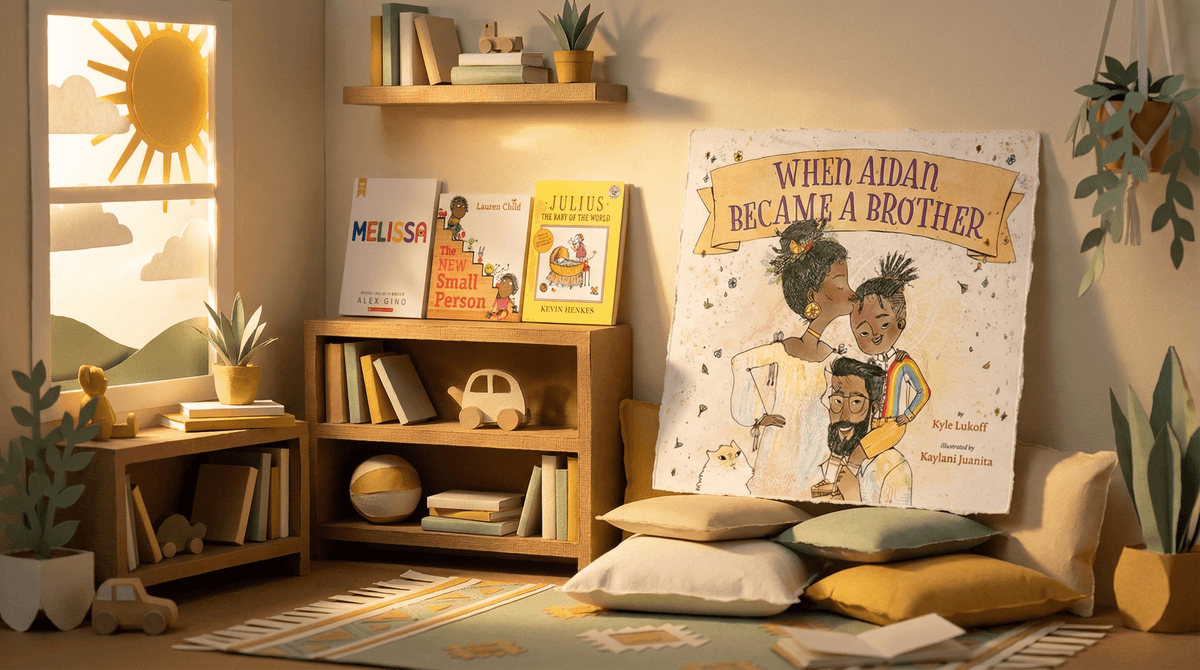
When Aidan Became a Brother is a groundbreaking picture book by Kyle Lukoff that tells the story of a transgender boy preparing to become a big brother. When Aidan was born, everyone thought he was a girl—but Aidan knew better. Now he's excitedly preparing for his new sibling's arrival, thinking about all the things he'll teach them and what kind of big brother he wants to be.
The book, which won a Stonewall Book Award, is beautifully illustrated by Kaylani Juanita and handles its subject matter with the matter-of-fact warmth that makes it accessible to young readers. It's not a book about being transgender—it's a book about becoming a big sibling that happens to feature a transgender protagonist. That distinction matters.
Here's the thing about kids' literature in 2024: representation isn't a "nice to have" anymore. Kids are encountering diverse families and identities everywhere—in their classrooms, on YouTube Kids, in shows like The Owl House, and yes, even in Roblox communities where they're building worlds and expressing themselves.
"When Aidan Became a Brother" does something really special: it normalizes both transgender identity and the universal experience of welcoming a new sibling. For families with a new baby on the way, it's a conversation starter about what being a big sibling means. For families with transgender kids or family members, it's a mirror that says "your story matters." And for all families, it's a window into experiences different from their own.
The book also subtly addresses something many parents worry about: how do we talk about gender identity with young kids without it being weird or confusing? Lukoff shows us—you talk about it the same way you talk about anything else. Naturally, warmly, and with the assumption that kids can handle age-appropriate truth.
Ages 3-7: This is the sweet spot for this book. The story is simple enough for preschoolers to follow, with gorgeous illustrations that hold attention. Kids this age are concrete thinkers—they accept that Aidan is a boy because Aidan says he's a boy, the same way they accept that Daniel Tiger is a tiger even though he wears a watch.
Ages 8-10: Older elementary kids can engage with the book on a deeper level, discussing the emotions around family transitions and what it means to be yourself. They might have more questions about gender identity, which is developmentally appropriate. Here's how to navigate those conversations .
.
Ages 11+: While the picture book format skews younger, middle schoolers dealing with identity questions or preparing for a new sibling might appreciate its straightforward approach. Pair it with chapter books like George by Alex Gino for more complex narratives.
It's Not About "Teaching" Kids to Be Trans
Let's address the elephant in the room. Some parents worry that books like this will "confuse" kids about gender. But here's what research actually shows: representation in media doesn't create identity, it creates understanding. Kids who are transgender will be transgender regardless of what books they read. Kids who aren't transgender will simply learn that different kinds of people exist—which, let's be honest, is just... accurate information about the world.
The Sibling Angle Is Universal
Strip away the gender identity piece (though please don't actually do that), and you have a book about a kid who is excited and nervous about becoming a big sibling, who wants to do things right, and who is thinking about what kind of family member they want to be. That's every kid preparing for a new baby. The book beautifully captures the mix of anticipation and uncertainty that comes with a family transition.
It Sparks Real Conversations
One of the best things about this book is how it opens up dialogue. Kids might ask:
- "What does it mean that everyone thought Aidan was a girl?"
- "Can people choose if they're a boy or girl?"
- "What if the baby doesn't like what Aidan teaches them?"
These are good questions—the kind that help kids develop empathy, critical thinking, and an understanding that people's experiences differ from their own. Need help navigating these conversations?
Context Matters for Your Family
You know your kid and your family values best. Some families will read this as part of their regular rotation of diverse books. Others might specifically seek it out when welcoming a new baby or when a family member is transitioning. Some families might read it because their child is questioning their own gender and needs to see themselves in stories.
All of these reasons are valid. The book works on multiple levels, which is the mark of good children's literature.
For families expecting a baby: Focus on the big sibling aspects. "What do you think you'll want to teach the new baby? What kind of big brother/sister do you want to be?" Let the gender identity piece be matter-of-fact background information, just like you'd note that a character has red hair or likes dinosaurs.
For families exploring gender identity: Let your child lead. They might have lots of questions, or they might just enjoy the story. Follow their curiosity. The book models parents who listen to and affirm their child, which is a beautiful message regardless of your family's specific situation.
For families building empathy and understanding: Connect it to other differences kids encounter. "Just like some kids need glasses to see clearly, Aidan knew something about himself that other people couldn't see at first. What do you think it felt like when his parents understood?"
"When Aidan Became a Brother" is a tender, thoughtful book that handles both new sibling dynamics and transgender identity with grace. It's not preachy, it's not complicated, and it's not trying to push an agenda—it's just telling a story about a kid who's excited to be a big brother.
In our digital age, where kids are encountering diverse perspectives everywhere from TikTok to Discord servers, having age-appropriate, thoughtful resources like this book helps ground conversations in empathy rather than confusion or fear.
Whether you're reading it because you're expecting a baby, because you want to expose your kids to diverse stories, or because your family is navigating gender identity questions, this book offers a warm, accessible entry point into important conversations.
- Check it out from your library or purchase it from your local bookstore
- Pair it with other sibling books like The New Small Person by Lauren Child or Julius, the Baby of the World by Kevin Henkes
- Explore more inclusive children's literature through resources like the Stonewall Book Awards list
- Talk to your child's teacher or librarian about other books that might resonate with your family's needs right now
Remember: good parenting isn't about having all the answers. It's about being willing to explore questions together with curiosity and love. This book is a great tool for doing exactly that.