

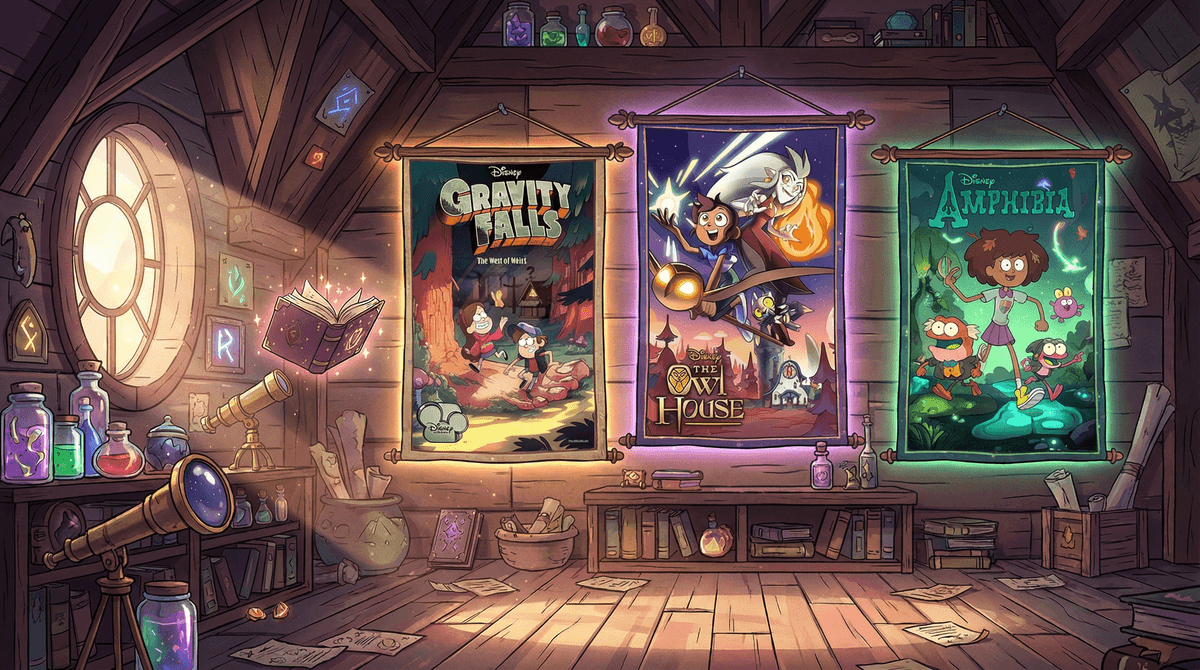
The Owl House is an animated fantasy series that ran on Disney Channel from 2020-2023. Think Harry Potter meets Gravity Falls with a healthy dose of found family vibes and some genuinely impressive LGBTQ+ representation. The show follows Luz Noceda, a 14-year-old human girl who stumbles into the Boiling Isles (a demon realm) and becomes an apprentice to Eda the Owl Lady, a rebellious witch.
Here's what makes it different from your typical Disney fare: it's actually serialized with ongoing plot arcs, character development that matters, and stakes that feel real. The animation quality is gorgeous, the humor lands for both kids and adults, and creator Dana Terrace built a world that feels genuinely thought-through rather than slapped together for toy sales.
The show wrapped up with a shortened third season (more on that drama later), so you're looking at 43 episodes total across three seasons. Each episode runs about 22 minutes, making it very bingeable for kids who get hooked.
The representation is groundbreaking for Disney. The main character Luz is bisexual and ends up in a same-sex relationship that's treated as... completely normal. Not a "very special episode" thing, not subtext you have to squint at – just a sweet teenage romance that happens to be between two girls. For LGBTQ+ kids and kids with LGBTQ+ family members, this matters a lot. For all kids, it normalizes diverse relationships in a way that feels organic rather than preachy.
The characters are genuinely well-written. Luz isn't just "quirky protagonist #47" – she's neurodivergent-coded (very ADHD energy), struggles with fitting in, and her journey isn't about changing herself to be "normal." Eda is a disabled character dealing with a chronic magical condition. King is... well, King is hilarious. The found family dynamic between these three is the emotional core of the show.
It takes kids seriously. The show deals with themes of identity, belonging, parental expectations, disability, and chosen family without dumbing things down. There are genuine emotional moments that might make you tear up during "kids' TV." But it balances this with humor that actually lands and action sequences that are legitimately cool.
The world-building is creative. The magic system makes sense, the Boiling Isles feel like a real place with history and culture, and the show rewards paying attention to background details.
Ages 8-10: This is probably the sweet spot lower end, though some mature 7-year-olds could handle it. There's fantasy violence (magic battles, scary creatures), some genuinely creepy imagery, and emotional themes that younger kids might not fully grasp. The "monster of the week" episodes in season one can get a bit intense – we're talking body horror elements, characters getting turned to stone, that kind of thing.
Ages 10-14: Prime demographic. Old enough to appreciate the character development and ongoing plot, young enough to still be in that fantasy-adventure sweet spot. The LGBTQ+ themes are presented in an age-appropriate way – it's a middle school romance, not anything explicit.
Ages 14+: Teens still love it, especially if they're into animation, fantasy, or representation. Some might feel it skews slightly young in the first half of season one, but the show matures as it goes.
Content heads up:
- Fantasy violence and peril throughout
- Some body horror and transformation sequences that can be unsettling
- Parental conflict and family dysfunction themes
- Characters dealing with chronic conditions/disability
- Death of parental figures (backstory, not graphic)
- Possession and mind control in later seasons
If your kid handled Gravity Falls or Avatar: The Last Airbender, they can handle The Owl House. If they got nightmares from Coraline, maybe wait a year or two.
The shortened final season is a whole thing. Disney cut the third season from a full 20 episodes to three 44-minute specials. The rumor mill says it was because of the show's LGBTQ+ content, though Disney officially cited it not fitting their brand. Your kids might have feelings about this, especially if they're in online fan spaces where this is discussed extensively.
The fandom is VERY active. Like most animated shows with good representation, The Owl House has inspired tons of fan art, fan fiction, and online discussion. This is mostly wholesome – kids drawing characters, making theories, celebrating representation. But as with any fandom, there are corners of the internet you'll want younger kids staying away from .
.
It might spark important conversations. If your kid hasn't asked about LGBTQ+ relationships yet, this show might be the catalyst. The good news? The show models these conversations beautifully. Characters' identities are respected, coming out moments are handled with care, and it's all very... sweet and age-appropriate. You can use the show as a jumping-off point for discussing diversity and inclusion.
The neurodivergent representation resonates deeply. Many ADHD and autistic kids see themselves in Luz and other characters. If your kid is neurodivergent, they might feel particularly connected to the show's themes about being different and finding where you belong.
It's actually finished. In an era of endless streaming content and shows that get canceled on cliffhangers, The Owl House has a complete story with a proper ending. This is honestly refreshing – your kid can watch it through and get closure.
The Owl House is one of the best animated shows of the past few years, full stop. It's well-written, gorgeously animated, emotionally intelligent, and yes, it has representation that matters to a lot of kids (and should be normalized for all kids).
Is it perfect for every family? No. If you're very sensitive to fantasy violence or magic content, this isn't your show. If you're not ready to have conversations about LGBTQ+ relationships with your 8-10 year old, you might want to wait (though honestly, the show handles it better than most parents could).
But for most families with kids 8+? This is quality content. The kind of show that might actually teach your kid something about empathy, acceptance, and being true to yourself while entertaining them with cool magic battles and genuinely funny jokes.
Plus, it's only 43 episodes. You could co-watch the whole thing in a reasonable amount of time and actually know what your kid is talking about when they reference it for the 47th time this week.
Start with Season 1, Episode 1 and watch it together if your kid is on the younger end. Gauge their reaction to the fantasy elements and see if it feels like a good fit.
Check out the show's Disney+ page – all three seasons are streaming there.
If your kid loves it, you might want to explore similar shows like Gravity Falls, Amphibia, or Avatar: The Last Airbender.
Need more personalized guidance about what's age-appropriate for your specific kid? See if The Owl House is appropriate for your child – we can help you figure out if this is the right fit for your family.