

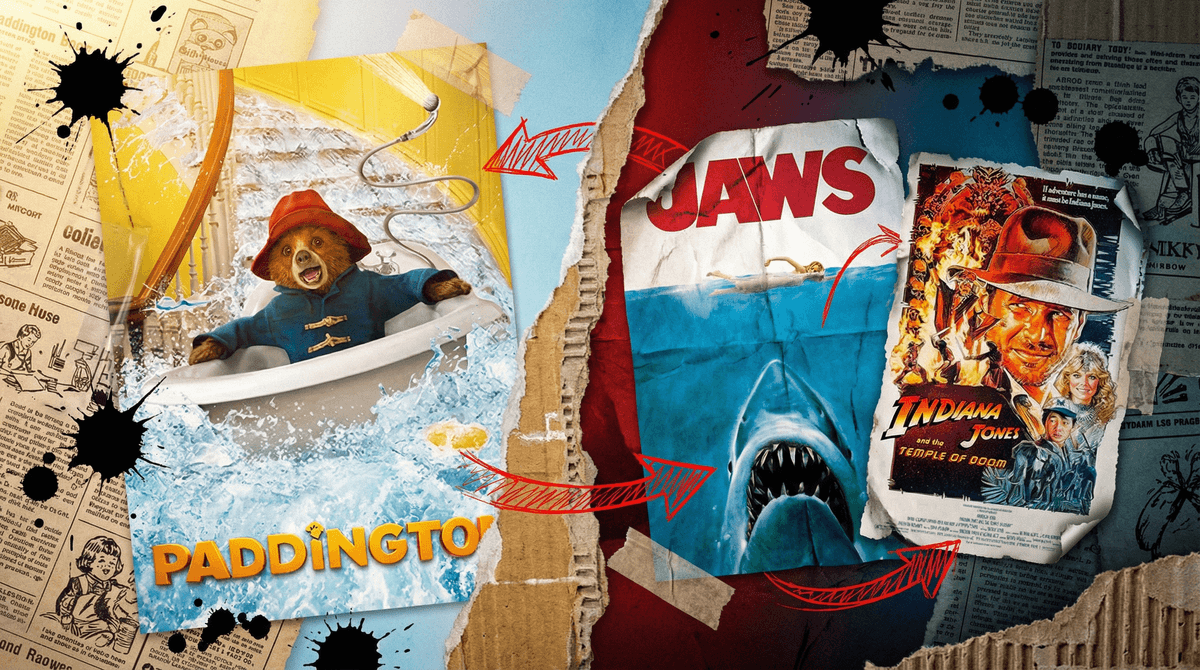
What the PG Movie Rating Really Means (and Why It Covers Everything from Paddington to Jaws)
The PG rating is basically the "good luck figuring this out" of movie ratings. It's the broadest, most inconsistent rating in the entire MPAA system, and honestly? It can be maddening.
Paddington is PG. Jaws is PG. The Dark Crystal is PG. These are not the same viewing experience for a 7-year-old, but they all get the same rating. Let's break down what's actually going on here.
PG stands for "Parental Guidance Suggested" — which is the MPAA's way of saying "we're punting this decision to you, parents." The official definition is that some material may not be suitable for children, and parents should investigate further before letting their kids watch.
Here's the thing: PG was created in 1984 after parents lost their minds when Indiana Jones and the Temple of Doom featured a still-beating heart being ripped out of someone's chest. Before that, movies either got a G rating or jumped straight to R. There was nothing in between.
So PG-13 was born for Temple of Doom and movies like it, and PG became this weird catch-all for "more than G, less than PG-13" — which is an absolutely massive range of content.
The PG rating has existed since 1972 (before the PG-13 split), which means older movies were rated by completely different standards. Jaws got a PG in 1975, and if you've seen it, you know there are legitimately traumatizing scenes in that movie. Today, it would absolutely get a PG-13, maybe even an R.
But here's where it gets weird: the MPAA doesn't re-rate old movies. So Jaws is still PG, even though it's scarier than half the horror movies that get PG-13 ratings today.
Modern PG movies can include:
- Mild language (think "hell," "damn," "crap")
- Some violence (cartoon violence, fantasy battles, mild peril)
- Brief scary images (monsters, intense moments, sad scenes)
- Crude humor (fart jokes, mild innuendo that goes over kids' heads)
- Thematic elements (divorce, death, bullying)
The range is WILD. The Lego Movie is PG. Gremlins is PG. One is a colorful adventure about plastic toys. The other involves creatures melting in microwaves.
Instead of trusting the PG label, here's what to actually check:
1. When was it made? Pre-1984 PG movies are a total crapshoot. Assume they might be more intense than you expect.
2. What's the actual content warning? The MPAA includes a brief descriptor with every rating. "Rated PG for mild thematic elements" is very different from "Rated PG for action violence and peril."
3. What's your kid's sensitivity level? Some 6-year-olds can handle Jurassic Park (PG-13, but close enough). Some 10-year-olds will have nightmares from Coraline (PG). You know your kid better than a rating board does.
4. Check Common Sense Media or Screenwise
Both platforms give you actual details about what's in the movie — not just a vague rating. Look up specific movies before committing to family movie night.
Here's a rough guide, but again — your kid is the expert on what they can handle:
Ages 5-7: Stick to modern PG movies with "mild" descriptors. Think Paddington, Moana, Encanto. Avoid older PG movies without screening them first.
Ages 8-10: Most modern PG movies are fair game. Start testing the waters with older classics, but watch together the first time. The Goonies and E.T. are beloved, but they have genuinely scary moments.
Ages 11+: PG movies should be pretty comfortable territory, though some kids are still sensitive to specific content (jump scares, animal death, etc.). This is also the age where you might start introducing PG-13 movies on a case-by-case basis.
Here's what consistently surprises parents:
- Cartoon violence is basically unlimited. Kung Fu Panda has extensive fight scenes, but it's PG because it's animated.
- Innuendo flies under the radar. Lots of PG movies include jokes clearly meant for adults that kids won't get. The MPAA is fine with this as long as it's not explicit.
- Death and grief are totally allowed. The Lion King, Coco, Up — all PG, all involve processing some heavy emotional content.
- Scary imagery is subjective. What's "mildly scary" to a rating board might be "nightmare fuel" to your 6-year-old.
The PG rating is basically a suggestion that you do your homework. It's not a guarantee of anything specific — it just means "this isn't for toddlers, and it's not graphic enough for PG-13."
The best approach: Treat PG as a starting point, not a final answer. Read the content descriptors, check parent reviews, and when in doubt, watch it yourself first or watch it together. Your kid's comfort level matters way more than what a rating board decided in a conference room.
And if you're trying to figure out whether a specific movie works for your family, See if a specific movie works for your family — we can help you figure out if it's more Paddington or more Jaws.
- Check specific movies on Screenwise media pages for detailed content breakdowns
- Create a family movie list based on your kids' actual sensitivities, not just ratings
- Watch questionable movies first — 90 minutes of your time beats a week of nightmares
- Talk to your kids about what they found scary or uncomfortable after watching something new. It helps you calibrate for next time.
The rating system isn't perfect, but with a little extra research, you can find the movies that actually work for your family — not just the ones with the "right" letter on the poster.