

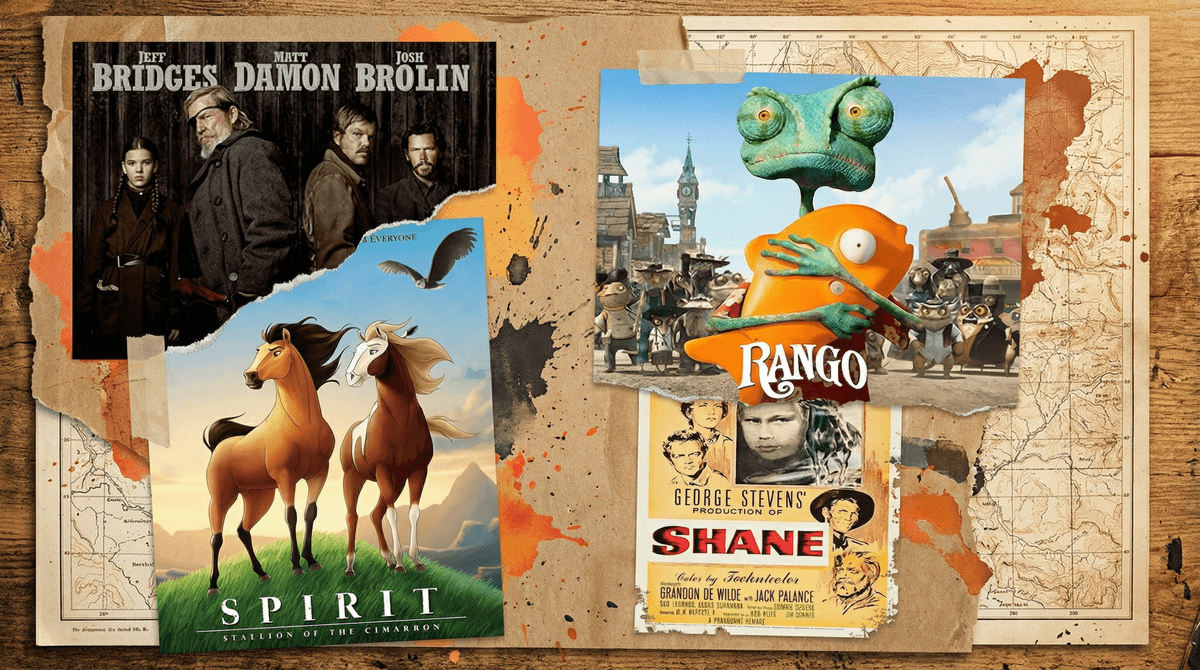
Cowboys, Outlaws, and Life Lessons: A Parent's Guide to Family Westerns
Westerns have been around since the dawn of cinema, but let's be real: a lot of classic westerns are... problematic. We're talking one-dimensional Native American characters (or worse), women as props, glorified violence, and a very narrow definition of heroism that usually involves a white guy with a gun solving everything.
But here's the thing: the Western genre at its best is actually incredible for families. Stories about frontier justice, moral courage, community-building, and characters navigating a lawless world where they have to decide what's right? That's gold. The landscape cinematography alone can spark conversations about nature and history. And when done well, Westerns tackle big themes—loyalty, revenge, redemption, what it means to be brave when there's no authority to tell you what to do.
The trick is finding the ones that trade outdated tropes for actual storytelling.
Moral complexity without being preachy. Good Westerns don't have easy answers. The hero makes hard choices. The "bad guy" sometimes has a point. This is exactly the kind of nuanced thinking we want kids developing.
History that doesn't feel like homework. Westerns can open up conversations about westward expansion, Indigenous peoples, immigration, the role of law enforcement, and what life was like before smartphones (gasp). Just be prepared to add context that the movie might gloss over.
Action with stakes. Unlike a lot of modern action movies where characters respawn or shake off injuries, Westerns tend to make consequences feel real. A gunfight matters. A broken promise matters. This can actually be less desensitizing than CGI explosion fests.
Strong themes of honor and integrity. Even flawed Western heroes usually operate by some code. Keeping your word. Protecting the vulnerable. Standing up to bullies. These aren't bad values to explore.
Ages 6-9: Gentle Introductions
Start with lighter fare that has Western vibes without the heavy violence or moral ambiguity.
- Spirit: Stallion of the Cimarron (2002) - Animated, gorgeous, and about a wild horse. Minimal dialogue, big themes about freedom. The Netflix series Spirit Riding Free is even gentler.
- Rango (2011) - Animated chameleon in a Western town. Surprisingly sophisticated humor, some intense moments, but ultimately a story about finding courage and community.
- Home on the Range (2004) - Disney's underrated Western with singing cows. Is it high art? No. Will your 7-year-old enjoy it? Probably.
Ages 10-13: Real Stakes, Real Themes
This is the sweet spot for introducing "true" Westerns with some grit.
- True Grit (2010, Coen Brothers version) - A 14-year-old girl hires a marshal to track her father's killer. She's tough, smart, and the moral center of the story. Some violence, but not gratuitous. This one's a masterclass in a young person demanding to be taken seriously.
- The Magnificent Seven (2016 remake) - More diverse cast than the original, about a group protecting a town from a corrupt industrialist. Action-heavy but with clear good vs. evil stakes.
- Hidalgo (2004) - More adventure than traditional Western, about a long-distance horse race. Some intense scenes but ultimately about perseverance and respect.
Ages 14+: The Complex Stuff
Teens can handle moral ambiguity and historical complexity.
- The Revenant (2015) - Okay, this one's INTENSE and definitely for older teens only (rated R for good reason), but it's a survival story that doesn't romanticize the frontier. Watch together and talk about it.
- Unforgiven (1992) - Clint Eastwood's deconstruction of Western violence. It's deliberately anti-heroic and would be great for a mature 16+ with context about how it's challenging the genre itself.
- Bone Tomahawk (2015) - Actually, scratch this one. It's got some genuinely disturbing violence. I'm including it here as a warning: just because something is labeled a "Western" doesn't mean it's family viewing. Read reviews first.
Outdated portrayals of Native Americans. This is the big one. Many classic Westerns either erase Indigenous people entirely or present harmful stereotypes. If you're watching an older Western, plan to pause and discuss. Learn more about how to talk with kids about representation in media .
.
Gender roles from 1873. Women in Westerns are often the schoolteacher, the saloon girl, or the rancher's daughter who needs saving. Look for movies that subvert this (True Grit, The Ballad of Buster Scruggs "The Gal Who Got Rattled" segment).
Glorified violence. Some Westerns make gunfights look consequence-free and cool. Others show the real cost. Know which kind you're watching.
Historical accuracy (or lack thereof). Westerns are mythology, not documentary. They're set in a 30-year period (roughly 1865-1895) but often blend decades and invent liberally. Use them as a starting point for learning real history, not the endpoint.
Pause and ask questions. "Why do you think he made that choice?" "What would you do?" "Do you think that's how it really was?"
Follow up with real history. Watch a Western about the transcontinental railroad? Look up photos of the actual workers (largely Chinese immigrants whose contributions were erased). Watching a movie with a Native American character? Find books or documentaries by actual Native voices.
Compare old and new. Watch Shane (1953) and then Logan (2017), which deliberately references it. Talk about how the Western hero myth has evolved.
Talk about justice vs. revenge. This is THE central Western theme. When is it right to take matters into your own hands? What's the difference between justice and vengeance?
Westerns aren't automatically wholesome family entertainment just because they're "old-fashioned." But the right ones can spark incredible conversations about courage, community, moral complexity, and history—conversations that are honestly harder to have with most modern blockbusters.
Start with the animated or lighter options for younger kids. Move into the grittier, more complex stories as they get older and can handle ambiguity. Always be ready to add context about what the movie gets wrong. And if you're not sure about a specific title, check out our media reviews or see if a western is age-appropriate for your kid.
The frontier might be closed, but the conversations these movies open? Those are still wide open.
- Not sure where to start? Check out our guide to the best Western movies for different age groups
- Want to expand beyond Westerns? Explore adventure movies that teach resilience
- Curious about historical accuracy? Learn how to use movies as a springboard for real history lessons