

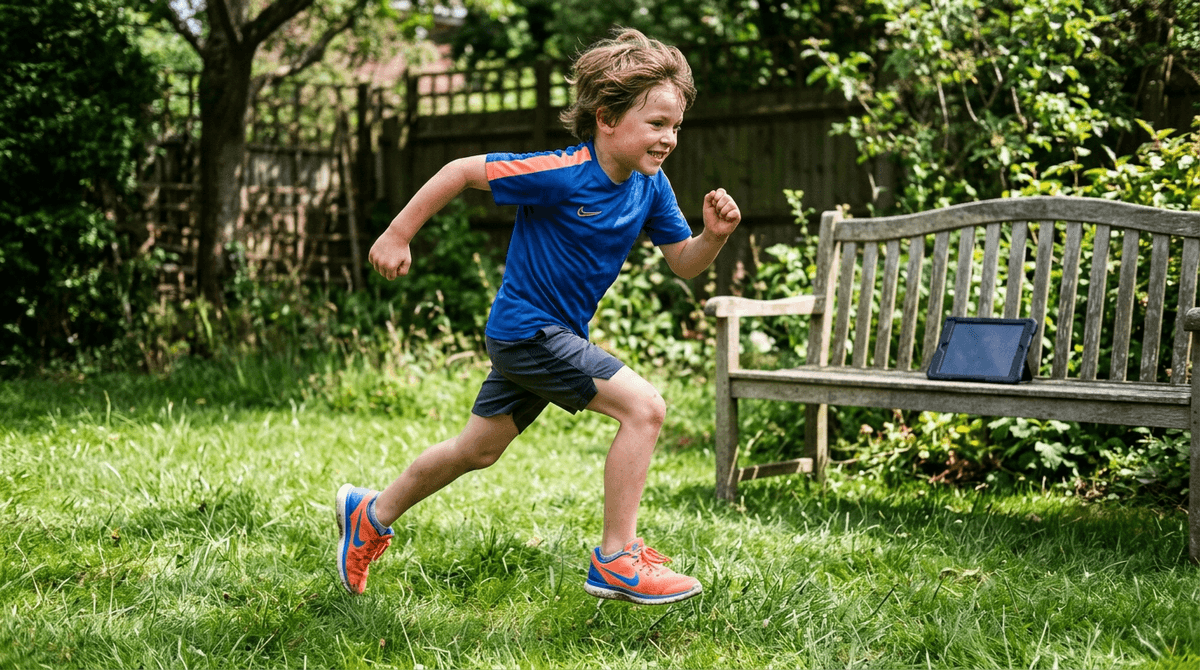

Getting preschoolers to sweat through active, high-energy play matters far more for their physical fitness than strictly monitoring their daily screen minutes. Active parental encouragement is the most powerful catalyst to get them moving.
Parents should prioritize high-energy, vigorous play over obsessing about modest screen time. Preschoolers who engage in moderate-to-vigorous physical activity show significantly better physical fitness test scores, and direct parental involvement—like playing together or providing sports gear—is the single best driver of that movement.
Health organizations urge parents to manage a demanding daily triad for young children: 180 minutes of activity, under 60 minutes of screen time, and 10 to 13 hours of sleep. Hitting all three targets feels like a full-time job, and nearly nine out of ten families fail to hit the mark.
This research gives you permission to triage. If you have limited energy at the end of the day, driving your child to run, jump, and break a sweat delivers a far higher payoff for their physical health than fighting over an extra 20 minutes of TV.
Public health guidelines routinely promote balanced 24-hour routines, but few studies measure which specific habit actually dictates physical fitness in early childhood. Researchers set out to evaluate how sleep, screen time, and intense exercise interact, helping families focus on the single behavior that yields the highest return on investment.
Fewer than one in eight preschoolers met all three recommended daily health guidelines, with physical activity proving to be the hardest metric for families to hit.
- Vigorous play is the primary driver: Moderate-to-vigorous physical activity had the strongest positive link to overall physical fitness in young children.
- Modest screen time isn't the primary enemy: Average screen time (about 41 minutes daily) showed no measurable negative impact on children's physical fitness scores.
- Parent support changes the outcome: Children whose parents actively played with them or provided basic sports equipment moved significantly more and spent less time sitting.
Simply restricting screen time does not automatically make a preschooler fit. Taking away a tablet often results in quiet, low-energy floor play, which does little for cardiovascular or motor skill development. The real engine of fitness isn't passive screen reduction—it's active substitution that gets a child's heart rate elevated.
This study evaluated 2,386 preschoolers across four provinces in China, meaning cultural routines and schooling environments could differ from those in other regions. Additionally, researchers relied on parent-reported surveys for activity and screen habits, which are subject to recall errors, and the observational design shows strong correlations rather than absolute proof of cause and effect.
- If you must choose between enforcing strict screen caps or going to the playground… choose the playground, because vigorous outdoor play directly improves physical fitness while modest screen doses showed no clear impact on fitness scores.
- If your child tends to play quietly indoors all afternoon… join in the game or supply active play gear like balls or jump ropes, as direct parental engagement strongly correlates with higher physical activity levels.
- If you feel overwhelmed by missing official daily health targets… focus your energy strictly on getting your child to run and sweat, as hitting the physical activity mark offers the greatest overall health return.
Stop stressing about perfect compliance with every daily health rule and focus on getting your preschooler sweating. Your active participation in their play is the most effective tool you have to build their physical fitness.
Sun S, Sun W, Liao S et al. (2026). Associations of Family Physical Activity Support and 24-Hour Movement Behaviors with Physical Fitness in Preschool Children: A Focus on MVPA. Healthcare (Basel, Switzerland). doi:10.3390/healthcare14121668 — pubmed.ncbi.nlm.nih.gov