

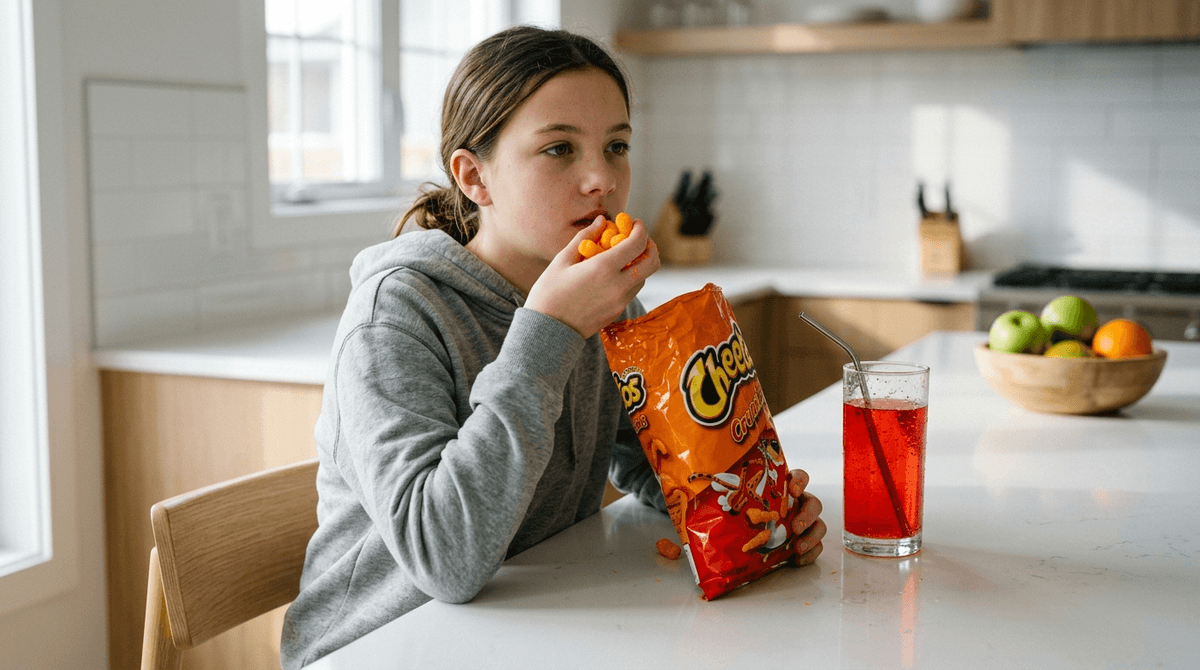

Ultra-processed foods now account for nearly two-thirds of a typical child's daily calories, driving measurable increases in cavities, asthma, and metabolic risk factors. Cutting back on routine packaged items and reclaiming whole foods early in childhood provides a powerful buffer against chronic health issues.
Ultra-processed foods dominate modern pediatric diets, significantly elevating a child's risk for early obesity, dental cavities, and allergic conditions like asthma.
What children eat during their first few years sets metabolic and immune baselines that can persist for decades. When packaged snacks, boxed meals, and sugary drinks become daily defaults, kids absorb high levels of industrial additives and refined sugars while missing out on critical dietary fiber and essential micronutrients.
Swapping even a small portion of daily processed snacks for whole foods yields immediate benefits. Reducing routine intake lowers a child's long-term odds of developing insulin resistance, high blood pressure, and chronic cavities.
Food manufacturers design packaged items to be hyper-palatable, long-lasting, and cheap, making ultra-processed foods the path of least resistance for busy families. With pediatricians seeing an unprecedented rise in early-onset metabolic disorders and allergic diseases, researchers gathered global dietary tracking data to evaluate how early exposure to industrial foods reshapes long-term physical health.
Ultra-processed items make up roughly two-thirds of daily calories for American children and teenagers.
- Dental risks jump significantly. High consumption of ultra-processed foods increases a child's risk of dental cavities by 71 percent.
- Pregnancy diets establish early baselines. Higher intake of ultra-processed items during pregnancy is linked to increased body fat and altered neurodevelopment in infants.
- Infant feeding patterns predict future habits. Weaning off breastfeeding before three months or introducing solid foods before four months strongly correlates with higher processed food intake later in childhood.
- Metabolic and immune risks stack up. Heavy intake is consistently associated with metabolic syndrome, early cardiovascular markers, and skin conditions like eczema.
Front-of-package marketing claims frequently act as health halos. Products labeled "plant-based," "organic," or "vegetarian" often undergo the exact same high-heat processing and additive loading as standard packaged snacks.
Screen habits heavily reinforce these dietary patterns. Children consume significantly more ultra-processed food while watching screens, driven by aggressive targeted advertising and distracted, habitual eating.
This synthesis relies on a review of observational studies and parent-reported dietary recalls, which are inherently subject to memory errors and underreporting. While these findings demonstrate a strong link between processed diets and poor pediatric health, observational data cannot definitively prove that ultra-processed foods cause every associated disease independently of other lifestyle factors.
- If you are packing daily school snacks… Swap out packaged fruit chews, granola bars, and crackers for whole fruit, raw nuts, or sliced vegetables to lower your child's exposure to refined starches and emulsifiers.
- If you rely on "healthy" packaged labels… Inspect the ingredient list for long strings of industrial additives, treat "plant-based" or "organic" snacks with the same caution as conventional packaged goods.
- If your child routinely snacks in front of the TV… Move all meals and snacks to the kitchen or dining table to eliminate unconscious, screen-driven overeating.
- If you are feeding an infant or planning a pregnancy… Aim to delay solid food introduction until roughly six months of age and minimize processed food consumption during pregnancy to help establish early health baselines.
You do not need to eliminate every convenience food overnight, but reducing routine daily ultra-processed calories is one of the most effective levers you have to protect your child's health. Focus on replacing processed default snacks with whole foods starting at the dining table.
Capra ME, Donini V, Muzi M et al. (2026). Ultra-processed food consumption across early life: implications for pediatric health and disease risk. Frontiers in nutrition. doi:10.3389/fnut.2026.1806903 — pubmed.ncbi.nlm.nih.gov