

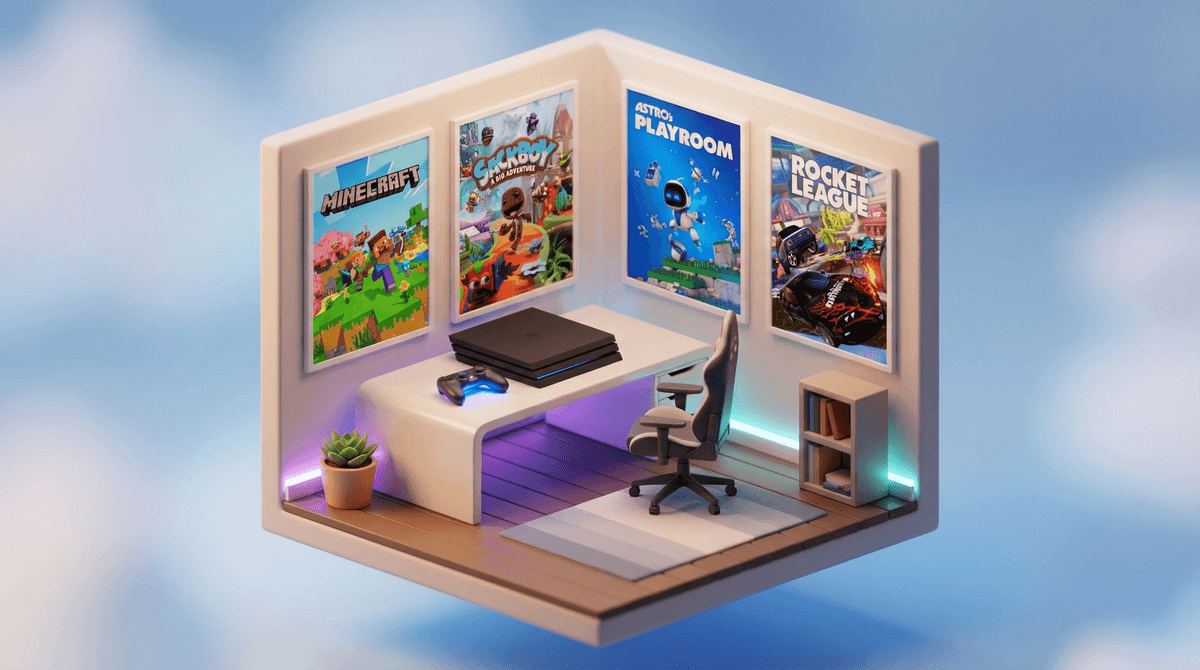
The PlayStation 4 launched in 2013, which feels like a lifetime ago in tech years. Sony's PlayStation 5 is the current console, but here's the thing: the PS4 is still wildly relevant. It's cheaper (especially used), has an enormous library of games, and honestly? Most kids don't care that it's not the latest model. They just want to play.
If you're trying to figure out what PS4 games are actually appropriate for your kids, you're in the right place. Because the PlayStation Store has thousands of games, and not all of them are created equal when it comes to age-appropriateness, content, or whether they'll drain your wallet through microtransactions.
The PS4 hits a sweet spot: it's a "real" gaming console (not a Switch, which some older kids see as "for little kids"), it's more affordable than a gaming PC, and it has games their friends are playing.
In middle school, about 40-50% of kids have access to a PlayStation console at home. By high school, that number climbs higher. The social element matters here—games like Fortnite, Minecraft, and Rocket League are where friend groups hang out after school, even if they're not physically together.
Let me save you some time: ESRB ratings are your starting point, not your finish line. A game rated E for Everyone might still have online chat features that expose kids to... let's just say "creative" language. And some T-rated games are genuinely fine for mature 10-year-olds, while others absolutely are not.
Ages 6-9: Starting Out
For younger kids, you want games that are genuinely designed for them—not just "acceptable" for them.
Astro's Playroom comes pre-installed on PS5, but if you have a PS4, look for Sackboy: A Big Adventure. It's colorful, creative, and has great co-op play for siblings or parent-kid gaming.
Spyro Reignited Trilogy is a remaster of the classic Spyro games—adorable purple dragon, zero violence, lots of collecting gems and exploring. Pure nostalgia if you played these as a kid yourself.
LEGO games (Marvel, Star Wars, Harry Potter, etc.) are the gold standard here. They're funny, cooperative, and basically impossible to fail at. The humor works for kids and adults, and they teach problem-solving without feeling educational.
Ages 10-12: The Tween Sweet Spot
This is where kids want more challenge and story, but you're (hopefully) still monitoring what they play.
Minecraft is the obvious one. On PS4, you can play in creative mode (basically digital LEGO), survival mode (more challenging), or join realms with friends. Learn how to set up proper parental controls if they're playing online.
Rocket League is soccer with cars. It's free-to-play, rated E, and massively popular. The learning curve is steep but rewarding. Main parent concern: online chat, which you can disable.
Spider-Man (2018) is rated T for Teen, but it's one of those games where the rating feels overly cautious. There's combat (you're literally fighting bad guys), but it's very comic-book style—no blood, no gore. The story is genuinely excellent, and swinging through New York is pure joy. I'd say mature 10-year-olds and up are fine here.
Stardew Valley is the cozy farming sim that has converted countless kids into agriculture enthusiasts. You plant crops, raise animals, make friends in town, and slowly build up your farm. It's chill, creative, and honestly addictive for adults too.
Ages 13+: Teen Territory
Teenagers want what they want, and a lot of it is rated M for Mature. Your job is to know what you're saying yes or no to, and why.
Fortnite is rated T and is the social hub for middle schoolers. Yes, it's a shooter. Yes, there are microtransactions (we'll get to that). But it's also cartoonish, there's no blood, and honestly? It's where their friends are. Here's how to manage Fortnite responsibly.
The Last of Us Part I & II are rated M for very good reasons—intense violence, heavy themes, and genuinely dark storytelling. These are masterpiece games, but they're not for younger teens. 16+ at minimum, and even then, know your kid. These are essentially playable HBO dramas.
God of War (2018) is also rated M, with fantasy violence and some gore. But it's also a surprisingly emotional father-son story. Again, older teens who can handle mature content.
Horizon Zero Dawn is rated T and is a much safer bet for younger teens. You play as Aloy, a young woman in a post-apocalyptic world filled with robot dinosaurs. The combat is strategic, the story is engaging, and there's a strong female protagonist.
Let's address the elephant in the room: gaming can get expensive fast if you don't set boundaries.
Free-to-play games like Fortnite, Rocket League, and Apex Legends make their money through in-game purchases—skins, battle passes, emotes. Your kid doesn't need any of it to play, but the social pressure is real. Everyone has cool skins except them, or so they'll tell you.
PlayStation Plus is a subscription ($10-15/month depending on tier) that's required for online multiplayer in most games. It also includes a rotating selection of free games each month. If your kid wants to play online with friends, you'll need this.
My recommendation: Set up a PlayStation account with parental controls that require approval for purchases. Give kids a monthly "gaming budget" they can spend on in-game items if they want, but once it's gone, it's gone. Learn more about how Robux is in fact real money —same principle applies to V-Bucks and every other in-game currency.
The PS4 has robust parental controls, but you have to actually set them up. Here's what matters:
- Age restrictions: You can block games above a certain rating from being played
- Spending limits: Require a password for purchases, or set monthly spending limits
- Online communication: Disable or restrict who can message or voice chat with your child
- Play time limits: Set daily or weekly limits on gaming time (though honestly, these are easy for kids to work around if they're motivated)
Go to Settings > Parental Controls/Family Management to set these up. It takes 10 minutes and is worth it.
Here's the truth: if your kid is playing online multiplayer, they will encounter jerks. Racism, sexism, homophobia, and just general toxic behavior are unfortunately common in online gaming spaces.
You can disable voice chat and text chat in most games. For younger kids (under 13), I'd recommend this by default. For older kids, have a conversation about what to do when they encounter toxic behavior—mute, block, report, and tell you if it's serious.
Some games have better communities than others. Minecraft on private servers with friends is generally fine. Random Call of Duty lobbies? That's the Wild West.
The PS4 is a great gaming console with an enormous library of age-appropriate games. Your job isn't to shield your kids from all gaming—it's to help them engage with it thoughtfully.
Start with these questions:
- What games do their friends play, and why?
- What's the actual content (not just the rating) of the games they want?
- What boundaries around time and money make sense for your family?
- Are they mature enough to handle online interactions, or should those be disabled?
Gaming isn't inherently good or bad. It's a medium, like books or movies. Some games are creative and challenging. Some are mindless. Some are social hubs. Some are solo experiences. Your kid will probably want to play all of them at some point.
If you want personalized recommendations based on your kid's age and interests, Get PS4 game recommendations for your kid about specific games. We can help you figure out if that M-rated game they're begging for is actually appropriate, or suggest alternatives that might work better.
And if you're trying to figure out whether a PlayStation is even the right console choice for your family, here's a breakdown of PS5 vs. Xbox vs. Switch.