

Look, if you're reading this, you've probably already hit peak screen time negotiations with your tween and are desperately searching for something—anything—that's engaging but doesn't involve a glowing rectangle. Enter: podcasts.
Podcasts for tweens are audio shows designed specifically for the 8-13 age range. They cover everything from science experiments to mystery stories to comedy sketches to history deep-dives. The best part? Your kid can listen while doing literally anything else—drawing, building Lego, walking the dog, or just staring at the ceiling contemplating the meaning of life (very on-brand for tweens).
Screenwise Parents
See allUnlike the YouTube rabbit holes or TikTok doom scrolling, podcasts are linear, finite, and—here's the kicker—they actually encourage imagination. No one's telling your kid exactly what to visualize. Their brain has to do the work.
Tweens are in this weird developmental sweet spot where they're too old for "baby stuff" but not quite ready for full adult content. Podcasts hit that middle ground perfectly.
Autonomy is everything at this age. Podcasts let them choose what they want to listen to, when they want to listen to it, and they can pause/skip/replay without anyone hovering. It feels independent and grown-up.
They're also weirdly social. Kids will share podcast recommendations like they're trading Pokémon cards. "Have you listened to the episode about the guy who got stuck in a vending machine?" becomes playground currency.
And honestly? Some of these shows are just genuinely funny and well-produced. We're not talking about educational content that feels educational in that "eat your vegetables" kind of way. These are shows that happen to teach stuff while being legitimately entertaining.
Science & Learning (That Doesn't Feel Like Homework)
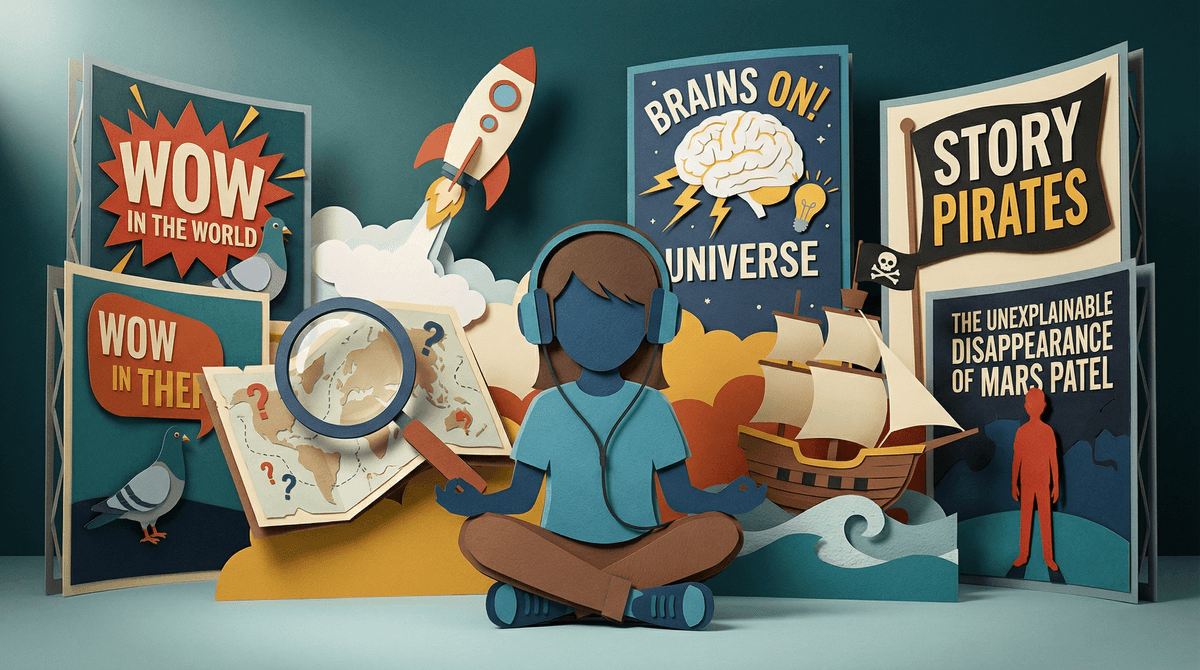
Brains On! is the gold standard. It's science questions from real kids, answered by actual scientists, with sound effects and humor that doesn't talk down to anyone. Episodes are 20-30 minutes, perfect for car rides. Ages 6-12, though honestly older kids will enjoy it too.
Wow in the World is hosted by Mindy Thomas and Guy Raz, and it's basically "wait, WHAT?" science facts turned into comedy sketches. High energy, sometimes a little chaotic, but kids eat it up. Ages 8-12.
But Why: A Podcast for Curious Kids from Vermont Public Radio answers kid questions about everything from "why is the sky blue?" to "why do people have different religions?" It's thoughtful, calm, and great for the kid who asks seventeen questions before breakfast. Ages 6-10.
Stories & Fiction
The Unexplainable Disappearance of Mars Patel is a serialized mystery with a full cast of kid actors. Think Stranger Things meets The Goonies but in audio form. Legitimately gripping. Ages 8-12.
Story Pirates takes stories written by real kids and turns them into sketch comedy. It's chaotic, silly, and validates the weird creative stuff your kid comes up with. Ages 5-10, though older kids who like improv will dig it.
The Alien Adventures of Finn Caspian is a sci-fi series about a kid living on a spaceship. Episodic, so you can jump in anywhere. Great for the kid who loves space but finds actual space documentaries boring. Ages 7-10.
History & Culture
The Past and The Curious covers historical events and figures with humor and sound effects. Episodes are short (15-20 min) and cover everything from ancient Rome to the invention of bubble gum. Ages 8-13.
Radiolab for Kids takes the investigative, sound-rich storytelling of the adult version and makes it accessible for younger listeners. Topics range from science to philosophy to "why do we have eyebrows?" Ages 8-12.
Just for Fun
Smash Boom Best is a debate show where two things face off: Pizza vs. Tacos, Cats vs. Dogs, Summer vs. Winter. A kid judge picks the winner. It's silly, teaches argumentation skills, and sparks endless family debates. Ages 6-12.
Short & Curly (from ABC Australia) tackles ethics questions like "Is it okay to lie to protect someone's feelings?" or "Should you be friends with someone just because they're lonely?" Great for the kid who loves to debate everything. Ages 7-12.
Screen Time That's Not Screen Time
Here's the thing: podcasts are technically media consumption, but they're fundamentally different from passive video watching. Audio content requires active listening and imagination. Your kid's brain is doing more work, not less.
That said, they're still consuming content, so if your family has media time limits, you'll need to decide where podcasts fall. Some families count them, some don't. There's no wrong answer—just be consistent.
Content Varies Wildly
Not all "kid podcasts" are created equal. Some are genuinely educational. Some are basically audio junk food (not necessarily bad, just... not enriching). And some podcasts marketed as "family-friendly" are really aimed at adults who don't mind if kids overhear.
Always preview first. Listen to an episode or two before handing your kid headphones. You know your kid's maturity level and your family's values better than any rating system.
The Ad Situation
Many podcasts have ads. Some are fine ("This episode is brought to you by the library!"). Some are aggressive toy commercials. Some are for adult products that are just... awkward when your 10-year-old asks "What's a mortgage?"
Look for podcasts from public radio (NPR, APM, BBC) or subscription services like Spotify Kids that have fewer or no ads. Or spring for premium versions if it's in your budget.
Listening Alone vs. Together
Podcasts are great for solo listening—long car rides, quiet time, before bed. But they're also fantastic conversation starters when you listen together. "What did you think about that episode about black holes?" can lead to genuinely interesting discussions.
Ages 6-8: Stick with shorter episodes (15-20 min), clear narratives, and lighter topics. Brains On!, Wow in the World, and Story Pirates are solid bets.
Ages 9-11: This is the sweet spot for most tween podcasts. They can handle longer episodes, serialized stories, and more complex topics. Mystery shows like Mars Patel or debate shows like Smash Boom Best work great.
Ages 12-13: Older tweens might be ready for some "young teen" content or even adult podcasts on topics they're interested in (with your guidance). Radiolab, This American Life, or Stuff You Should Know can work if you preview episodes first.
Podcasts are one of the easiest wins in the digital wellness playbook. They're engaging without being addictive, educational without being boring, and they give your kid something to do that doesn't involve begging for more Roblox time.
Start with one or two shows based on your kid's interests. Let them explore from there. And if they don't immediately love it? That's fine. Not every kid is an audio learner, and that's okay too.
But for the tweens who do connect with podcasts? You've just unlocked hours of screen-free entertainment that actually makes them smarter. That's a parenting win worth celebrating.
Start here: Pick one podcast from the list above based on your kid's interests. Download a few episodes and listen to one together on your next car ride.
Make it easy: Set them up with a kid-friendly podcast app (many families like the regular podcast app on their phone with parental controls, or dedicated apps like Spotify Kids).
Ask questions: After they listen, ask what they learned or what they thought. You don't need to quiz them—just show you're interested.
Explore together: Check out our guide to screen-free activities for more ways to balance digital and analog time.
And if you want to understand your family's overall media habits better, take the Screenwise survey—it'll help you see where podcasts fit into your bigger digital wellness picture.