

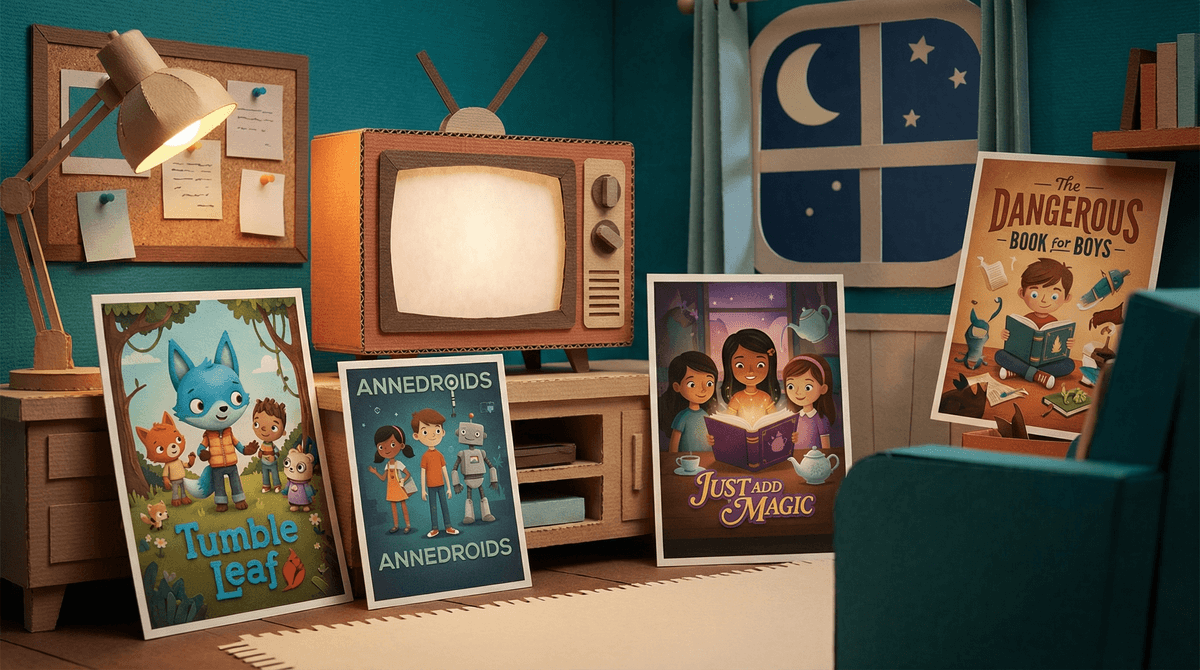
Amazon Prime Video is that streaming service you probably already have because of free shipping, and honestly? It's got a surprisingly solid lineup of family shows that don't get nearly enough credit. While Netflix gets all the hype and Disney+ has the brand recognition, Prime Video has quietly built a library that's worth actually exploring beyond The Boys and Jack Ryan.
The thing is, Prime's interface makes it genuinely difficult to find the good stuff. Their algorithm seems designed to surface whatever they spent the most money on rather than what your kids might actually enjoy. So let's cut through the noise and talk about what's actually worth watching.
Here's the reality: most families think of Prime Video as "that thing we have but never use for kids." But they've got some genuinely excellent content, including:
- Original series that don't talk down to kids - Shows like The Dangerous Book for Boys and Just Add Magic that treat young viewers like they have functioning brains
- Classic shows you forgot existed - Full runs of Arthur, Daniel Tiger's Neighborhood, and other PBS staples
- International content - Stuff from the BBC and other networks that offer different perspectives than the standard Disney fare
- No extra cost - Unlike Disney+ or Netflix raising prices every other month, this is bundled with your Prime membership
The catch? You really do have to hunt for it. Prime's kids section is a mess of rental movies, shows you need extra subscriptions to watch, and content that's technically "family-friendly" but absolutely not what you're looking for.
Ages 2-5: The Gentle Intro Tier
Tumble Leaf - This is Prime's answer to Bluey, and while nothing is actually Bluey, this comes closer than most. Gorgeous stop-motion animation, a fox named Fig who explores science concepts through play, and genuinely calming vibes. Perfect for that post-daycare wind-down time.
Creative Galaxy - Art projects meet space adventures. Created by the same team behind Daniel Tiger, so you know it's hitting those social-emotional learning beats. The craft ideas are actually doable, which is shockingly rare.
If You Give a Mouse a Cookie - Based on the book series, obviously. Sweet, simple, and doesn't make you want to throw the remote through the TV after the third episode in a row.
Ages 6-9: The Sweet Spot
Just Add Magic - Three middle school girls find a magical cookbook in one of their grandma's attics. It's got mystery, friendship dynamics that feel real, and actual plot consequences. Solid pick for kids who are ready for something with stakes but not ready for full teen drama.
Gortimer Gibbon's Life on Normal Street - This show is weird in the best way. Think suburban magical realism—kids dealing with real friendship and growing-up stuff, but also there's a tree that makes you tell the truth and a fog that shows you your fears. It's like if Stranger Things was actually age-appropriate and focused on emotional growth instead of body horror.
The Dangerous Book for Boys - A family dealing with grief after losing their dad, and the boys find his old copy of the titular book. Each episode, they use the book's advice to navigate both practical problems and emotional ones. It's genuinely touching without being manipulative about it.
Ages 10-14: The Transition Years
The Kicks - Soccer team drama that doesn't revolve around mean girls or romance. New girl joins a struggling team, they work together to improve. Based on Olympic gold medalist Alex Morgan's book series. Good for kids who need to see teamwork modeled without the toxic competition.
Annedroids - A girl genius who builds robots in her junkyard, teaching STEM concepts through actual storytelling rather than heavy-handed "learning is fun!" energy. The main character is neurodivergent-coded in ways that feel authentic rather than stereotypical.
The Wilds - Okay, this one's for the older end of this range, like 13-14, and you should probably watch it first. Teen girls stranded on an island after a plane crash, Lost-style, but it's actually a social experiment. Deals with trauma, sexuality, and heavy themes, but does so thoughtfully. Not for every family, but for teens ready for more mature content, it's genuinely well-done.
The rental vs. included problem is REAL. Prime Video loves to show you content that costs extra money or requires additional channel subscriptions. When browsing, look for the "Prime" badge or filter by "Included with Prime" to avoid the rage of your kid getting excited about something that's going to cost you $3.99 per episode.
The ads situation: Even with Prime, you're now getting ads unless you pay an extra $2.99/month for ad-free. The ads aren't terrible—usually just one or two per show—but it's annoying on principle since you're already paying for Prime.
Download capabilities are excellent. If you're going on a road trip or flight, Prime's download feature actually works well and doesn't have the restrictive time limits that some other platforms impose.
Age ratings are... inconsistent. Prime's age recommendations can be all over the place. A show marked TV-G might have themes that are genuinely too mature for younger kids, while something marked TV-PG might be perfectly fine for a mature 8-year-old. Read reviews on our media pages before just trusting the rating.
Prime Video isn't going to replace your other streaming services, but it deserves more credit than it gets for family content. The interface is frustrating, the rental/included distinction is annoying, and the algorithm is useless—but once you find the good shows, they're legitimately good.
Start with these three:
- Ages 2-5: Tumble Leaf
- Ages 6-9: Just Add Magic
- Ages 10-14: Gortimer Gibbon's Life on Normal Street
And honestly? Set aside 20 minutes to actually browse the kids section with your child. Let them scroll through and see what catches their eye. The shows that work best are often the ones kids feel ownership over choosing, not the ones we assign them because the internet said they're good.
Want more streaming recommendations? Check out our guides for family shows on Netflix, Disney+ hidden gems, or how to evaluate if a show is right for your kid.