

Let's be honest: most kids' shows are designed to keep little eyeballs glued to screens, not to build character. But here's the thing—your kids are watching TV anyway (mine too, no judgment), so we might as well be intentional about what they're absorbing during those hours.
When we talk about shows that inspire integrity, we're looking for content that models doing the right thing even when it's hard, costly, or unpopular. Not the sanitized "sharing is caring" stuff that feels preachy, but stories where characters face real moral dilemmas, make mistakes, own up to them, and deal with actual consequences.
The best integrity-building shows don't lecture. They show characters wrestling with tough choices: Should I tell the truth if it gets my friend in trouble? Do I stand up for someone being excluded even if it means I might get excluded too? Is it worth doing the right thing if no one will ever know?
Here's what's wild: kids are spending an average of 4-6 hours a day on screens, and a huge chunk of that is YouTube and TikTok—platforms that algorithmically reward outrage, pranks, and increasingly unhinged behavior. The "it's just a prank bro" culture is everywhere, and the line between entertainment and cruelty has gotten really blurry.
So when your kid actually sits down to watch a show with a narrative arc and developed characters? That's an opportunity. These moments are when they can see people (or talking animals, or magical creatures, whatever) model courage, honesty, and accountability in ways that stick.
Plus, co-watching gives you natural conversation starters. It's way easier to talk about integrity when you can say "What do you think about what Aang did in that episode?" than to launch into an abstract lecture about honesty at the dinner table.
Here are some shows that genuinely model integrity without being insufferable about it:
For Younger Kids (Ages 4-8)
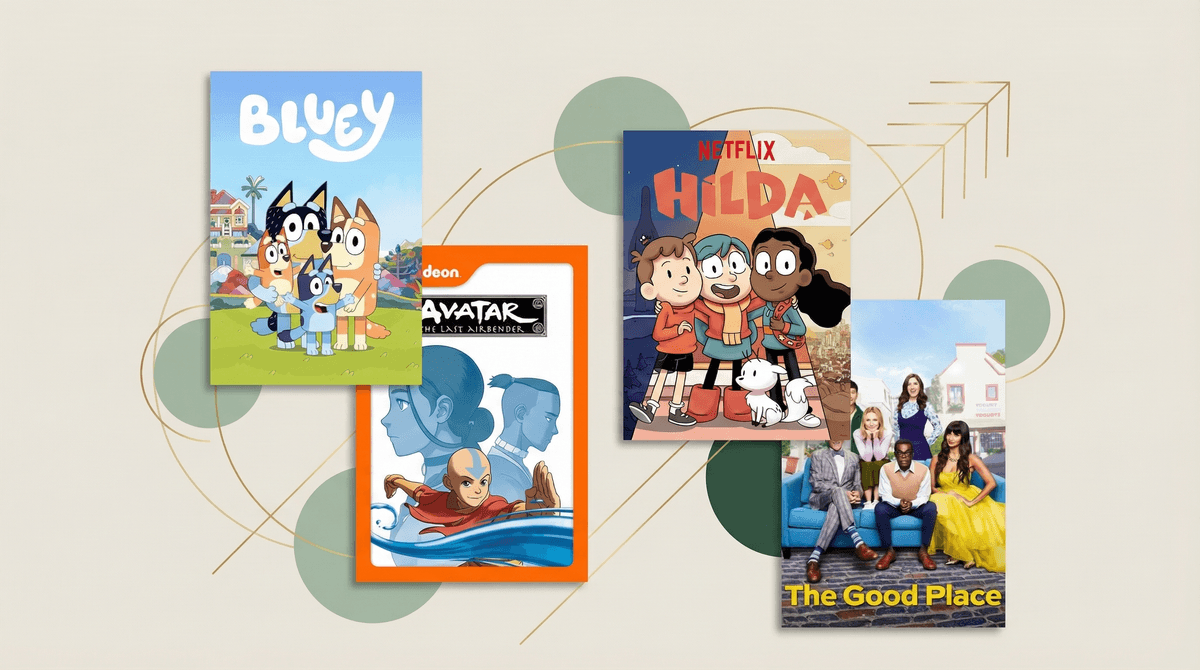
Bluey - Yeah, everyone recommends Bluey, but that's because it's legitimately excellent. Episodes like "Copycat" (dealing with death and honesty) and "Flatpack" (perseverance and patience) handle complex emotions without dumbing them down. Plus, the parents actually model apologizing when they mess up, which is chef's kiss.
Daniel Tiger's Neighborhood - I know, I know, the songs get stuck in your head for days. But this show is surprisingly good at showing kids how to navigate feelings and make amends. The episode about Daniel breaking Prince Wednesday's toy and having to tell the truth? Solid.
Hilda - This Netflix gem flies under the radar, but it's fantastic. Hilda consistently chooses kindness and bravery, even when it would be easier to stay quiet or go along with the crowd. Beautiful animation, too.
For Tweens (Ages 8-12)
Avatar: The Last Airbender - This is the gold standard. Aang's journey is literally about choosing peace and integrity over power and revenge. Zuko's redemption arc shows that people can change when they're willing to do the hard work. Every character faces moral complexity, and the show never takes the easy way out.
The Dragon Prince - From the same creators as Avatar, this show is all about breaking cycles of violence and choosing understanding over revenge. Characters make mistakes with real consequences, and integrity often means admitting you were wrong.
Anne with an E - Anne's fierce commitment to truth and justice, even when it gets her in trouble, is genuinely inspiring. The show tackles hard topics (racism, sexism, abuse) with nuance and shows what it looks like to stand up for what's right.
For Teens (Ages 13+)
The Good Place - Literally a show about ethics and becoming a better person. It's hilarious, clever, and will have your teen actually thinking about moral philosophy. The whole premise is about people trying to be good even when it's really, really hard.
Ted Lasso - Yes, it's technically an adult show, but it's incredibly wholesome and models emotional intelligence, forgiveness, and choosing kindness over winning. Ted's integrity is his superpower, and the show demonstrates that vulnerability isn't weakness.
Derry Girls - Okay, this one has some language and mature themes, but it's set during The Troubles in Northern Ireland and shows teens navigating real moral complexity with humor and heart. The episode where they have to decide whether to report a classmate for stealing is genuinely thought-provoking.
Not all popular shows are created equal. Some actively model behavior you probably don't want your kids emulating:
Most Disney Channel sitcoms - The laugh-track shows where kids are constantly snarky to parents and lying is played for laughs? Yeah, those aren't doing you any favors. The characters rarely face real consequences, and "integrity" usually means "don't get caught."
Riverdale - I mean, come on. This show is a hot mess of terrible decisions with zero consequences. If your teen is watching it, fine, but don't pretend it's modeling anything positive.
A lot of reality TV - Shows that reward backstabbing, lying, and manipulation aren't great integrity-builders. Shocking, I know.
Having the TV on isn't enough—you've got to actually talk about what you're watching. Here's how to make it work:
Ask open-ended questions: "What would you have done in that situation?" "Do you think they made the right choice?" "What do you think will happen because of that decision?"
Point out the gray areas: "That was a tough choice—I can see why they were conflicted." Real integrity isn't always black and white.
Share your own dilemmas: "You know, I faced something like that at work last week..." Making it personal helps kids see how these concepts apply to real life.
Notice the consequences: "See how that lie just made everything worse?" Help them connect actions to outcomes.
Celebrate the hard choices: "Wow, that took real courage to tell the truth even though they knew they'd get in trouble." Name the integrity when you see it.
You're not going to raise honest, courageous kids just by watching the right TV shows. But media matters, and choosing shows that model integrity—and then actually talking about them—is one tool in your parenting toolbox.
The goal isn't perfection. It's intentionality. It's choosing Avatar over another hour of YouTube pranks. It's pausing the show to ask "What do you think about that?" It's modeling integrity yourself by admitting when you mess up.
And honestly? A lot of these shows are genuinely great television that you'll actually enjoy watching too. Which makes the whole thing a lot easier.
Start with one show: Pick something age-appropriate from this list and watch the first episode together. See if it clicks with your kid.
Make it a ritual: Even one co-watched episode per week where you actually discuss what happened is more valuable than passive watching.
Ask your kids for input: What shows do they think model good character? Their answers might surprise you (and give you insight into what they're already absorbing).
Check out more recommendations: Explore shows by age and values to find what works for your family.
Want to dig deeper into what your kids are watching and whether it aligns with your family's values? Take the Screenwise survey to get personalized recommendations and see how your family's media habits compare to your community.