

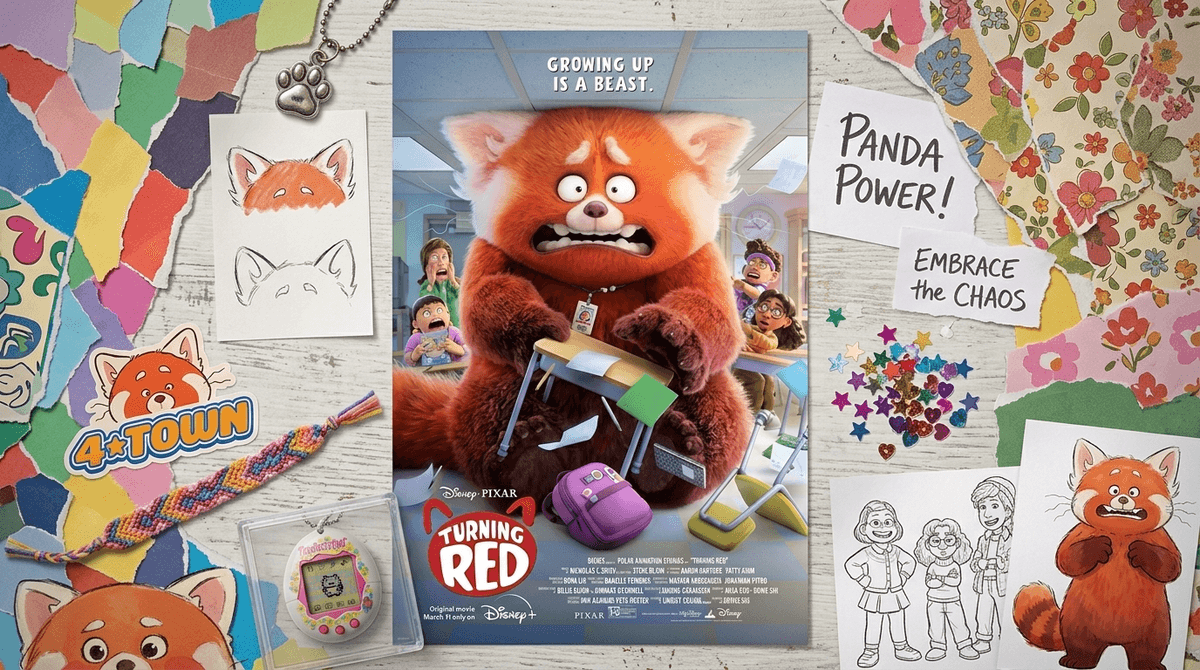
TL;DR: Turning Red is Pixar’s bold, vibrantly awkward exploration of the "messy" phase of puberty. It’s perfect for the 9-13 age bracket, tackling periods, parental expectations, and the "red panda" of big emotions. If you’re looking for ways to bridge the gap between your child’s childhood and their emerging independence, this is the movie to watch together.
Quick Links:
Set in Toronto in 2002 (hello, Tamagotchis and boy bands), the story follows Meilin Lee, a confident, slightly dorky 13-year-old who is determined to be the "perfect" daughter to her overprotective mother, Ming.
The twist? Whenever Mei gets too excited, angry, or emotional, she "poofs" into a giant, fluffy red panda. It’s a family curse—or a gift, depending on who you ask—that serves as a brilliant, high-energy metaphor for the hormonal chaos of the middle school years.
While the movie features a fictional boy band called 4*Town and a lot of early-2000s nostalgia, its heart is about the friction between who our kids are becoming and who we think they should be.
If your child is currently obsessed with TikTok trends or uses "Ohio" as a synonym for "weird," they’ll likely find Mei’s squad deeply relatable. Here is why it hits home:
- The Squad Goals: Mei’s friends—Miriam, Abby, and Priya—are the ultimate support system. They love her even when she’s a literal beast. For tweens, friendship is their new North Star, and this movie honors that.
- The Fandom Culture: Whether it’s 4*Town in the movie or K-Pop and Roblox YouTubers in real life, kids recognize the intense, almost spiritual devotion to a fandom.
- The Cringe: Tweens live in a state of perpetual "cringe." Watching Mei navigate her mother showing up at school with pads or drawing "spicy" fan art of her crush provides a safe way for kids to laugh at their own awkwardness.
When the movie first dropped, there was a lot of chatter about the "period talk." Yes, the movie mentions menstruation. Ming brings a box of pads (and some ibuprofen and hot water bottles) to Mei when she first transforms.
But the red panda isn't just a period metaphor. It’s a metaphor for the "messy" parts of growing up.
In many cultures (and let's be honest, many modern "high-achieving" households), there is a lot of pressure on kids to stay "small," quiet, and compliant. The panda represents the loud, hairy, smelly, emotional, and impulsive parts of a teenager that don’t fit into the "perfect child" box.

We are living in an era of "intensive parenting," where we have more data than ever about our kids' grades, locations, and search histories. It’s easy to accidentally become a Ming Lee—smothering our kids because we love them and want to protect them from "making mistakes."
Turning Red challenges us to ask: Are we loving our kids for who they are, or for how well they obey us?
The movie suggests that the goal of parenting isn't to "tame" the panda (the big emotions and independence) but to help our kids learn to live with it. It’s a shift from control to connection.
Recommended Ages: 9-13
While younger kids (6-8) will enjoy the physical comedy and the fluffy panda, the emotional nuances and the specific mentions of puberty might go over their heads.
Content to be aware of:
- Puberty Talk: Mentions of "womanhood," pads, and hormones. It’s handled with humor and honesty.
- Rebellion: Mei sneaks out to a party and lies to her mother. This isn't "brain rot" content; it's a realistic depiction of a 13-year-old trying to find her boundaries.
- Intensity: The climax involves a giant panda "battle" and some heavy emotional confrontation between Mei and her mother. It might be a bit much for very sensitive younger viewers.
If your tween felt seen by Mei Lee, here are some other media items to keep the conversation going:
Movies
- Inside Out 2: Specifically deals with the arrival of Anxiety as a new emotion during puberty. It’s the perfect companion piece to Turning Red.
- Brave: Another mother-daughter dynamic where a transformation (a bear, this time) forces them to actually listen to each other.
- Are You There God? It's Me, Margaret.: A classic for a reason. It handles the "waiting for puberty" phase with incredible grace and humor.
Books & Graphic Novels
- Smile by Raina Telgemeier: This is the "gateway drug" to graphic novels for middle schoolers. It deals with dental drama, boy trouble, and shifting friendships.
- Guts by Raina Telgemeier: Focuses on the physical manifestations of anxiety (stomach issues), which mirrors the "panda" transformation in many ways.
- Real Friends by Shannon Hale: An honest look at the "mean girl" dynamics and the struggle to find your tribe in middle school.
Apps & Games
- Kind Words: A low-stress, "cozy" game where players write anonymous encouraging letters to each other. Great for building empathy.
- Sky: Children of the Light: A beautiful, non-violent social game about connection and helping others.
Don't make it a lecture. Use the movie as a "third point" of conversation—something you can both look at without the pressure of it being about them specifically.
- Ask about the friends: "Mei's friends were pretty intense about 4*Town. Is there anything you and your friends are that obsessed with right now?"
- Ask about the "Panda": "What does it feel like when you get really frustrated or 'poof' into your own version of a panda? Do you feel it in your chest? Your head?"
- Check your own "Ming": "Do you ever feel like I'm hovering too much like Mei's mom? I'm trying to find the balance between keeping you safe and letting you grow up." (Warning: Be prepared for an honest answer!)
Turning Red isn't just a movie about a girl who turns into a panda. It’s a movie about the end of childhood. It’s messy, it’s loud, and it’s occasionally cringey—just like being 13.
As intentional parents, our job isn't to keep the panda in the cage. It's to make sure our kids know that even when they’re "big and hairy" and making choices we don't always understand, we’re still standing there with the pads and the ibuprofen, ready to listen.
- Plan a family movie night with your 9-13 year old.
- Download the Screenwise app to see how other parents in your community are navigating the "smartphone milestone" that often comes right alongside this stage of life.
- Read our guide on managing social media pressure for middle schoolers.