The anti-iPad of picture books
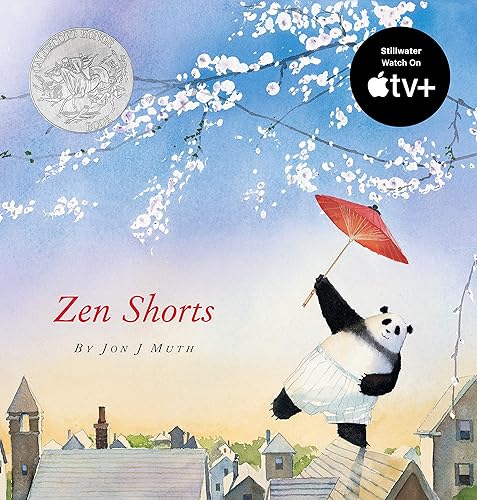
If your household is currently a vibrating ball of high-energy chaos, Zen Shorts is the literary equivalent of a weighted blanket. It doesn’t try to compete with the loud, frantic energy of most modern kids' media. Instead, it just sits there, being beautiful and quiet, waiting for your kid to get bored enough to actually look at the pictures.
Jon J Muth uses a clever visual split that helps younger kids keep track of the narrative. The "real world" scenes with the kids and Stillwater the panda are rendered in soft, misty watercolors. But when Stillwater starts telling his ancient Zen stories, the style shifts to a starker, traditional black-and-white ink wash. It’s a subtle cue that signals "pay attention, this is a story within a story" without needing to explain the concept of a meta-narrative to a five-year-old.
The logic of "Maybe"
The standout moment in the book is the story of the farmer whose luck keeps shifting. His horse runs away (bad luck?), then returns with wild horses (good luck?), then his son breaks a leg (bad luck?), which keeps him out of the army (good luck?).
This specific story is a superpower for parents. It gives you a shorthand for those moments when your kid is melting down because they dropped their ice cream or didn't get the blue popsicle. You can just say, "Maybe," and they’ll actually know what you mean. It moves the conversation away from binary "good vs. bad" thinking and toward a more resilient mindset. If you find your kid gravitating toward these kinds of perspective shifts, you might want to look into TV that inspires gratitude to keep that momentum going.
From the page to the screen
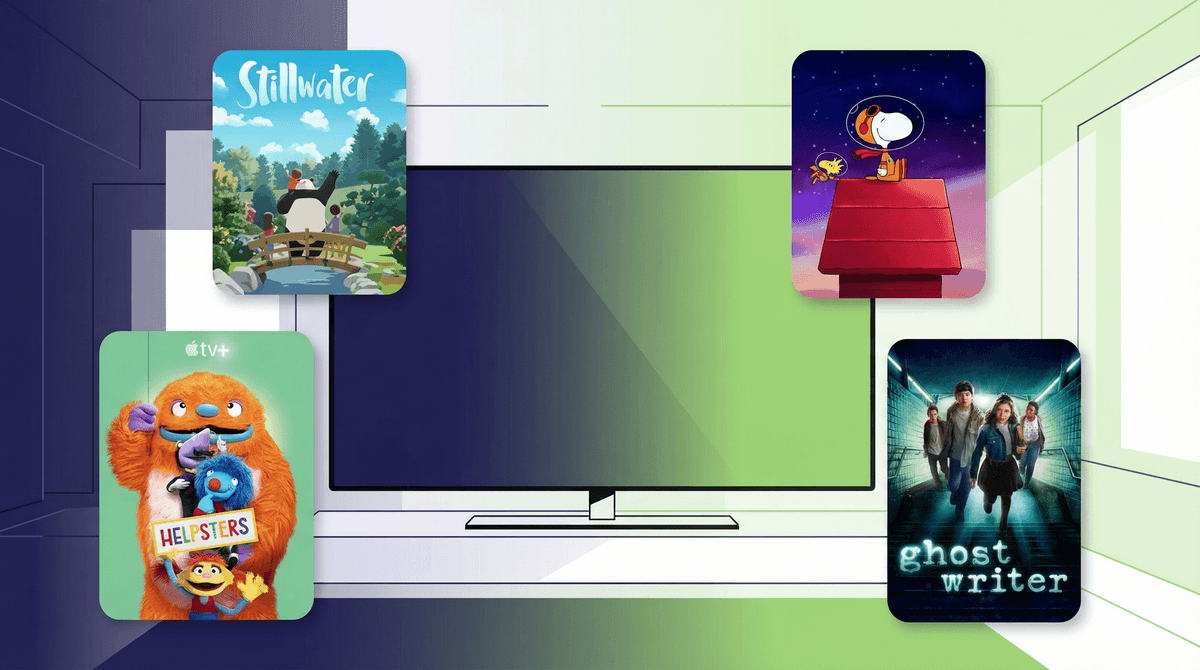
Since this book was published in 2005, it has evolved into a bit of a lifestyle brand for the mindful-parenting set, culminating in the Stillwater series. If you are already paying for an Apple TV+ subscription, this book is the perfect companion piece.
The show is great, but the book is purer. The TV version has to pad the runtime with extra dialogue and side-plots, whereas the book is lean. It’s a 10-minute read that stays in a kid’s head for a week. If you’re trying to decide if the subscription is worth it just for the panda, check out our ranking of the best Apple TV+ series for kids to see where it sits alongside things like Snoopy or Fraggle Rock.
How to use it without being "That Parent"
The danger with a book like this is leaning too hard into the "teaching moment." Don't do that. You don't need to explain the four noble truths or the history of Zen Buddhism. The stories are fables for a reason—they work on their own.
The best way to read this is to treat it like a mystery. Stillwater is a giant panda with an umbrella who just... shows up. He’s weird. Lean into the weirdness of a panda living next door. Let the philosophy be the background noise while your kid focuses on why a bear is carrying a red umbrella. The wisdom sticks better when it's caught, not taught.