

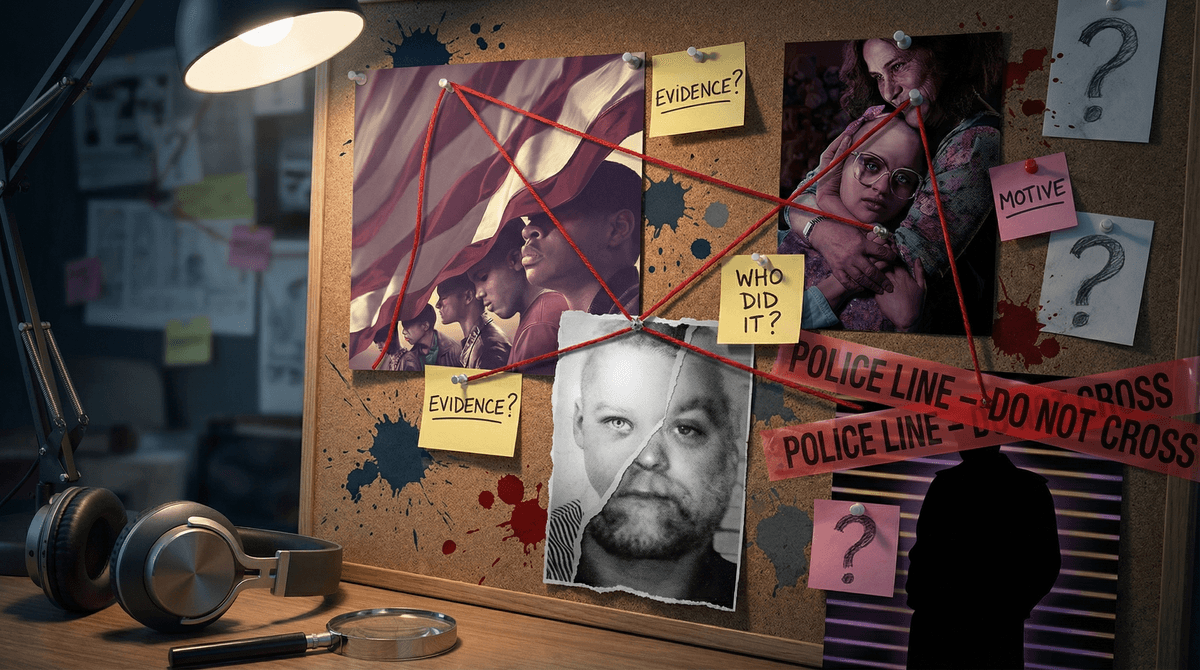
True crime has exploded from a niche interest into a full-blown cultural phenomenon, and your teen is probably deep in it. We're talking shows like Making a Murder, The Act, Monster: The Jeffrey Dahmer Story, and dozens of documentaries about everything from unsolved disappearances to serial killers to wrongful convictions.
The genre spans Netflix originals, Hulu series, YouTube deep dives, and TikTok creators who break down cases in 60-second clips. Some are thoughtfully produced documentaries that examine systemic failures. Others are... well, let's just say they're more interested in shock value than journalism.
And here's the thing: your teen is probably watching this stuff way more than you realize. True crime content is absolutely dominating teen viewing habits, particularly among girls ages 13-17. It's not just passive watching either—they're discussing theories in group chats, following case updates, and sometimes even trying to "solve" cold cases online.
Let's be real: the appeal makes sense, even if it feels uncomfortable to admit.
It's a safe way to explore danger. Teens are developmentally wired to push boundaries and explore risk, but true crime lets them do it from the couch. They get the adrenaline rush without actual danger. It's like a controlled experiment in understanding the worst-case scenarios they're (rightfully) a little anxious about.
It feeds their sense of justice. Teenagers are at a developmental stage where they're acutely aware of fairness and injustice. True crime often highlights system failures, wrongful convictions, and inequality—themes that resonate deeply with teens who are forming their worldviews about right and wrong.
It feels "adult" and educational. Unlike reality TV or sitcoms, true crime feels substantive. Teens can justify the binge because they're "learning about psychology" or "understanding the legal system." And honestly? Sometimes they actually are.
The storytelling is genuinely compelling. These shows are produced by professionals who know how to hook viewers. Cliffhangers, mysterious narration, dramatic music—it's designed to be addictive, and it works.
Community and connection. There's a massive online community around true crime. Your teen might be watching to participate in discussions, share theories, or feel part of something bigger. The social element can't be understated.
Before we get to the "but it's fine in moderation" part, let's acknowledge the legitimate issues:
Desensitization to violence. Constant exposure to graphic details about murder, assault, and trauma can normalize violence or reduce emotional responses to real suffering. This is especially concerning for younger teens whose brains are still developing empathy pathways.
Victim exploitation. Many true crime shows treat real tragedies as entertainment. Families of victims have spoken out about how painful it is to see their loved ones' worst moments turned into binge-worthy content. This raises serious questions about ethics and respect.
Anxiety and fear. Some teens develop heightened anxiety about their own safety, seeing danger everywhere. The constant barrage of "this could happen to anyone" messaging can be genuinely frightening, especially for kids already prone to anxiety.
Problematic parasocial relationships. There's a disturbing trend of teens (and adults) romanticizing killers or developing weird fascinations with criminals. The "hot murderer" discourse around certain cases is... deeply troubling.
Misinformation and amateur sleuthing. Not all true crime content is well-researched. Some teens end up with wildly inaccurate ideas about criminal justice, and the rise of "armchair detectives" has real consequences—like harassment of innocent people or interference with actual investigations.
Not all true crime is created equal, and age matters here.
Ages 13-14: If they're going to watch (and let's be honest, they probably already are), stick with shows that focus on the investigative process rather than graphic violence. Unsolved Mysteries (the newer Netflix version) is relatively tame. Avoid anything that dwells on torture, sexual violence, or extremely detailed crime scene descriptions. This age group needs more guidance and co-viewing.
Ages 15-16: They can probably handle more mature content, but it's worth steering them toward shows that explore the "why" and systemic issues rather than just the gore. When They See Us is powerful and educational. Still avoid the most graphic series, and definitely talk about what they're watching.
Ages 17+: At this point, they're nearly adults and can make more informed choices. But that doesn't mean you can't still have conversations about ethics, media literacy, and how they're processing what they watch.
Hard pass for all teens: Anything that glorifies killers, includes extremely graphic sexual violence, or turns tragedy into pure exploitation. Dahmer was hugely popular but honestly pretty disturbing in how it portrayed violence. Use your judgment, but don't be afraid to say no to specific shows.
Here's the thing: forbidding true crime entirely will probably backfire. Instead, engage with it.
Watch together sometimes. Pick a documentary that interests both of you and make it a shared experience. It opens the door for real conversations about justice, safety, and ethics.
Ask questions that promote critical thinking:
- "Do you think this show is respectful to the victims and their families?"
- "What do you think the filmmakers want you to feel about this person?"
- "How accurate do you think this portrayal is?"
- "Does this make you feel more anxious about your own safety?"
Talk about the ethics of true crime as entertainment. This is a genuinely complex topic that even adults struggle with. Discussing it with your teen helps them develop media literacy and empathy.
Set boundaries around graphic content. It's okay to say "I know you're interested in this case, but that particular show is too graphic for right now. Let's find a different documentary about it."
Monitor for warning signs. If your teen seems increasingly anxious, desensitized, or is developing an unhealthy fascination with violence or criminals, it's time to pull back and possibly talk to a professional.
Encourage balance. True crime shouldn't be the only thing they watch. Make sure they're also consuming content that's uplifting, funny, creative, or just plain light.
True crime isn't going anywhere, and trying to completely shield your teen from it is probably impossible (and might not even be necessary). The goal isn't to eliminate their interest but to help them engage with it thoughtfully and safely.
Some true crime content can actually be valuable—it can teach about injustice, critical thinking, and how systems work (or don't). But it needs to be balanced with awareness of the real people involved and the potential psychological impacts.
Your job isn't to be the fun police. It's to be the person who helps them think critically about what they're consuming, recognize when something crosses a line, and process the heavy emotions that come with this content.
And if they want to discuss the latest twist in whatever case they're obsessed with? Lean in. It's actually a great opportunity to connect and guide them toward being thoughtful, empathetic consumers of media—true crime or otherwise.
Have the conversation this week. Ask what true crime content they're watching and why it interests them. Listen without judgment first.
Co-view one episode of something they're into. See what they're actually consuming and use it as a discussion starter.
Set some family guidelines around graphic content and balance. Maybe true crime is fine, but not right before bed, or not as the only thing they watch.
Want to dig deeper into media literacy conversations? Or curious about other mature content your teen might be consuming?