

The Ultimate Stranger Things Parent's Guide: Is It Safe for Kids?
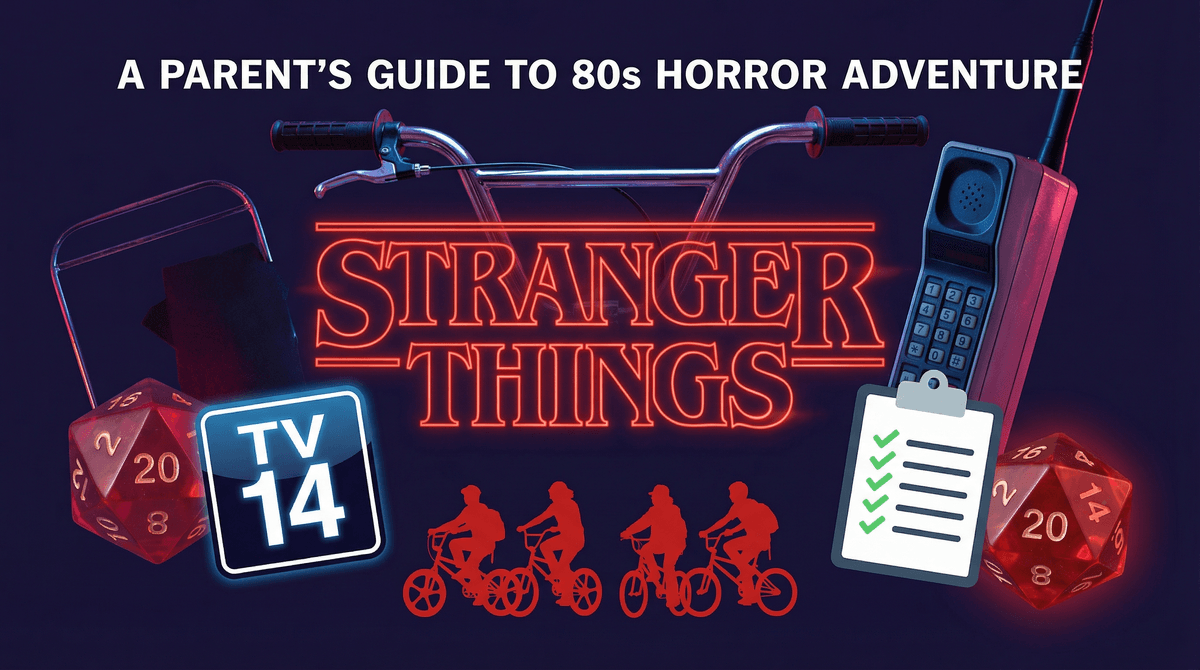
Stranger Things is rated TV-14, but that rating doesn't tell the whole story. The show gets progressively darker and more violent with each season. Seasons 1-2 are generally okay for mature 12+, but Seasons 3-4 push firmly into 14+ territory with intense horror, graphic violence, and disturbing imagery. If your kid can handle IT or A Quiet Place, they can probably handle Stranger Things. If they're still spooked by Goosebumps, they're not ready.
Quick age breakdown:
- Ages 10-11: Probably too intense for most kids
- Ages 12-13: Seasons 1-2 with parent co-viewing
- Ages 14+: Most teens can handle all seasons
- Ages 16+: No concerns for mature content
If you've somehow avoided this cultural phenomenon, Stranger Things is Netflix's mega-hit sci-fi horror series set in 1980s Indiana. It follows a group of kids (and later teens) dealing with supernatural threats from an alternate dimension called the Upside Down. Think The Goonies meets Alien with a heavy dose of Stephen King.
The show premiered in 2016 and has become a genuine pop culture juggernaut. Your kids know about it even if they haven't watched it. The references are everywhere—from Halloween costumes to TikTok trends to Roblox experiences.
It's designed to be addictive. Each episode ends on a cliffhanger, the mysteries stack up, and the show moves fast. The kids on screen are smart, capable, and save the day while adults bumble around being useless (classic kid fantasy).
The nostalgia factor is real—even for kids who weren't alive in the '80s. The show romanticizes an era of unsupervised bike rides, walkie-talkies, and Dungeons & Dragons campaigns in basements. It's a world without smartphones where kids have actual adventures. For today's over-scheduled, over-supervised generation, that freedom looks pretty appealing.
The characters are genuinely great. Eleven's telekinetic powers and traumatic backstory, Dustin's humor, Steve's evolution from jerk to beloved babysitter—these are well-written characters kids actually care about. The friendships feel real, the dialogue is sharp, and the emotional beats land.
It spawned an entire aesthetic. The show's influence on fashion, music, and pop culture is massive. Kids want the vintage band tees, the retro arcade vibes, the Dungeons & Dragons campaigns. The show made D&D cool again for a whole new generation.
Violence and Gore
This is where Stranger Things really pushes boundaries. Season 1 is relatively tame—some jump scares, a deer carcass, implied deaths. Season 2 ups the ante with creatures attacking people and some body horror.
Season 3 gets significantly more violent with graphic deaths, people melting into goo, and a scene where someone gets their leg graphically broken. Season 4 goes full horror movie with multiple brutal deaths, bones snapping, eyes exploding, and genuinely disturbing imagery that would earn an R-rating in theaters.
The violence isn't cartoonish—it's designed to be scary and often succeeds. Blood, gore, and body horror are regular features by Season 3.
Language
Pretty standard TV-14 fare. You'll hear "shit," "damn," "hell," "ass," and "bitch" throughout. The f-word appears occasionally but isn't constant. If your kid rides the school bus, they've heard worse.
Sexual Content
Minimal but present. Teenagers kiss and make out. There are references to sex and some sexual jokes. Season 3 has a running joke about Steve's dating life. Season 4 includes a teen couple in bed together (clothed, nothing explicit).
Nothing graphic, but the characters age up as the show progresses, so romantic relationships become more prominent. It's all pretty tame compared to most teen content.
Scary/Disturbing Content
This is the big one. Stranger Things is fundamentally a horror show. The Demogorgon in Season 1 is nightmare fuel. The Mind Flayer is terrifying. Season 4's Vecna is genuinely disturbing—his kills involve bones breaking and bodies contorting in graphic detail.
The show uses darkness, jump scares, and sustained tension effectively. Kids are put in genuine danger constantly. Characters die, sometimes brutally. The Upside Down itself is a rotting, hostile environment that's deeply unsettling.
If your kid has nightmares easily or is sensitive to scary content, this show will absolutely give them bad dreams. That's not speculation—it's the point.
Themes Worth Discussing
Trauma and PTSD: Multiple characters deal with trauma, particularly Eleven. The show actually handles this thoughtfully, showing how past abuse affects behavior and relationships.
Friendship and loyalty: The core group's friendship is the heart of the show. They stick together, protect each other, and work through conflicts.
Government conspiracy and experimentation: The show depicts unethical government experiments on children, which is based on real Cold War-era programs. Worth a conversation about historical context .
.
Bullying and social dynamics: The kids face realistic middle school bullying. Season 4 explores how outcasts are scapegoated during moral panics.
Sacrifice and heroism: Characters regularly put themselves at risk for others. The show explores what it means to be brave when you're terrified.
Ages 10-11: Probably Not Yet
Even Season 1 is likely too intense for most kids in this age range. The sustained tension, jump scares, and monster violence will be overwhelming. If your 10-year-old is unusually mature and specifically requests it, maybe consider Season 1 with co-viewing—but be ready to turn it off.
Better alternatives: Ghostbusters, The Spiderwick Chronicles, or Gravity Falls for that adventure-with-supernatural-elements vibe without the graphic horror.
Ages 12-13: Seasons 1-2 With Discussion
This is the sweet spot for the early seasons. Mature 12-13 year olds can typically handle the scares in Seasons 1-2, especially if you watch together and talk through the scary parts. These seasons capture the adventure and friendship elements without the extreme violence of later seasons.
Co-viewing is key here. Watch it with them, pause for questions, and check in about how they're feeling. Some kids will be fine; others will tap out after one episode. Trust your kid's self-assessment.
Hold off on Seasons 3-4 until they're at least 14. The violence and horror escalate significantly.
Ages 14+: Green Light With Context
Most 14+ teens can handle the full series. They're at the age where they're seeking out horror content anyway, and Stranger Things is actually well-crafted compared to a lot of what's available.
That said, Season 4 is genuinely intense. Even horror-loving teens might find Vecna's kills disturbing. Consider watching the first episode of Season 4 together to gauge their reaction before letting them binge alone.
Ages 16+: No Content Concerns
At this point, it's about whether they're interested, not whether they can handle it. The show's themes about trauma, identity, and growing up actually resonate well with older teens.
The show gets progressively darker. If your kid starts with Season 1 and seems fine, don't assume that means they're good for the whole series. Check in before each new season.
The episode lengths vary wildly. Season 4 episodes run 60-90 minutes each—basically movies. This isn't a "just one more episode before bed" situation. Plan accordingly.
The cultural references will fly over your kid's head. The '80s nostalgia is for parents, not kids. They won't get the Ghostbusters references or understand why everyone's freaking out about New Coke. They're watching for the monster fights and friendship drama.
It's a conversation starter about real history. The show references real Cold War fears, government experiments, and the Satanic Panic around D&D. These are worth discussing as actual historical events.
The fandom is massive and sometimes spoiler-heavy. If your kid gets into it, they'll immediately want to join online discussions. Be aware that spoilers are everywhere, and fan spaces can sometimes be intense.
It's reignited interest in D&D. Many kids who watch Stranger Things want to try Dungeons & Dragons themselves. This is actually a great outcome—D&D teaches creativity, math, problem-solving, and social skills. If your kid expresses interest, check out age-appropriate ways to get started.
Before watching: "This show has some scary monsters and people get hurt. There's going to be blood and some disturbing scenes. If it gets too intense, we can pause or stop. No judgment—everyone has different comfort levels with scary stuff."
During watching: Actually watch with them, at least for the first few episodes. Note their reactions. Are they hiding behind a pillow? Laughing nervously? Completely unfazed? This tells you whether they're ready.
After watching: "What did you think? Were any parts too scary? What questions do you have?"
Talk about the themes. Discuss how Eleven was treated by the scientists. Ask what they'd do in the characters' situations. Use it as a jumping-off point for conversations about friendship, bravery, and doing the right thing when adults aren't helping.
Stranger Things is a well-made show that's genuinely scary and increasingly violent. The TV-14 rating is accurate for Seasons 1-2 but understates the intensity of Seasons 3-4.
For mature 12-13 year olds: Start with Seasons 1-2, watch together, and have ongoing conversations. Skip Seasons 3-4 until they're older.
For 14+ teens: Most can handle the full series, though Season 4 is intense even by horror standards. Check in, especially around the graphic deaths.
For younger kids: Wait. There are plenty of age-appropriate adventure shows that capture the friendship and mystery elements without the nightmare fuel.
The show's popularity means your kid will encounter references and spoilers regardless of whether they watch. If they're not ready for the show itself, consider letting them engage with the gentler aspects of the fandom—the friendships, the D&D elements, the '80s aesthetic—without the graphic horror content.
Trust your kid's maturity level, watch together when possible, and remember that "everyone else is watching it" has never been a good reason to let your kid consume content they're not ready for. That said, for the right age and temperament, Stranger Things is genuinely excellent television that can spark great conversations about bravery, friendship, and facing your fears.
- Screen the first episode yourself before committing to watching with your kid
- Set expectations about pausing or stopping if it's too intense
- Plan for post-episode conversations about what they saw and how they felt
- Consider alternatives to Stranger Things if your kid wants the adventure vibe without the horror
- Explore D&D resources for beginners if the show sparks interest in tabletop gaming
Want more specific guidance for your family's situation? Ask about your specific concerns and get personalized recommendations based on your kid's age and sensitivity level.