

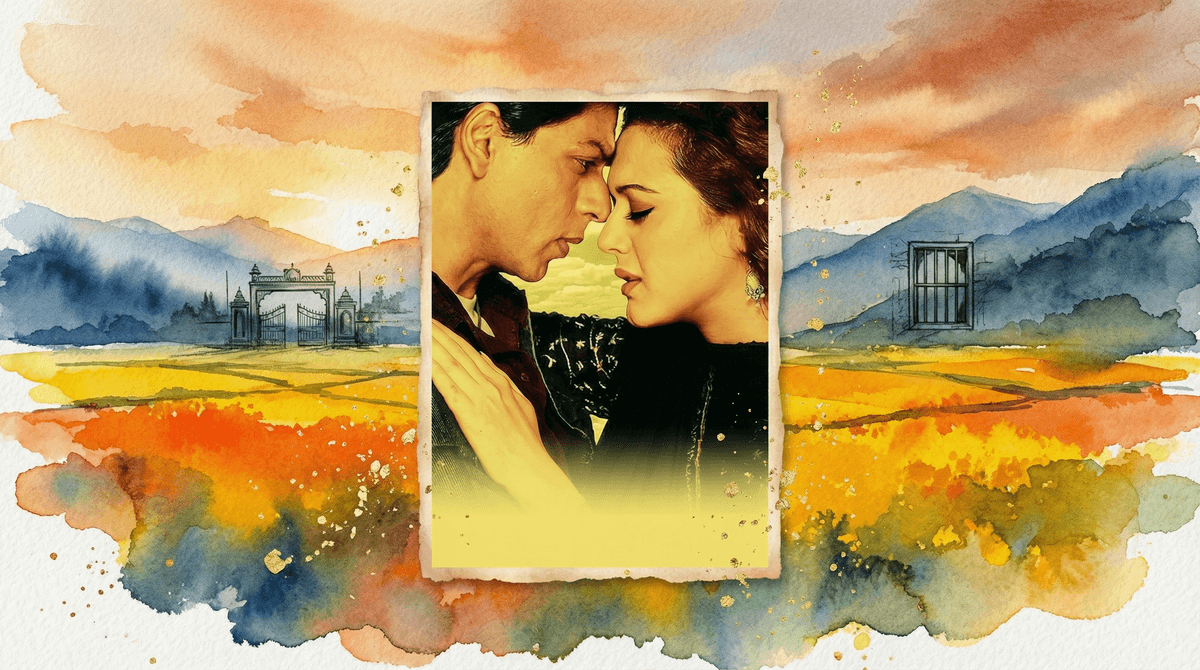
Veer-Zaara is a 2004 Bollywood epic romance that's been having a serious moment with Gen Z and younger millennials—and honestly, if you haven't seen it, you're missing out on one of the most beautifully crafted love stories in Indian cinema. Directed by the legendary Yash Chopra, this three-hour film tells the story of Veer Pratap Singh (Shah Rukh Khan), an Indian Air Force pilot, and Zaara Hayaat Khan (Preity Zinta), a Pakistani woman, who fall deeply in love despite the political tensions between their countries.
The film spans 22 years and weaves together themes of sacrifice, duty, cultural identity, and the kind of love that transcends borders—literally. It's streaming on various platforms now, and if your teens are suddenly obsessed with it (thanks, TikTok), you might be wondering: Is this just a melodramatic Bollywood tearjerker, or is there something here worth watching together?
The short answer: It's both, and that's exactly why it's worth your time.
Here's the thing about Veer-Zaara—it's not just a love story. It's a film that grapples with questions of national identity, religious difference, family obligation, and personal sacrifice in ways that feel surprisingly relevant in 2026.
Your teens are watching this film and seeing characters who choose duty over desire, who sacrifice decades of their lives for love, who navigate impossible family expectations. In an era where we're constantly talking to our kids about boundaries, self-care, and putting themselves first, Veer-Zaara presents a completely different framework: What if love means giving everything up? What if duty to family and country comes before personal happiness?
These aren't easy questions, and the film doesn't pretend they are.
The India-Pakistan tension that forms the backdrop of the story also provides an entry point for conversations about how nationalism and identity shape relationships , about what it means when governments and borders separate people who share so much culture and history. For South Asian families, this might be a deeply personal watch. For others, it's a window into understanding why partition and cross-border tensions aren't just historical footnotes—they're lived realities that continue to shape millions of lives.
Ages 12+: This is where I'd start. The film is rated PG-13 and there's nothing sexually explicit or graphically violent. The romance is beautifully restrained—mostly longing looks, a few embraces, and one particularly swoon-worthy song sequence in the mustard fields.
What makes it mature: The emotional weight. This isn't a Disney fairy tale where everything works out after 90 minutes. Characters make devastating choices. There's false imprisonment, family rejection, and 22 years of separation. Younger kids might find it slow (it IS three hours), but more importantly, they might not have the emotional maturity to process why Veer makes the choice he does—or why Zaara spends decades not knowing he's alive.
For teens 14+: This is the sweet spot. They're old enough to understand sacrifice, to grapple with the complexity of duty vs. desire, and to appreciate the film's slower pacing and musical interludes. They're also at an age where they're forming their own ideas about love, family expectations, and what they'd be willing to give up for someone else.
It's LONG: Three hours and 12 minutes. This is not a quick Friday night watch. Plan accordingly, maybe with an intermission (Bollywood films traditionally have one). Make popcorn. Commit to the experience.
The music is stunning: The soundtrack by the late Madan Mohan (completed posthumously) is genuinely beautiful. Even if your kids aren't typically into Bollywood music, songs like "Tere Liye" and "Main Yahaan Hoon" are worth experiencing. They're not just background—they're integral to the storytelling.
Cultural context helps: If your family isn't familiar with the India-Pakistan partition of 1947 and its ongoing impact, a quick five-minute conversation beforehand will make the film much richer. Understanding the historical context of partition helps explain why the families react the way they do, why borders matter so much, and why this love story is considered so transgressive.
The courtroom framing device: The film is told mostly in flashback, with a young Pakistani lawyer (Rani Mukerji) trying to uncover Veer's identity after he's been imprisoned in Pakistan for 22 years. This structure means the first 20 minutes can feel a bit slow, but it pays off beautifully.
Expect tears: I'm not being dramatic. This film will make you cry. It will make your teenagers cry. Have tissues ready.
This is where Veer-Zaara really shines as a family watch. The film raises questions that don't have easy answers:
On sacrifice: Veer chooses to go to prison in Pakistan to save Zaara's reputation and future. He gives up 22 years of his life without her even knowing. Ask your teen: "Would you make the same choice? Is that romantic or is it self-destructive?" There's no right answer, and that's the point.
On family expectations: Both Veer and Zaara struggle with disappointing their families. Zaara is engaged to someone else when she meets Veer. Veer's family expects him to marry within their community. These aren't villain families—they're just traditional. How do we honor our families while living our own lives?
On borders and identity: The film asks whether love can transcend national identity. In a world where we're increasingly divided by politics, religion, and nationalism, what does it mean to choose love across those lines?
Veer-Zaara is not perfect. It's melodramatic. It's long. Some of the plot twists require a hefty suspension of disbelief. But it's also gorgeous, emotionally resonant, and genuinely moving in ways that most modern romantic films aren't willing to be.
If your teen is already interested, watch it together. If they're not, this might be a tough sell—but if you have a kid who loves epic romances, period pieces, or just beautiful filmmaking, give it a shot.
And honestly? Even if your kids aren't interested, you might want to watch it yourself. Sometimes we need reminders that love stories can be about more than just getting together—they can be about what we're willing to sacrifice, what we're willing to endure, and how love shapes us even when it doesn't give us the ending we want.
Content notes: PG-13. No sexual content, mild violence (a bus accident, prison scenes), emotional intensity throughout. Runtime: 3 hours 12 minutes.
Where to watch: Check your streaming services—it's available on several platforms with subtitles.
Want to explore more Bollywood films with your teens? Check out our guide to age-appropriate Bollywood movies or explore other epic romance films worth watching together.
Curious about how to talk to your teens about sacrifice and relationships? Start here.