

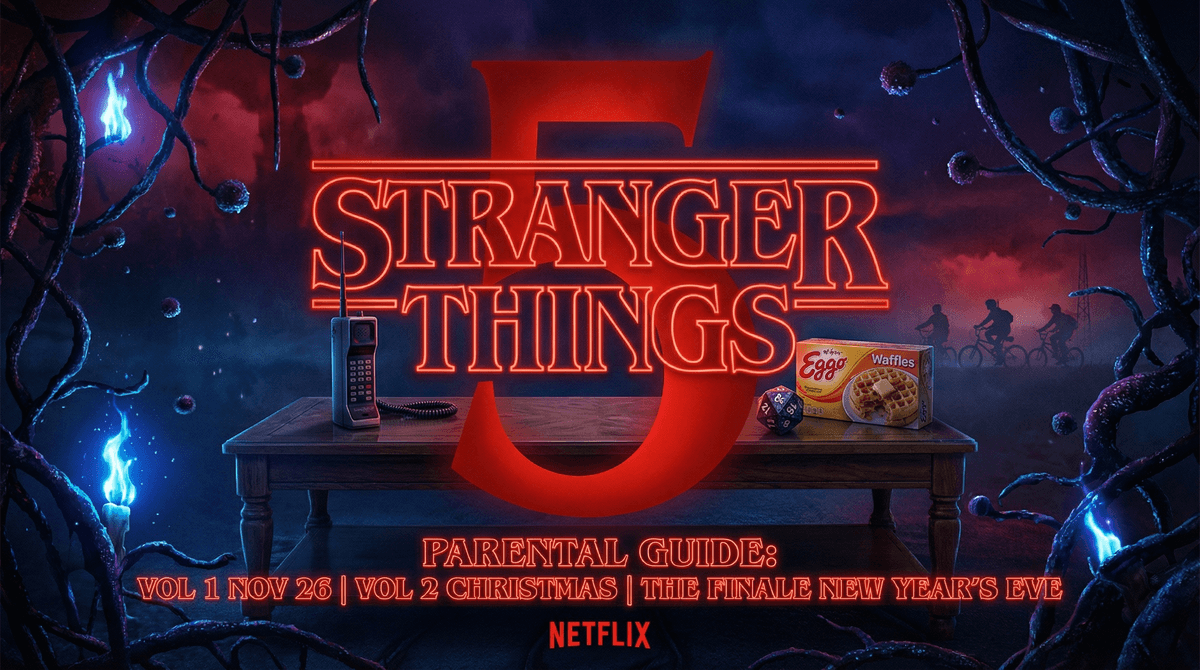
The Ultimate Parental Guide to Stranger Things: Age Appropriateness by Season
Season 1 (TV-14): Ages 13+ | Moderate horror, some language, nostalgic 80s adventure vibes
Season 2 (TV-14): Ages 13+ | Similar intensity, more creature horror
Season 3 (TV-14): Ages 13+ | Body horror escalates, more graphic violence
Season 4 (TV-MA): Ages 15-16+ | Significantly darker, intense gore, psychological horror
Season 5 (Coming 2025): Expect TV-MA based on trajectory
The rating jump to TV-MA in Season 4 isn't just Netflix being cautious—it's a real shift in content intensity. If your kid watched Seasons 1-3, don't assume Season 4 is more of the same.
Stranger Things sits in this weird space where it's technically rated for teens but has genuine horror elements that can be intense even for adults. It's not Riverdale (teen drama with some dark themes) and it's not full-on adult horror like The Haunting of Hill House. It's somewhere in between, which makes the age-appropriateness question legitimately complicated.
The show leans heavily on 80s nostalgia—think [E.T.](https://screenwiseapp.com/media/e-t-the-extra-terrestrial-movie, The Goonies, and Stephen King vibes. But here's the thing: those 80s movies that parents remember fondly were often pretty intense themselves. The difference is that Stranger Things has modern production values, which means the scares are more visceral and the violence more graphic than what we saw in 1985.
Season 1: The Gateway Season (TV-14)
Age recommendation: 13+, though mature 11-12 year olds who handle suspense well might be okay
Season 1 is the most restrained of the series. The Demogorgon is scary but mostly lurks in shadows. There's tension and jump scares, but the violence isn't particularly graphic. The language includes some swearing (mostly "shit" and "damn," occasional stronger language). There's brief bullying that feels realistic and uncomfortable.
The real question: Can your kid handle sustained tension? Season 1 builds dread slowly. If they loved Goosebumps or can handle Coraline, they're probably ready for this level of spooky.
Parent note: Barb's death happens off-screen but is emotionally heavy. Eleven's backstory involves child experimentation that's disturbing in concept more than visuals.
Season 2: More of the Same, Slightly Darker (TV-14)
Age recommendation: 13+
Season 2 maintains the TV-14 rating but inches up the intensity. The Demodogs are more numerous and we see more creature violence. Bob's death is genuinely upsetting—not gratuitously gory but emotionally brutal because we like him.
The Mind Flayer concept introduces psychological horror elements. Max and Billy's family dynamic includes domestic tension that's uncomfortable to watch. There's more swearing throughout.
The real question: If Season 1 was fine, Season 2 probably is too. The emotional stakes are higher (we care more about these characters now), which can make scary moments hit harder even if the content level is similar.
Season 3: The Body Horror Escalation (TV-14)
Age recommendation: 13-14+
This is where things get noticeably more intense while still maintaining a TV-14 rating. The "flayed" humans melting into grotesque flesh monsters is body horror that rivals R-rated films. Billy's possession and eventual death is graphic and disturbing. The Russian torture scene with Hopper is intense.
There's also more sexual content—not explicit, but teenage relationships involve more making out and implied sexuality. The mall setting and summer vibes make it feel lighter tonally, but the actual horror content is significantly more graphic than Seasons 1-2.
The real question: Has your kid seen any body horror before? Think Venom or the grosser parts of Spider-Man: No Way Home. If that made them queasy, Season 3 will be rough.
Parent note: Billy's arc is tragic and well-done but heavy. His abusive home life and redemption arc involve themes that might need discussion.
Season 4: The TV-MA Jump (TV-MA)
Age recommendation: 15-16+, honestly
Season 4 earned its TV-MA rating. Vecna's kills are explicitly shown, with bones snapping and eyes exploding. It's not just implied horror—it's on-screen graphic violence. The Russia subplot involves genuine torture and gore. The Upside Down is more visceral and disturbing than ever.
The episodes are also much longer (some nearly movie-length), which means sustained intensity without much relief. The emotional weight is heavier—these kids have been through trauma, and the show doesn't shy away from PTSD, survivor's guilt, and grief.
There's more language (including F-bombs), more mature romantic content, and themes of cult-like behavior, satanic panic, and mob mentality that are timely but intense.
The real question: Can your teen handle graphic horror? Not "scary movie" horror but "horror film" horror. We're talking A Quiet Place level intensity, maybe edging toward It territory in specific scenes.
Parent note: Eddie's death is heartbreaking. Max's fate at the end of Season 4 is legitimately traumatic—even adults found it difficult to watch. If your kid gets deeply invested in characters, prepare for some heavy emotional processing.
Here's the reality: lots of kids younger than 13 have watched Stranger Things. According to various surveys, a significant percentage of 10-12 year olds have seen at least Season 1. Does that mean it's appropriate? Not necessarily.
What actually matters:
-
Your individual kid: A 12-year-old who devours horror books and loves being scared is different from a 12-year-old who has nightmares after Scooby-Doo.
-
Co-viewing: Watching together (or at least being available to discuss) makes a huge difference. The show raises questions about friendship, loyalty, sacrifice, and trauma that are worth talking about.
-
The season matters: A kid who watched Season 1 at 11 and was fine doesn't mean they're ready for Season 4 at 13. The content genuinely escalates.
-
Knowing when to pause: If your kid is watching and gets too scared, that's valuable information. Better to stop and come back later than push through and create negative associations.
Lighter than Stranger Things:
- The Umbrella Academy (TV-14, but more campy violence)
- Locke & Key (TV-14, horror elements but less intense)
- Wednesday (TV-14, gothic but not truly scary)
Similar intensity:
- The Haunting of Bly Manor (TV-MA, atmospheric horror)
- Sweet Tooth (TV-14, post-apocalyptic but more hopeful)
More intense than Stranger Things:
- The Haunting of Hill House (TV-MA, genuinely terrifying)
- The Walking Dead (TV-MA, graphic violence throughout)
For kids who want that 80s adventure vibe without the horror:
- The Goonies (PG, the original inspiration)
- Super 8 (PG-13, Spielberg-style adventure)
- Jumanji: Welcome to the Jungle (PG-13, fun adventure)
For kids who want supernatural mystery without intense scares:
- Gravity Falls (TV-Y7, brilliant writing, some spooky moments)
- The Mysterious Benedict Society (TV-PG, puzzle-solving adventure)
- Hilda (TV-Y7, gentle fantasy adventure)
For teens who want sci-fi without horror:
- The Mandalorian (TV-14, action but not scary)
- Lost in Space (TV-PG, family-friendly sci-fi)
Try the "first episode test": Watch the Season 1 premiere together. If they handle that well and want more, you're probably good for Season 1. Reassess before each new season.
Talk about what scares them: Some kids are fine with monsters but can't handle emotional intensity. Others are the opposite. Knowing your kid's specific triggers helps.
Consider watching key episodes first: As the parent, you can preview episodes that might be particularly intense (Season 3 Episode 8, Season 4 Episodes 4 and 9) and decide if your kid is ready.
Use the pause button liberally: There's no prize for watching straight through. If something is too much, pause, talk about it, decide together whether to continue.
Check in after episodes: "How are you feeling about that?" is a powerful question. Kids will often tell you if something was too much, and that's valuable information for next time.
Stranger Things actually offers great opportunities for discussions:
About friendship: The core group's loyalty is genuinely moving. "What makes a good friend?" "Would you risk your life for your friends?"
About outsiders: Eddie in Season 4 is the "freak" who turns out to be heroic. "Why do people judge others for being different?"
About trauma: By Season 4, these kids have PTSD. "How do you think these experiences would affect someone in real life?"
About mob mentality: Season 4's satanic panic mirrors real moral panics. "Why do people believe conspiracy theories?"
About sacrifice: Multiple characters make heroic sacrifices. "What would you be willing to give up for others?"
Season 1-2: Reasonable for most 13+ kids, mature 11-12 year olds with parental discretion
Season 3: Solidly 13-14+, the body horror is real
Season 4: Actually deserves that TV-MA rating, 15-16+ is more appropriate
The show gets progressively more intense, so a kid being ready for Season 1 doesn't automatically mean they're ready for Season 4. The rating jump to TV-MA wasn't arbitrary—the content genuinely escalated.
That said, Stranger Things is also genuinely good television with strong character development, excellent performances, and meaningful themes. If your teen is ready for it, it's worth watching together and discussing. The show doesn't glorify violence or trauma—it shows consequences and emotional weight.
The real answer: You know your kid better than any rating system. Use the ratings as a starting point, preview content when you're unsure, and remember that you can always pause and come back later. There's no rush—the show will still be there when they're ready.
Want to explore other shows for teens that aren't quite as intense? Or looking for shows the whole family can watch together? We've got guides for that too.