

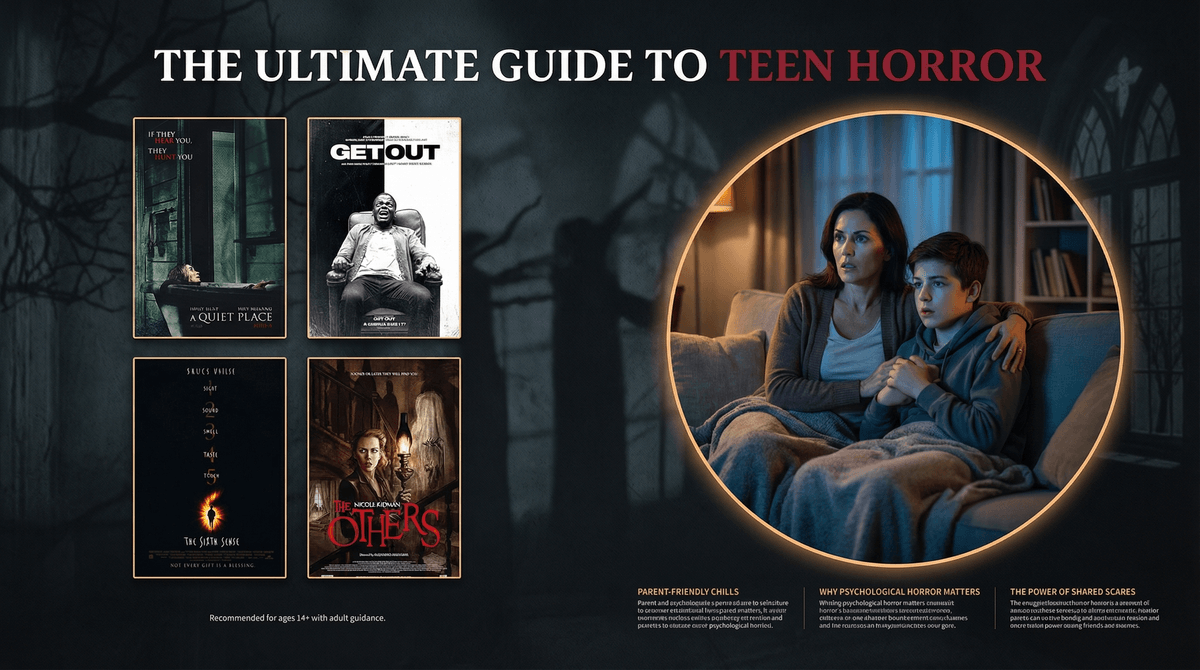
The Ultimate Guide to Teen Horror Movies: Low Gore, High Chills
TL;DR: Your teen wants to watch scary movies but you're not ready for torture porn. These suspense-driven horror films deliver genuine scares through atmosphere, tension, and storytelling—not graphic violence. Quick picks: A Quiet Place (ages 13+), The Sixth Sense (ages 12+), Get Out (ages 15+), and The Others (ages 12+).
There's this weird parenting moment that happens around middle school where your kid suddenly wants to watch horror movies. Maybe it's a sleepover thing, maybe they're trying to prove something to friends, or maybe they genuinely love the adrenaline rush of being scared in a safe environment (which is actually a healthy way to process anxiety, according to research).
But here's the problem: modern horror has split into two camps. There's the thoughtful, atmospheric stuff that builds dread through storytelling. And then there's the "how creatively can we show someone's intestines" genre. Your 13-year-old might think they want the latter, but trust me—most teens (and most adults) don't actually enjoy watching extended torture sequences.
The good news? There's a robust catalog of genuinely scary movies that rely on suspense, atmosphere, smart writing, and psychological tension instead of gore. These films respect the craft of horror without traumatizing viewers.
Horror movies aren't just entertainment—they're actually a developmental tool. Watching scary movies in a controlled environment helps teens:
- Process fear and anxiety in a safe context
- Build emotional resilience
- Understand narrative structure and filmmaking techniques
- Engage with complex themes (death, loss, injustice, the unknown)
- Bond with peers over shared experiences
The key is finding the right level of intensity. Too tame and they're bored. Too graphic and you're dealing with nightmares and genuine distress. These recommendations hit that sweet spot.
A Quiet Place (2018) — Ages 13+
This is the movie I recommend most often to parents looking for teen-appropriate horror. It's essentially a masterclass in tension-building. The premise—a family must stay silent to avoid alien creatures that hunt by sound—creates constant suspense without relying on gore. There's violence (creatures attack), but it's not graphic or lingering.
Why it works: The family dynamics are strong, the kids are smart and capable, and the scares come from situation and atmosphere rather than jump scares or blood. Plus, it's only 90 minutes, so it doesn't overstay its welcome.
Content note: A few intense moments, including a childbirth scene (not graphic but stressful) and some creature violence. One character death that's emotional but not gory.
The Sixth Sense (1999) — Ages 12+
Yes, it's a classic. Yes, everyone knows the twist (even if they haven't seen it). But it holds up remarkably well as a ghost story that's more melancholy than terrifying. The scares are there—some genuinely creepy ghost appearances—but the film is ultimately about grief, connection, and helping lost souls find peace.
Why it works: The protagonist is a kid, which makes it relatable for younger teens. The ghosts are scary but not malicious. And the emotional core of the story gives you something to discuss afterward beyond just "that was creepy."
Content note: Some disturbing imagery (ghosts showing how they died), but minimal blood. Themes of suicide and child abuse are present but handled with restraint.
The Others (2001) — Ages 12+
Nicole Kidman in a gothic mansion with mysterious servants and strange occurrences. This is old-school haunted house storytelling—all shadows, creaking doors, and mounting dread. The twist ending reframes everything you've watched, which makes it great for a rewatch.
Why it works: Zero gore, zero jump scares that feel cheap. Just sustained atmosphere and a genuinely clever script. The period setting (post-WWII) also creates distance that can make it feel less immediately threatening.
Content note: Some scary imagery and themes of death, but nothing graphic. The scariest moment involves children in communion veils (which sounds silly but plays genuinely creepy).
Get Out (2017) — Ages 15+
Jordan Peele's directorial debut is a social thriller that uses horror conventions to explore racism. It's smart, it's scary, and it has virtually no gore until the final act (and even then, it's brief and not gratuitous). The horror comes from the mounting realization that something is very, very wrong.
Why it works: This is the kind of horror movie you can actually discuss afterward. What did the sunken place represent? How does the film use horror tropes to comment on microaggressions? It's scary AND intellectually engaging.
Content note: Violence in the third act, some blood, themes of racism and exploitation. The "brain surgery" concept is disturbing but not shown graphically. Rated R primarily for language and some violence.
The Witch (2015) — Ages 15+
Set in 1630s New England, this slow-burn folk horror follows a Puritan family unraveling after being banished from their colony. It's deeply atmospheric, historically grounded, and genuinely unsettling. Fair warning: it's slow. Like, really slow. But if your teen appreciates mood and dread over action, this is masterful.
Why it works: The horror comes from isolation, religious paranoia, and the unknown. The period dialogue (based on actual historical accounts) creates an immersive experience. And the ambiguity—is the witch real or is this mass hysteria?—makes for great discussion.
Content note: Some disturbing imagery involving a baby (happens off-screen but implied), themes of religious extremism, brief nudity. The family's goat (named Black Phillip) becomes iconic and meme-worthy.
Hereditary (2018) — Ages 16+
I'm including this with major caveats. This is INTENSE. It's not gory in the traditional sense, but it's deeply disturbing and deals with grief, mental illness, and family trauma in ways that can be genuinely upsetting. That said, it's also one of the best-crafted horror films of the past decade.
Why it works (for the right teen): If your teen is interested in filmmaking, this is a technical masterpiece. The way it builds dread through composition, sound design, and performance is extraordinary. But it's emotionally heavy.
Content note: One shocking death scene (not graphic but traumatic), themes of mental illness and grief, occult imagery, one decapitated body shown. This is NOT for sensitive viewers. Have a serious conversation before watching this one.
Rear Window (1954) — Ages 11+
Hitchcock's masterpiece about a photographer who thinks he witnessed a murder from his apartment window. It's a thriller more than horror, but the suspense is real and the filmmaking is impeccable. Plus, it's a great entry point for discussing voyeurism, privacy, and how movies manipulate audiences.
Why it works: No gore, no graphic violence, just mounting tension and brilliant visual storytelling. And because it's old, it feels "safe" while still being genuinely suspenseful.
Jaws (1975) — Ages 11+
The original summer blockbuster is still scary because Spielberg understood that what you don't see is scarier than what you do. The shark is barely shown for the first half of the film, but the tension is relentless.
Why it works: It's essentially a disaster movie with a creature feature element. The characters are well-drawn, the stakes are clear, and the shark attacks, while intense, aren't gratuitously gory by modern standards.
Content note: Some blood in the water, a severed leg, and a few jump scares. The opening scene (night swimming attack) is genuinely frightening but not graphic.
The Invisible Man (2020) — Ages 14+
This reimagining of the classic story turns it into a domestic abuse thriller with sci-fi elements. Elisabeth Moss is incredible as a woman trying to prove her abusive ex is stalking her using invisibility technology. The horror comes from gaslighting, paranoia, and the violation of safety.
Why it works: It's scary because it taps into real fears (being watched, not being believed, abusive relationships). The violence is present but not the focus—the psychological terror is what lingers.
Content note: Domestic abuse themes, some violence (a few deaths, some blood), intense scenes of being stalked. Good opportunity to discuss consent, control, and believing survivors.
Signs (2002) — Ages 12+
M. Night Shyamalan's alien invasion movie is really about faith, grief, and family. The scares come from sounds in the cornfield, glimpses of creatures, and mounting paranoia. The famous birthday party scene (if you know, you know) is still one of the most effective jump scares in modern cinema.
Why it works: Like A Quiet Place, it's about a family protecting each other. The alien threat is scary but not graphic. And the emotional resolution gives the horror context and meaning.
Content note: Some intense moments, brief alien violence, themes of loss and faith. The dog attack scene is upsetting for dog lovers.
The Conjuring (2013) — Ages 14+
James Wan's haunted house movie is a throwback to classic supernatural horror. It's got jump scares, creepy dolls (Annabelle), and ghostly apparitions, but it's more interested in building dread than showing gore. Based (very loosely) on the real-life paranormal investigators Ed and Lorraine Warren.
Why it works: It's scary but not mean-spirited. The family is likable, the investigators are competent, and good ultimately triumphs. It's horror comfort food—familiar beats executed really well.
Content note: Lots of jump scares, some intense possession sequences, themes of demonic activity. No gore but definitely scary. The sequels get progressively weaker and more intense, so stick with the first one.
Not all "low-gore" horror is created equal. Here are some films that technically have minimal blood but are still problematic for teens:
Midsommar — Visually stunning, barely any blood on screen, but the psychological horror and disturbing imagery (especially involving a relationship breakdown and cult manipulation) make it inappropriate for most teens under 17.
It Follows — Interesting concept (a supernatural STD, basically), but the sexual content and existential dread make it better suited for older teens who can process the metaphor.
The Ring — This was the gateway horror movie for millennials, but it's aged into something genuinely disturbing. The imagery of the dead girl is nightmare fuel, and the "seven days" countdown creates real anxiety. Ages 14+ at minimum.
Bird Box — The concept is great (monsters you can't look at), but the suicide content is graphic and disturbing. Not recommended for teens struggling with mental health.
Ages 11-12: Stick with classics and thrillers. Rear Window, The Sixth Sense, The Others, Jaws, Signs. These build suspense without traumatizing.
Ages 13-14: Add in A Quiet Place, The Conjuring, The Invisible Man. These have more intense moments but aren't gratuitous.
Ages 15-16: Get Out, The Witch, and more challenging psychological horror. These require more emotional maturity and ability to process complex themes.
Ages 17+: If they're ready, Hereditary and other elevated horror. But honestly, even at 17, check in about their mental health and stress levels before diving into heavy psychological horror.
The best way to introduce teens to horror is to watch together, at least the first time. This lets you:
- Gauge their reactions in real-time
- Pause for bathroom breaks or if things get too intense
- Discuss what's happening and why it's scary
- Process the experience together afterward
- Model healthy boundaries ("Okay, this is too much, let's turn it off")
Create a debrief routine: After the movie, talk about it. What was scariest? Why? What did they think of the ending? How did the filmmakers create tension? This helps process the fear and turns it into a learning experience rather than just residual anxiety.
Respect their limits: If your teen says they're done, believe them. Don't push them to "tough it out." Horror tolerance is individual, and forcing someone to watch something that genuinely distresses them isn't building resilience—it's just mean.
Check in later: Sometimes the scary stuff hits later, especially at bedtime. Make it clear they can come talk to you if they're having trouble sleeping or can't stop thinking about something disturbing.
Horror movies can be a great bonding experience and a healthy way for teens to explore fear, but the genre is a minefield of gratuitous violence and trauma porn. These recommendations prioritize craft, storytelling, and psychological tension over gore and shock value.
Start with the gateway films (A Quiet Place, The Sixth Sense), watch together, and let your teen's reactions guide you. Some kids will be ready for Get Out at 14, others won't want to watch it at 17. That's fine. The goal isn't to desensitize them—it's to give them age-appropriate thrills that respect both their desire for scares and their developing emotional regulation.
And if they come back from a sleepover having watched something way more intense than you'd have chosen? Don't panic. Talk about it, process it together, and use it as a conversation starter about how movies affect us differently and why boundaries matter.
Want more recommendations? Check out our guides on psychological thrillers for teens or how to talk to kids about scary content.