

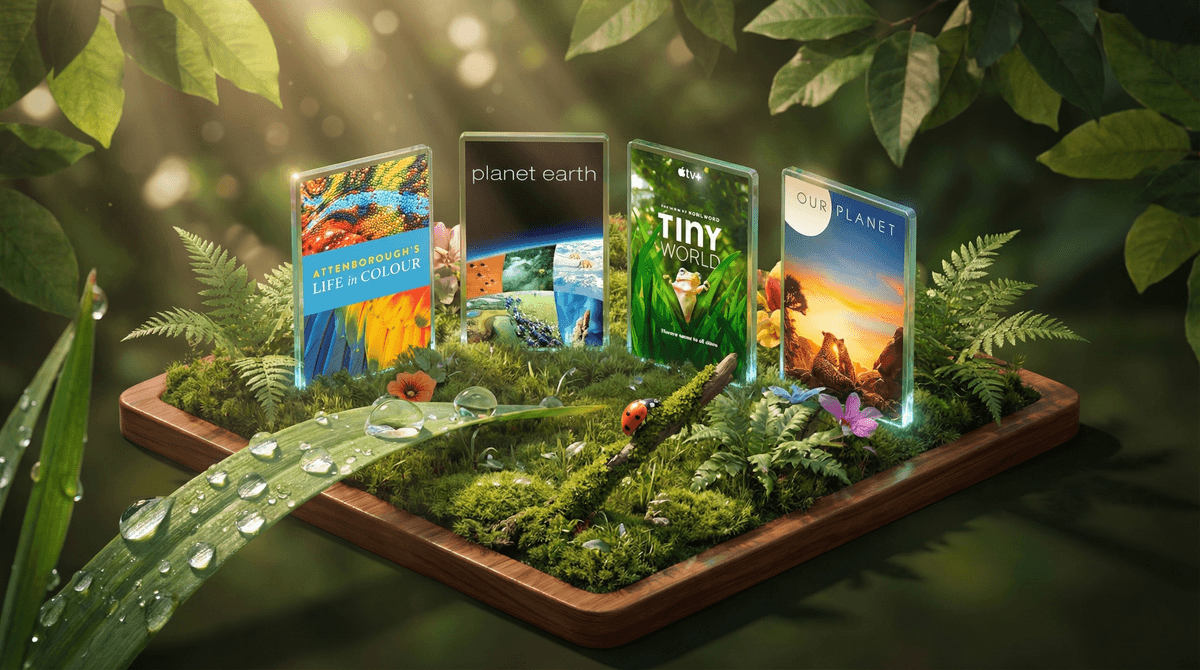
Tiny World is an Apple TV+ nature documentary series that does exactly what it says on the tin: it shows you the world from a really, really small perspective. We're talking macro-lens cinematography that makes a mouse look like a lion and a beetle's journey across a log feel like an epic quest.
Narrated by Paul Rudd (yes, Ant-Man himself, which feels very on-brand), the series explores how tiny animals survive in various ecosystems around the world. Each episode focuses on a different habitat—rainforests, gardens, coral reefs, African savannas—and follows the surprisingly dramatic lives of creatures you'd normally step over without noticing.
The show debuted in 2020 with its first season of six episodes, followed by a second season in 2021 with another six episodes. Each episode runs about 30 minutes, making it a perfect length for younger attention spans without the commitment of a feature film.
Here's the thing: kids are naturally obsessed with small stuff. They're the ones stopping to watch ants carry crumbs, rescuing ladybugs, and asking a million questions about whether spiders have feelings. Tiny World taps directly into that fascination.
The cinematography is genuinely stunning—like, "wait, can we rewind that?" stunning. When a hummingbird hovers in slow motion or a baby octopus changes colors, it doesn't matter if you're 6 or 36, you're going to be mesmerized. The show makes the familiar feel alien and the overlooked feel important.
Paul Rudd's narration strikes a nice balance too. He's warm and engaging without being condescending, and the script doesn't dumb things down for kids while also not getting too technical. There's genuine humor (a mouse stealing seeds gets treated like a heist movie) and real stakes (will the baby turtle make it to the ocean?).
Best for: Ages 5+
This is one of those rare shows where the age range is genuinely wide. Preschoolers will be captivated by the visuals and the animals, elementary kids will start understanding the survival narratives, and middle schoolers can appreciate the actual science and cinematography.
Content considerations:
- Nature is nature. You will see predator-prey relationships. A spider catches a fly. A bird eats a beetle. It's not gratuitous or gory—this isn't a horror movie—but it's honest about how ecosystems work.
- The show doesn't shy away from showing animals dying or failing to survive, but it handles these moments matter-of-factly rather than traumatically. Still, sensitive kids might need a heads-up that not every creature makes it.
- There's no violence, scary music, or jump scares. The tension comes from natural drama (will the ant colony survive the flood?) rather than manufactured suspense.
For younger viewers (5-7): You might want to watch together, especially the first time, so you can gauge their reaction to predator scenes and answer questions. Some kids this age are totally fine with "that's how spiders eat!" and others might need reassurance.
For older kids (8+): Most can watch independently. This is actually great educational content that doesn't feel like homework.
The good stuff:
- Genuinely educational without being preachy. Kids will learn about ecosystems, adaptation, survival strategies, and biodiversity just by being entertained.
- Excellent conversation starter about nature, conservation, and paying attention to the small things around us. After watching, kids often want to go outside and look for tiny creatures in their own backyard.
- Beautiful production values. This isn't cheap nature footage with stock narration. The cinematography required serious time and technology—some shots took weeks to capture.
- No commercials, no ads, no weird YouTube algorithm rabbit holes. It's on Apple TV+, so it's a controlled viewing experience.
The less-good stuff:
- You need an Apple TV+ subscription. It's not available on free platforms, and at $9.99/month (as of 2026), it's another streaming service to pay for. That said, Apple TV+ has a pretty solid library of family content if you're already considering it.
- Limited episodes. With only 12 episodes total across two seasons, you'll run through it quickly if your kids get hooked. (Though honestly, these are shows kids will rewatch—the visuals hold up.)
Educational value: This is the kind of show teachers would genuinely be happy to hear your kid watched. It touches on:
- Ecosystems and habitats
- Predator-prey relationships
- Adaptation and survival
- Biodiversity
- Conservation (subtly woven in, not heavy-handed)
If your kid is studying life science or ecosystems in school, this is a much more engaging way to reinforce those concepts than a textbook.
If you're wondering how this stacks up against other nature shows:
- vs. Planet Earth/Blue Planet: Tiny World is more accessible for younger kids. Those BBC series are incredible but can be longer and more intense. Tiny World has a lighter touch.
- vs. Octonauts or Wild Kratts: Those are animated and more explicitly educational. Tiny World is real footage and feels more "grown-up" while still being kid-friendly.
- vs. YouTube nature content: Way higher quality, no algorithm concerns, no ads, no comments section. You know exactly what you're getting.
For more nature content your kids might enjoy, check out Our Planet or Life in Color with David Attenborough.
After watching Tiny World, try asking:
- "What was the smallest animal we saw today? The biggest?"
- "Why do you think that beetle needed to roll the dung ball?" (Spoiler: it's actually fascinating)
- "Should we go outside and see what tiny creatures we can find?"
- "How do you think they filmed that? What would it be like to be that close to a spider?"
These conversations can lead to bigger discussions about why nature matters and environmental stewardship without feeling like a lecture.
Tiny World is a solid win for intentional parents. It's beautiful, educational, age-appropriate for a wide range, and genuinely entertaining. The predator-prey content is handled responsibly, and honestly, it's good for kids to understand that nature isn't all Disney princess-singing-to-birds vibes.
If you already have Apple TV+, this is a no-brainer addition to your rotation. If you don't, it might be worth the free trial to check out—Apple has been building a decent family content library (Ted Lasso for you, Snoopy in Space for them).
The biggest gift this show gives kids is a sense of wonder about the world right under their feet. In an age where "nature content" often means watching someone else's safari on TikTok, Tiny World might actually inspire your kid to put down the iPad and go look at bugs in the backyard.
And honestly? That's worth 30 minutes of Paul Rudd telling you about a heroic hamster.
Ready to watch? You'll need an Apple TV+ subscription. The service offers a 7-day free trial for new subscribers.
Want more nature content? Check out our guide to the best nature documentaries for kids.
Curious about other Apple TV+ family shows? Read about Stillwater, Ghostwriter, or Helpsters.