

Jumanji: What Parents Need to Know Before Family Movie Night
TL;DR: The 1995 Jumanji is rated PG but plays more like PG-13 with genuinely scary moments (giant spiders, stampeding animals, a hunter shooting at kids). Best for ages 10+. The newer Jumanji: Welcome to the Jungle (2017) is funnier, less intense, and works better for ages 8-9+. Both have great themes about facing fears and working together, but you'll want to prep younger kids for some legitimately frightening scenes.
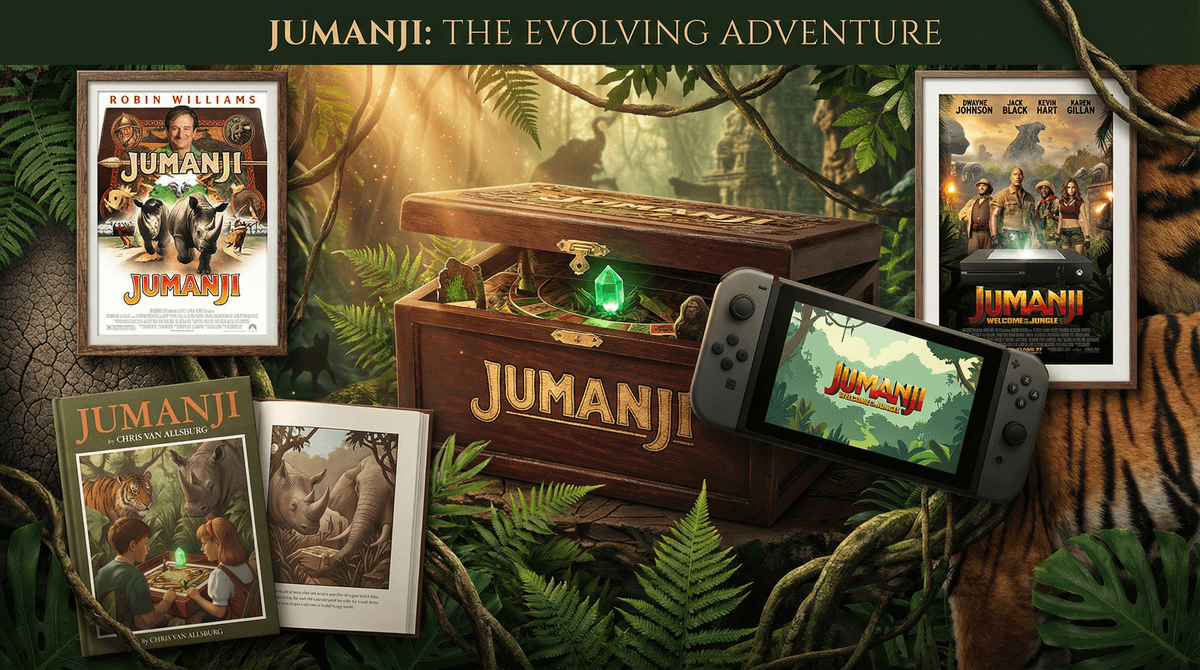
There are actually three Jumanji experiences to know about:
- The original 1995 film starring Robin Williams—a magical board game unleashes jungle chaos into the real world
- The 2017 reboot (Welcome to the Jungle) and its 2019 sequel (The Next Level)—teenagers get sucked into a video game and must survive as their avatars
- The 1981 picture book by Chris Van Allsburg that started it all
The original is a straight-up adventure thriller. The reboots are action-comedies with video game logic (three lives, character stats, comic deaths). Totally different vibes, both called Jumanji.
Age Rating: PG (but honestly feels PG-13)
Best For: Ages 10-12+
Runtime: 104 minutes
What Happens
Two kids in 1969 find a mysterious board game. When 12-year-old Alan rolls the dice, he gets sucked into the jungle world of Jumanji and doesn't escape for 26 years. When two new kids find the game in 1995, they accidentally release adult Alan (Robin Williams) and must finish the game to reverse all the chaos—which includes stampeding rhinos, carnivorous vines, giant mosquitoes, monsoons in the living room, and a big game hunter who literally shoots at children.
The Scary Stuff (Let's Be Real)
This movie has a PG rating but plays much scarier than most parents expect. Here's what actually freaked kids out in theaters:
- The hunter (Van Pelt) is genuinely menacing and fires a high-powered rifle at kids multiple times
- Giant spiders crawl on people and chase them through a house
- Alan's 26 years alone in the jungle is psychologically heavy—he's traumatized, has PTSD-like flashbacks
- The quicksand floor scene where a kid almost dies
- Bats attacking people's faces
- A kid almost gets eaten by a crocodile
- The overall chaos is relentless—there's barely a breather between scary moments
The special effects are dated by today's standards (very 90s CGI), which actually makes some scenes more unsettling in an uncanny valley way.
Why It's Actually Great
Despite the intensity, this is a legitimately good family adventure film with real stakes and emotional depth:
- Robin Williams gives a heartfelt performance as a man-child dealing with childhood trauma
- The themes about facing your fears and finishing what you start are meaningful
- The kids aren't annoying—they're brave and resourceful
- The ending is genuinely moving (the reunion scene gets me every time)
- It respects kids' intelligence and doesn't talk down to them
Parent Conversation Starters
- "What would you do if you were stuck somewhere for 26 years?"
- "Alan was really scared of his dad's disappointment. Do you ever worry about disappointing us?"
- "The game forced them to finish what they started. Why do you think that matters?"
Age Rating: PG-13
Best For: Ages 8-9+
Runtime: 119 minutes
What Makes It Different
This is basically a different franchise that happens to share the Jumanji name. Four high schoolers in detention find an old video game console, select their avatars, and get sucked into the game. Nerdy Spencer becomes The Rock (buff explorer), popular Bethany becomes Jack Black (overweight male cartographer), jock Fridge becomes Kevin Hart (tiny weapons specialist), and shy Martha becomes Karen Gillan (badass martial artist).
It's much more of a comedy than the original, with video game logic throughout—characters have three lives (shown as tattoo marks), NPCs repeat the same dialogue, there are obvious cutscenes and boss battles.
The Scary/Mature Stuff
- Much less intense than the 1995 film—played for laughs rather than genuine scares
- Some comic violence (people explode into animals when they die, then respawn)
- Mild sexual innuendo (mostly from Jack Black playing a teenage girl discovering he's now in a male body)
- A few butt/fart jokes and bathroom humor
- Some mild language (nothing worse than "ass" or "hell")
- Karen Gillan's character wears a crop top and short shorts—there's a whole joke about video game female character design being impractical
The PG-13 rating is mostly for action sequences and mild language. It's honestly less scary than the PG-rated original.
Why Kids Love It
- Video game structure is instantly relatable to modern kids
- The body-swap comedy is genuinely funny (Jack Black steals every scene)
- Great teamwork and friendship themes
- Characters have to learn to play to their strengths (literal character stats)
- The Rock and Kevin Hart have excellent chemistry
- It's funny without being mean—the humor comes from situations, not cruelty
The Sequel: The Next Level (2019)
Same vibe, slightly less fresh. The twist is that Spencer's grandpa (Danny DeVito) and his friend (Danny Glover) accidentally get sucked into the game, so now The Rock has to play Danny DeVito and Kevin Hart plays Danny Glover. It's fun if your kids loved the first reboot, but not essential viewing.
For families with kids 10+: Start with the 1995 original. It's a classic for a reason, and if your kids can handle Indiana Jones or Jurassic Park, they can handle this. Just prep them that it gets intense.
For families with kids 8-9+: Go with Welcome to the Jungle. It's funnier, lighter, and the video game framing helps kids process the scary moments as "not real even within the movie."
For kids under 8: Hold off on both. Try Zathura instead (basically Jumanji in space, slightly gentler) or stick with Night at the Museum for adventure-comedy vibes.
Chris Van Allsburg's original Jumanji picture book is a beautifully illustrated 32-page story that's perfect for ages 5-8. It's much simpler than either film—two kids find a board game, chaos ensues, they finish the game, everything resets. The pencil illustrations are gorgeous and slightly eerie without being scary.
The book is great for younger kids who aren't ready for the movies but want to know what everyone's talking about. It also makes a nice read-aloud before family movie night to introduce the concept.
Both versions of Jumanji offer surprisingly rich material for family conversations:
Consequences and responsibility: You can't just walk away from something because it's hard or scary. The game forces players to finish what they started.
Facing your fears: Every character has to confront something they're terrified of. Alan faces his dad's disappointment and the hunter. Spencer faces his insecurity. Martha faces her self-doubt.
Teamwork over individual glory: Nobody can win Jumanji alone. You need different skills, perspectives, and strengths.
The cost of avoidance: Alan spent 26 years in the jungle because he ran away from his problems. The game is basically a metaphor for how avoiding hard things makes them worse.
For the 1995 film:
- Watch it WITH your kids the first time, especially if they're on the younger end (10-11)
- Have the remote ready to pause if they need a break
- Don't watch it right before bedtime—give kids time to decompress
- Some kids are fine with spiders, some are terrified—you know your kid
For Welcome to the Jungle:
- The body-swap humor might prompt questions about gender and bodies—that's actually a good thing
- The "female video game character" costume commentary is a teaching moment about representation in games
- If your kids play Fortnite or Minecraft, they'll understand the respawn mechanic immediately
The original Jumanji is a legitimately scary adventure film with real emotional weight. It's a classic, but it earns its scares. The reboots are action-comedies that happen to share a name—lighter, funnier, more accessible for younger kids.
Both versions are worth watching with your family, just at different ages and stages. And honestly? The best part of Jumanji isn't the special effects or the action sequences—it's watching characters learn that courage isn't the absence of fear, it's doing the hard thing anyway.
That's a lesson worth rolling the dice for.
- Check your kid's sensitivity level: Have they handled Harry Potter and the Chamber of Secrets (the spider scene) or The Incredibles (Syndrome is pretty menacing)? Then they can probably handle Jumanji.
- Read the book first if you're unsure—it's a low-stakes way to introduce the concept
- Plan a post-movie activity—maybe play an actual board game together to decompress and talk about what you watched
- Ask what your kid thought was scariest—their answer will tell you a lot about what they're processing
Want to explore more family adventure movies? Check out our guides to movies like Jumanji or adventure movies for kids who are ready for something intense.