

The Ultimate Guide to Family-Friendly Mystery Movies
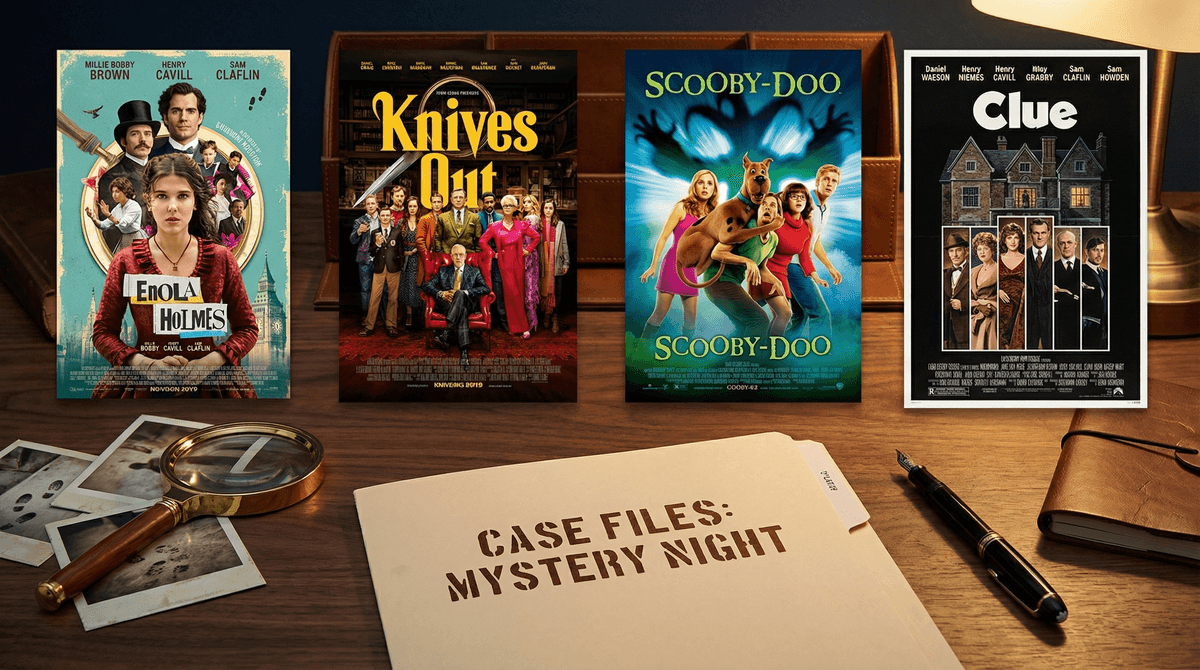
TL;DR: Mystery movies are screen time gold—they keep kids engaged, teach critical thinking, and actually give you something to talk about afterward. Here's what works by age: Scooby-Doo for littles, Enola Holmes for tweens, and Knives Out for teens who can handle some language. Skip the jump-scares, embrace the clue-hunting.
Here's what makes mystery movies uniquely valuable for family screen time: they're active watching. Your kid can't zombie-scroll through their brain while watching a good mystery—they're tracking suspects, spotting clues, making predictions. It's the opposite of passive consumption.
Plus, mysteries teach actual skills: deductive reasoning, attention to detail, understanding motivation, and that deeply satisfying feeling of solving something before the reveal. When your 8-year-old correctly predicts the culprit in The Great Mouse Detective, they're not just entertained—they're building confidence in their analytical thinking.
The bonus? Post-movie conversations practically write themselves. "Who did you think did it?" is infinitely more engaging than "Did you like it?"
The live-action version is actually pretty solid for this age. Yeah, it's campy, but that's the point. The "monsters" are always people in masks, the gang solves mysteries with friendship and snacks, and there's zero actual danger. Ages 6+ can handle the mild spookiness; younger kids might need reassurance during the chase scenes.
The formula is perfect for beginners: clues are obvious, red herrings are gentle, and the reveal is always satisfying without being scary.
Not strictly a mystery, but the prison-break whodunit plot is genuinely clever, and the whole thing is wrapped in such warmth and humor that even the "villain" isn't that villainous. Ages 5+ will follow the mystery, younger kids will just enjoy the bear in a prison uniform.
This is what we mean by "family-friendly"—everyone in the room is entertained, not just tolerating it for the kids.
Disney's Sherlock Holmes adaptation with mice is criminally underrated. Basil is a fantastic detective, Ratigan is a properly menacing villain (Vincent Price's voice work is chef's kiss), and the mystery has real stakes without being traumatizing. Ages 6+ is the sweet spot.
Fair warning: the climax in Big Ben is genuinely tense. Not nightmare-inducing, but you might have a kid climbing into your lap.
Look, is this high cinema? No. Is it a mystery? Barely. But for ages 4-6, it's got problem-solving, teamwork, and just enough "figuring things out" to count as mystery-adjacent. If you're trying to introduce the concept of clues and solutions without any tension whatsoever, this is your entry point.
You will be bored. That's fine. Your preschooler will be delighted.
This is THE gateway mystery movie for elementary-aged kids. Millie Bobby Brown breaks the fourth wall, the mystery is genuinely engaging, there's adventure and humor, and Enola is a fantastic role model—smart, brave, and figuring things out as she goes. Ages 8+ will be completely absorbed.
The sequel (Enola Holmes 2) is equally good, with a more complex mystery involving factory workers and social justice. Both films sneak in actual history and feminism without being preachy.
Bonus: if your kid loves these, the Enola Holmes books by Nancy Springer are excellent.
Kenneth Branagh's Agatha Christie adaptation is lush, star-studded, and surprisingly kid-appropriate. Yes, there's a murder, but it's all very civilized—no blood, no gore, just good old-fashioned detective work. Ages 10+ who can handle the slower pace and period dialogue will love feeling sophisticated.
This is your "I want my kid to appreciate classic mystery storytelling" pick. Pair it with hot chocolate and you've got an event.
Okay, hear me out. Yes, it's rated PG-13. Yes, there's some language (mostly one character saying "shit" a lot). But for ages 11-12 who can handle mature themes, this is the gold standard of modern mystery movies. The plot is intricate without being confusing, every character is a suspect, and the reveal is so satisfying.
The language is the main concern—if your tween is already hearing worse at school (spoiler: they are), this is a non-issue. The actual content is a wealthy family being terrible to each other, which is honestly great material for discussing privilege and ethics.
A modern update that actually works. Nancy is a fish-out-of-water in a new town, there's a "haunted" house, and the mystery involves local history and real estate corruption (because of course it does). Ages 8-11 is perfect—it's got just enough spookiness to feel exciting without being scary.
Sophia Lillis (from It, but this is MUCH tamer) is great as Nancy, and the whole thing feels contemporary without trying too hard.
Based on the Louis Sachar book, this is technically more of an adventure-mystery hybrid, but the way past and present mysteries interweave is genuinely clever. Ages 9+ will appreciate the complexity, and it's one of those rare adaptations that's as good as the book.
There are some heavier themes (juvenile detention, family curses, racism in the Old West), so it's worth watching together and being ready for questions.
The Knives Out sequel is even better than the original—more playful, more satirical, and with a mystery that rewards attention to detail. Ages 12+ who've seen the first one will love this. Same language considerations apply.
Daniel Craig is having the time of his life as Benoit Blanc, and the whole thing is a masterclass in misdirection. Your teen will feel very smart when they spot the clues.
A murder mystery set in 1950s London theater world—think Knives Out meets Agatha Christie. It's clever, funny, and very meta about mystery tropes. Ages 13+ who appreciate humor will get a kick out of this.
Fair warning: it's a bit slow for kids who need constant action, but for the right teen, it's delightful.
Okay, the 1997 TV movie adaptation is dated and hard to find, but if you can track it down, it's worth it for fans of the book. Better plan: read The Westing Game book together and then watch the movie to discuss how adaptations work (or don't). Ages 10+ for both.
This is puzzle-box mystery at its finest—16 heirs, paired up, trying to solve a will. It's like Clue as a novel.
Speaking of Clue—the movie is a cult classic for a reason. It's fast-paced, genuinely funny, and has three different endings. Ages 12+ who can keep up with rapid-fire dialogue and slapstick humor will love it.
Tim Curry is absolutely unhinged in the best way. Some mild innuendo that will go over younger kids' heads but might prompt questions from older tweens.
Mystery movies aren't all created equal. The difference between a cozy mystery and a thriller matters. If your kid is sensitive to tension, stick with the lighter options. If they're thrill-seekers, they'll be bored by overly gentle mysteries.
The "who" matters less than the "how." Some mysteries (like Enola Holmes or Glass Onion) show you the crime early and the fun is figuring out how it happened. Others keep you guessing about the culprit. Know which type your kid prefers.
Language and violence vary wildly. A movie can have a murder without showing any blood (most Agatha Christie adaptations), or it can be rated PG and still have intense scenes. Check Common Sense Media reviews for specifics if you're unsure.
Post-movie discussions are the real value. Ask questions: "When did you figure it out?" "What clues did you notice?" "Who did you think did it and why?" This is where critical thinking actually happens.
Early Elementary (5-7): Stick with animated or very gentle live-action. The mystery should be obvious enough that they can follow along but not so simple they're bored. Scooby-Doo, Paddington 2, and The Great Mouse Detective are your tier.
Late Elementary (8-10): This is the sweet spot for kid-detective stories. Enola Holmes, Nancy Drew, and Holes work great. They can handle more complex plots and some mild tension.
Middle School (11-13): They're ready for actual whodunits with adult casts and more sophisticated plots. Knives Out, Murder on the Orient Express, and Glass Onion are all fair game, with language disclaimers.
High School (14+): Pretty much anything goes at this point, as long as it's not gratuitously violent. They can handle complex narratives, unreliable narrators, and dark themes. See How They Run and Clue are great for teens who appreciate clever writing.
If your kid devours these movies, there's a whole world of mystery TV to explore:
-
Only Murders in the Building: Hulu series that's genuinely funny and clever. Ages 13+ for some mature themes and language, but it's cozy mystery gold.
-
The InBESTigators: Australian kids' show on Netflix about a detective agency run by elementary schoolers. Perfect for ages 6-10.
-
Carmen Sandiego: Netflix animated series that's part mystery, part geography lesson, all fun. Ages 7-12.
Mystery movies are some of the best screen time you can offer—they're engaging, educational, and actually give you something to talk about afterward. Start with age-appropriate picks that match your kid's sensitivity level, and don't be afraid to stretch a bit as they get older.
The goal isn't to shield them from all tension—it's to give them mysteries they can solve, characters they can root for, and that deeply satisfying "aha!" moment when the pieces click together.
Next Steps: Pick one movie from your kid's age range, make it an event (popcorn, dimmed lights, no phones), and see if they can solve it before the reveal. If they love it, you've got a whole genre to explore together.
And if you want more recommendations, ask about mystery books for kids or mystery games that teach logic—the rabbit hole goes deep, and it's all good stuff.