

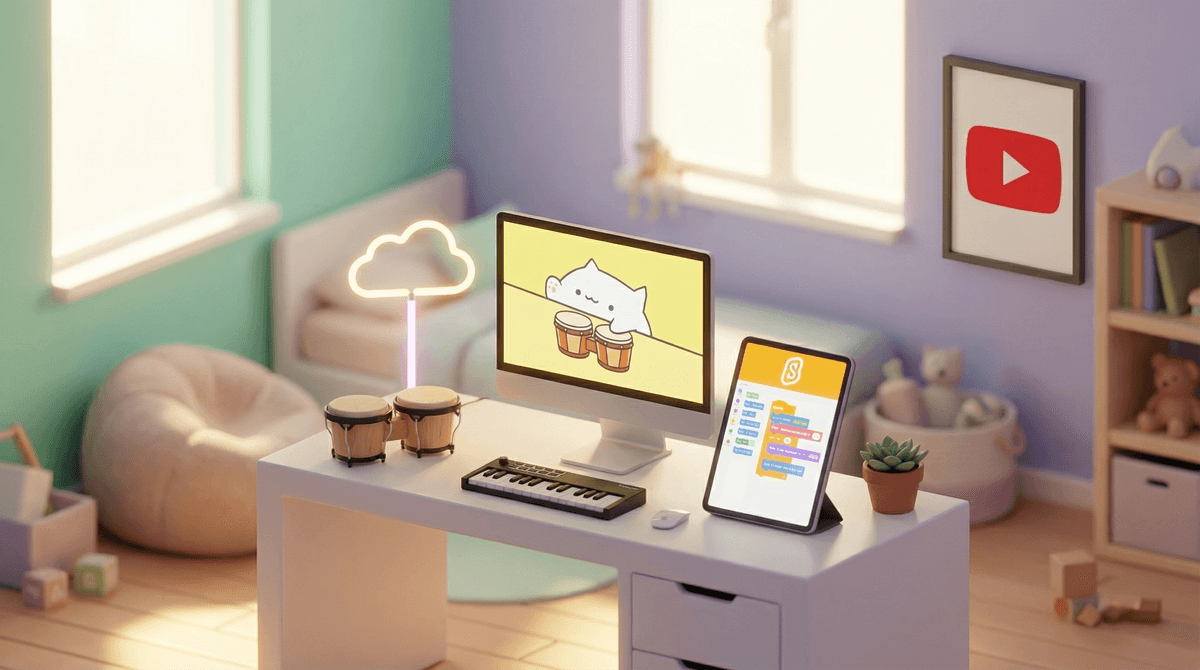
If you've caught your kid watching a simple white cartoon cat rhythmically tapping two bongos, congratulations—you've encountered one of the internet's most wholesome obsessions. Bongo Cat is exactly what it sounds like: an animated cat that plays various instruments (mostly bongos, but also piano, drums, and pretty much anything else the internet can dream up).
The original Bongo Cat was created in 2018 by Twitter artist @StrayRogue as a simple two-frame animation. Another artist, @DitzyFlama, added the now-iconic bongo drums, and the internet absolutely ran with it. What started as a cute doodle became a full-blown meme phenomenon, spawning thousands of variations, remixes, and covers.
Here's the thing: Bongo Cat is genuinely delightful. In an internet landscape filled with content that makes you want to throw devices into the ocean, Bongo Cat is pure, uncomplicated joy. The cat bops along to music with perfect timing, its little paws tapping away, and that's... it. No jump scares, no inappropriate humor, no trying to sell your kid cryptocurrency.
The appeal is surprisingly universal across age groups. For younger kids (ages 5-8), it's the simple animation and cute factor—a cartoon cat playing music is inherently entertaining. For tweens and teens (ages 9-15), it's become a cultural reference point and a way to share music they love.
The real magic is in the remixes. The Bongo Cat format has been applied to basically every genre of music imaginable. Your kid might be watching Bongo Cat play:
It's also become a gateway to music discovery. Kids stumble onto a Bongo Cat video, fall in love with the song, and then go exploring. Not the worst rabbit hole they could fall down.
One reason Bongo Cat has such staying power is that it's open source. The original creators made the assets freely available, encouraging others to create their own versions. This has spawned an entire creative community of animators, musicians, and programmers who make increasingly elaborate Bongo Cat content.
Some versions are interactive—you can control Bongo Cat with your keyboard, making it play actual music. Others are elaborate animations synced perfectly to complex songs. There are even Roblox games where you can be Bongo Cat.
This is actually good for kids to see. It's a perfect example of remix culture, creative commons licensing, and collaborative internet creativity. The original artists could have locked everything down, but instead they said "here, make cool stuff with this," and the result is thousands of people learning animation, music production, and coding skills.
Here's the rare good news: Bongo Cat content is about as safe as internet content gets. The original animations are completely appropriate for all ages. Most of the popular remixes stick to instrumental music or well-known songs.
The main thing to watch for is where your kid is watching these videos. YouTube is the primary home for Bongo Cat content, which means the usual YouTube concerns apply:
- Autoplay can lead to unrelated content
- Comments sections exist (and YouTube comments are... YouTube comments)
- Ads can be inappropriate
- Recommended videos might not stay in the wholesome zone
For younger kids (under 8), YouTube Kids is probably the better option, though Bongo Cat content is generally fine on regular YouTube with parental controls enabled.
For older kids (8+), Bongo Cat videos are a pretty safe interest. The worst you're likely to encounter is a Bongo Cat version of a song with lyrics you wouldn't choose, but that's a music conversation, not a Bongo Cat problem.
This is one of the good ones. If your kid is spending time watching Bongo Cat videos, that's genuinely fine. It's not "brain rot" content—there's actual musicality, timing, and often impressive technical skill involved.
Some kids get inspired to create their own versions. If your kid expresses interest in making Bongo Cat animations, that's actually a fantastic entry point into:
- Animation software (even basic stuff like Scratch or more advanced tools like Adobe Animate)
- Music production and editing
- Video editing
- Understanding copyright, creative commons, and remix culture
The educational angle is real here. Kids who get into creating Bongo Cat content are learning legitimate digital media skills. They're also engaging with music in an active rather than passive way—figuring out timing, rhythm, and how songs are structured.
If your kid is watching these videos, try asking: "What song is that?" or "How do you think they made the cat's movements match the music so perfectly?" You might be surprised by how much they've absorbed about music production and animation just from being fans.
In the grand landscape of things kids are into online, Bongo Cat is genuinely wholesome. It's creative, it's musical, it's collaborative, and it's not trying to sell them anything or expose them to inappropriate content.
Ages 5-8: Perfectly appropriate. The simple animation and music is engaging without being overstimulating.
Ages 9-12: Great age for this content. Many kids this age are discovering music preferences and Bongo Cat is a fun way to explore.
Ages 13+: Still appropriate, though teens might be more into creating their own versions than just watching.
If you're looking for things to worry about in your kid's digital life, Bongo Cat shouldn't be one of them. This is the rare internet phenomenon where the answer is: yes, this is fine, let them enjoy the musical cat.
Want to explore more wholesome internet culture with your kids? Check out alternatives to YouTube or learn about age-appropriate creative apps that might channel their Bongo Cat enthusiasm into making their own content.