

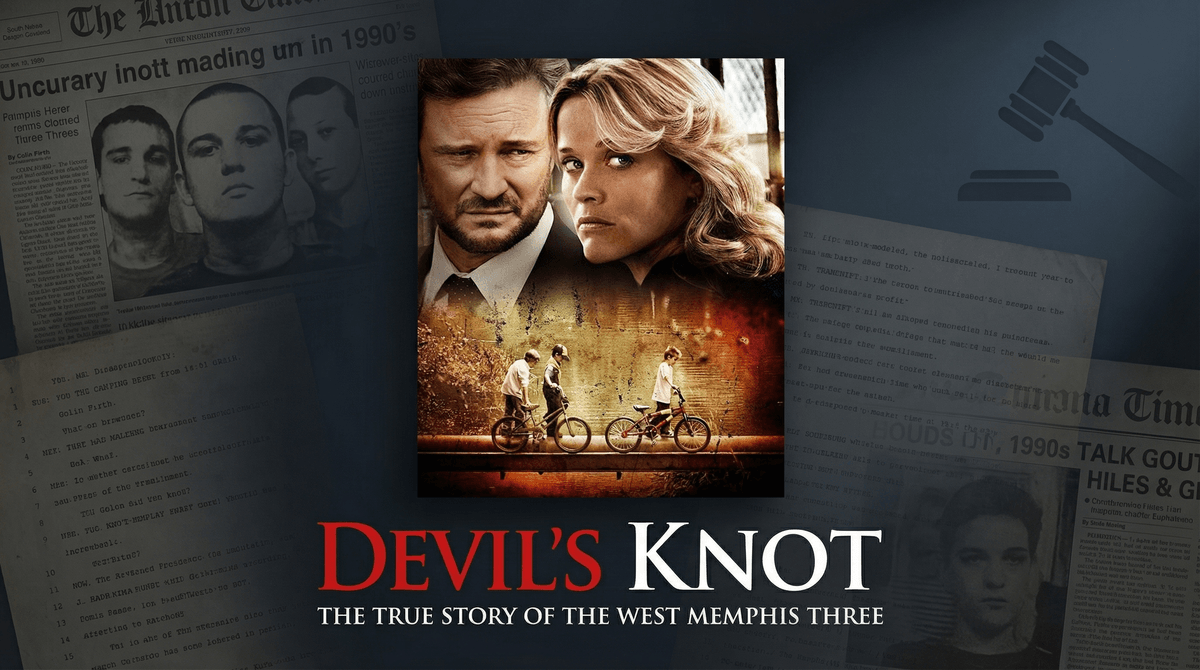
Devil's Knot: Why Critics Were Divided on This True Crime Drama
TL;DR: Devil's Knot landed a 21% critics score on Rotten Tomatoes, but this isn't really about whether it's a "good movie" — it's about whether a heavy, procedural courtroom drama about child murders belongs anywhere near your family viewing queue. Spoiler: probably not, unless you've got older teens interested in criminal justice and you're ready for some tough conversations.
Devil's Knot is a 2013 courtroom drama starring Reese Witherspoon and Colin Firth, directed by Atom Egoyan. It tells the story of the West Memphis Three — three teenagers convicted in 1994 for the murders of three 8-year-old boys in West Memphis, Arkansas, in a case that became one of the most controversial wrongful conviction stories in American legal history.
The movie attempts to capture the hysteria, flawed investigation, and "Satanic panic" that led to the convictions of Damien Echols, Jason Baldwin, and Jessie Misskelley Jr. It's based on Mara Leveritt's 2002 book of the same name, which meticulously documented the case's many problems.
Here's the thing about that 21% critics score: it's not because Devil's Knot is offensive or unwatchable. Critics weren't divided because of controversy — they were mostly united in finding it frustratingly flat.
The consensus? The movie takes one of the most compelling true crime cases of the past 30 years and somehow makes it feel... boring. Egoyan's approach is procedural and restrained to a fault. Where documentaries like Paradise Lost (the HBO series about the same case) crackled with urgency and emotion, Devil's Knot plods through the facts with all the energy of reading a legal brief.
Critics noted:
- Witherspoon and Firth feel wasted in underwritten roles that never come alive
- The pacing drags despite covering inherently dramatic material
- It adds nothing new to a story already covered extensively in multiple documentaries
- The emotional weight never lands — we're told this is tragic but rarely feel it
The 61% audience score tells a slightly different story. Regular viewers seem more forgiving of the film's flaws, possibly because they're less familiar with the case or more invested in the true crime genre regardless of execution.
If your teen is asking to watch Devil's Knot, they're probably already deep into true crime content. And honestly? That's not inherently bad. True crime can teach critical thinking about the justice system, media influence, and wrongful convictions.
But Devil's Knot specifically presents some challenges:
The subject matter is genuinely heavy. This isn't a mystery where someone stole a painting. Three young children were brutally murdered, and the movie doesn't shy away from the grief and horror, even if it handles it in a muted way.
It's about system failure. The real story of the West Memphis Three is about how panic, prejudice, and incompetence can destroy innocent lives. That's an important lesson, but it can be deeply unsettling for younger viewers who still believe the system generally works.
The movie itself isn't great at providing context. If you're not already familiar with the case, Devil's Knot can feel confusing and incomplete. It assumes knowledge it doesn't provide.
Ages 16+: This is where I'd draw the line, and even then, with context and conversation.
Not recommended for under 16: The subject matter (child murder, wrongful conviction, death penalty) combined with the film's inability to provide clear emotional or educational scaffolding makes it a poor choice for younger teens.
If your 15-year-old is interested in true crime and criminal justice, I'd actually steer you toward better options:
- Making a Murderer (Netflix) — more engaging, better structured
- The Innocent Man (Netflix) — based on John Grisham's book
- Just Mercy — a more accessible film about wrongful conviction with Michael B. Jordan
Or if they specifically want to learn about the West Memphis Three case, the Paradise Lost documentary trilogy is far more compelling and educational, though equally intense in subject matter.
The real story is more interesting than the movie. The West Memphis Three case is fascinating because it involves so many intersecting issues: class prejudice, religious panic, flawed forensic science, media influence, and the power of grassroots activism. Celebrities like Johnny Depp and Eddie Vedder championed the cause. The three men were eventually released in 2011 through an unusual legal maneuver (Alford plea) after spending 18 years in prison.
Devil's Knot tries to capture all of this and ends up feeling like a Wikipedia article with famous actors.
Content warnings include:
- Discussion and brief depiction of child murder
- Courtroom testimony describing violence
- Emotional scenes of grieving parents
- Death penalty themes
- Religious prejudice and "Satanic panic" hysteria
There's no graphic violence shown, but the subject matter alone is disturbing.
The movie doesn't have a "satisfying" ending because the real case didn't either. The three men were released but not exonerated. The real killer was never found. Justice wasn't really served for anyone. If your teen needs narrative closure, this will frustrate them.
If your teenager is genuinely interested in criminal justice, wrongful convictions, and how the system works (or doesn't), here are better starting points:
For younger teens (13-15):
- A Case of You podcast — true crime cases explained for younger audiences
- The 57 Bus by Dashka Slater — a YA book about a real crime and its aftermath
- Exhibit A: Secrets of Forensic Science — focuses on forensic science without gratuitous violence
For older teens (16+):
- Serial podcast Season 1 — the gold standard for thoughtful true crime
- When They See Us — Ava DuVernay's powerful series about the Central Park Five
- The Thin Blue Line — the documentary that actually freed a wrongfully convicted man
If you do watch Devil's Knot with your older teen, here are conversation starters:
"What do you think made the police and prosecutors so convinced they had the right people?" This opens up discussion about confirmation bias, tunnel vision in investigations, and how prejudice influences justice.
"How did the media coverage affect the case?" The West Memphis case happened during the "Satanic panic" of the 1990s, when communities across America were convinced secret devil-worshipping cults were everywhere. It's a fascinating study in moral panic and how it spreads.
"What would you do differently if you were investigating this case?" This encourages critical thinking about forensic evidence, witness interviews, and proper procedure.
"How do you think the families of the victims felt about the three men being released?" There's no easy answer here. Some believed in the men's innocence, others remained convinced of their guilt. It's a reminder that wrongful conviction cases have multiple victims.
Devil's Knot's Rotten Tomatoes score reflects what it is: a well-intentioned but ultimately flat adaptation of a compelling true story. The low critics score isn't about it being inappropriate or offensive — it's about it being boring, which is almost worse when you're dealing with such important subject matter.
For parents, the question isn't really "Is this a good movie?" (it's not), but rather "Is this the right way for my teen to learn about this case and these issues?"
My take: Skip Devil's Knot. If your teen is interested in wrongful convictions and criminal justice, there are better, more engaging, more educational options out there. And if they specifically want to learn about the West Memphis Three, point them toward the Paradise Lost documentaries or books about the case that provide more context and insight.
The true crime genre can be valuable for teens — it teaches critical thinking, media literacy, and healthy skepticism about institutions. But it needs to be done well, with appropriate context and conversation. Devil's Knot, despite its good intentions and talented cast, just doesn't deliver.
Next Steps:
