

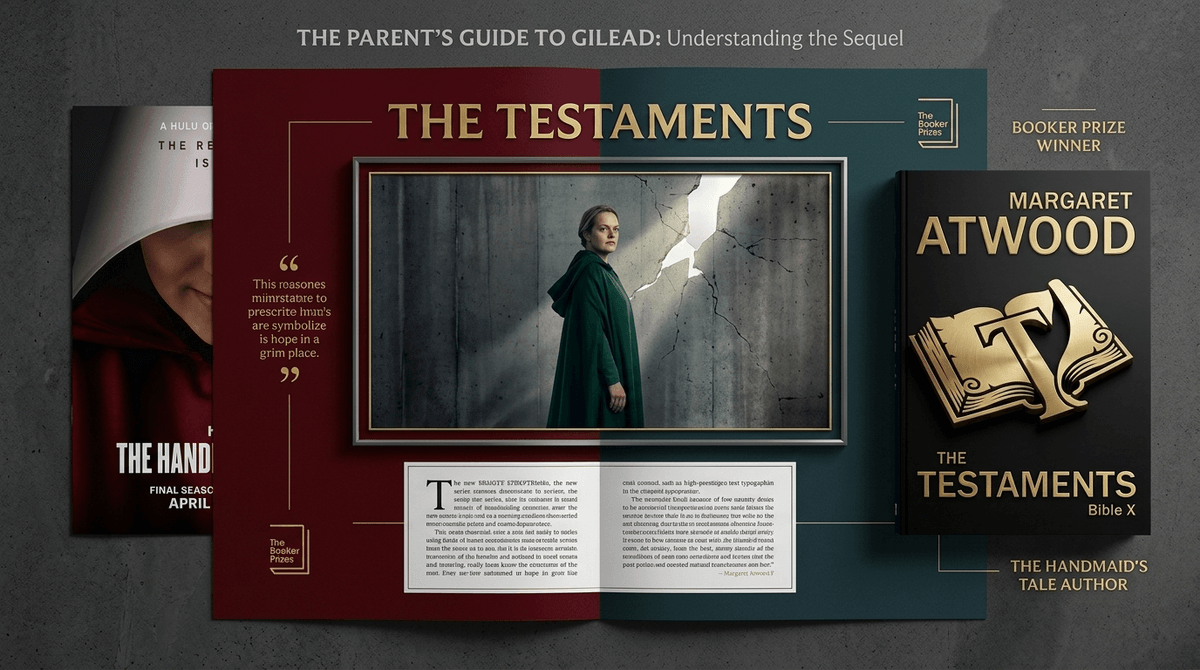
The Testaments is rated TV-MA, and while it trades some of the relentless grimness of the original series for a high-stakes "teen rebellion" thriller vibe, it’s still heavy, intense, and definitely not for the middle school crowd.
TL;DR: Premiering April 8, The Testaments is the long-awaited sequel to The Handmaid’s Tale, following three women—including two teenagers—as they attempt to take down Gilead from the inside and out. It’s a sophisticated dystopian drama that Screenwise recommends for ages 16+ due to themes of systemic oppression, sexual violence (mostly discussed/implied), and graphic "justice" scenes. If your teen enjoyed The Hunger Games but is ready for something with more political weight and darker consequences, this is the next step.
Screenwise Parents
See allIf you’ve been living under a rock (or just avoiding depressing prestige TV), The Handmaid's Tale told the story of June Osborne surviving a near-future theocratic dictatorship called Gilead. The Testaments, based on Margaret Atwood’s 2019 novel, picks up years later.
The story shifts focus to three different narrators:
- Agnes: A young woman raised within the elite "Commander" circles of Gilead who begins to see the cracks in the system.
- Daisy: A teenager in Canada who discovers her entire identity is a lie and that she’s a target for Gilead’s secret agents.
- Aunt Lydia: The formidable villain we love to hate, who is now playing a much more complex, long-term game of survival and sabotage.
Unlike the first series, which often felt like a "misery marathon," this sequel feels more like a heist or a spy thriller. There’s a sense of momentum and hope that was often missing from June’s story. According to Screenwise community data, about 65% of parents who watched the original show plan to co-watch this with their older teens, citing the "rebellion" themes as a great bridge for talking about real-world agency.
We’re in an era where "dystopian" isn't just a book genre; it’s a vibe kids use to describe the news. While your 12-year-old might be calling everything "Ohio" (slang for weird or cringey), The Testaments deals with actual, high-stakes "weirdness"—the kind involving the loss of fundamental rights.
For intentional parents, this show is a massive opportunity to talk about:
- Information Literacy: How Gilead uses propaganda to keep girls like Agnes in the dark.
- Bodily Autonomy: A central theme of the series that is incredibly relevant in 2026.
- The Power of Small Actions: How individual choices (like Daisy’s or Aunt Lydia’s) can eventually topple a giant, corrupt system.
Let’s not sugarcoat it: Gilead is a nightmare. Even though The Testaments is slightly more "accessible" than its predecessor, it doesn't pull its punches.
Violence and Gore
Expect "Gilead-style" justice. This includes public executions, physical punishments, and intense scenes of escape and pursuit. It’s not "slasher movie" gore, but it is emotionally heavy violence.
Sexual Content
The original show was notorious for graphic depictions of sexual assault. The Testaments focuses more on the threat of forced marriage and the systemic control of women’s bodies. It’s less "on-screen graphic" but arguably just as psychologically intense for a viewer who isn't prepared for those themes.
Religious Extremism
The show uses religious language to justify oppression. For families with strong faith traditions, this is a crucial area to navigate—distinguishing between genuine faith and the weaponization of religion for power.
If your teen is pushing to watch this because "everyone at school is talking about it," here’s how to handle it without being the "no fun" parent:
- Read the book first: The Testaments by Margaret Atwood is a fantastic read. If they can handle the book, they can likely handle the show. Plus, it makes for a great "book vs. show" comparison.
- Watch the "Essential" Handmaid’s episodes: They don’t need to watch all five seasons of the original show (that’s a lot of trauma for one teen). Use a guide to The Handmaid's Tale to catch them up on the lore.
- Check the Screenwise WISE Score: Our community currently gives the show a "Contextual Complexity" score of 88/100. This means it’s not "brain rot" like some YouTube trends, but it requires a lot of processing power.
Instead of asking "Was it too scary?", try these:
- "Agnes grew up thinking Gilead was perfect. How do we know when the information we're getting is biased?"
- "Daisy had to leave her whole life behind in an instant. What do you think gives someone that kind of resilience?"
- "Aunt Lydia is a 'villain' who thinks she's doing the right thing. Do you think she's redeemable?"
Q: Is The Testaments appropriate for a 13-year-old? Generally, no. Screenwise and most parent communities suggest waiting until at least 15 or 16. The themes of sexual subjugation and the psychological weight of the "Aunt" training are very heavy for middle schoolers.
Q: Do you need to watch The Handmaid's Tale before watching The Testaments? It helps, but it’s not strictly necessary. The show is designed to stand on its own, though the emotional payoff of seeing certain characters return is much higher if you know the history of Gilead.
Q: Is there a lot of "brain rot" content in the show? Not at all. This is high-level storytelling. If you’re worried about your kid’s attention span being ruined by TikTok or Skibidi Toilet, a show like The Testaments is actually a great "antidote"—it requires focus, empathy, and critical thinking.
Q: What are the content warnings for The Testaments? Key warnings include: systemic misogyny, child marriage (discussed), graphic executions, psychological torture, and intense peril involving teenagers.
The Testaments is a rare sequel that actually feels necessary. It takes the terrifying world of Gilead and gives us a roadmap for how hope survives in dark places. For parents of older teens, it’s a "prestige" viewing experience that can spark some of the most important conversations you’ll have all year.
Just maybe don't binge it all in one night—even in 2026, Gilead is a lot to take in.
- Check out our guide to dystopian media for teens for more age-appropriate recommendations.
- If your teen wants something lighter but still "smart," look into Stardew Valley or The Wild Robot.
- Take the Screenwise Survey
 to see how your family's media consumption compares to your local community.