

If you're here, you probably already know the basics: dystopian future, kids forced to fight to the death on live TV, teenage rebellion against an oppressive government. But with the recent resurgence thanks to The Ballad of Songbirds and Snakes prequel, many families are revisiting the original series or discovering it for the first time. And that PG-13 rating? It's doing a lot of heavy lifting.
The Hunger Games came out in 2012, based on Suzanne Collins' wildly popular book series. The premise: In the nation of Panem, 24 teenagers (called "tributes") are selected annually to fight to the death in an elaborate televised arena until only one survives. It's essentially Battle Royale meets reality TV, wrapped in a story about class warfare, propaganda, and the cost of survival.
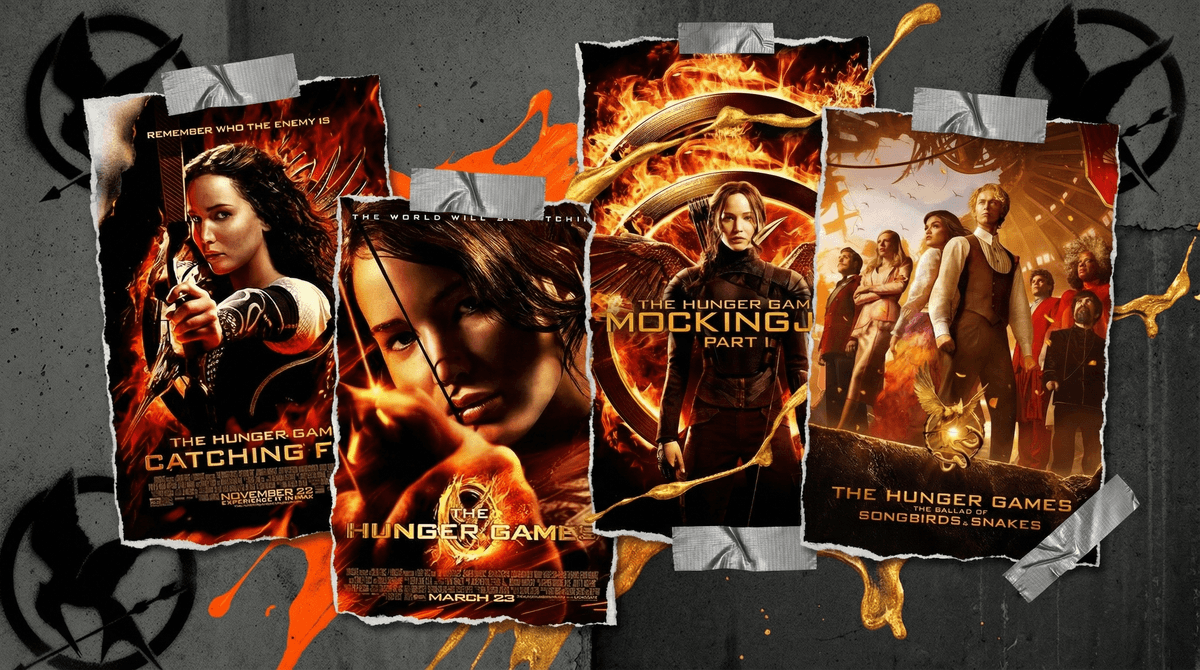
The franchise includes four films: The Hunger Games, Catching Fire, Mockingjay Part 1, and Mockingjay Part 2. All carry a PG-13 rating. The 2023 prequel, The Ballad of Songbirds and Snakes, also got PG-13.
Here's the thing: PG-13 means "parents strongly cautioned" and suggests content may be inappropriate for children under 13. But the MPAA rating system is notoriously inconsistent, and The Hunger Games is a perfect example of why you can't just trust the label.
The violence is the main issue. Yes, the films avoid graphic gore—you won't see blood spurting or close-ups of wounds. But the concept is deeply disturbing: children murdering other children for entertainment. The camera work is often shaky and cuts away from the worst moments, but the implications are crystal clear. Kids are stabbed, necks are snapped, a girl is stung to death by mutant wasps while hallucinating, another is mauled by genetically engineered dogs. One character dies slowly from infection. It's not gratuitous, but it's heavy.
The PG-13 rating was likely achieved through clever editing rather than toning down the story. The books are actually more explicit in describing the violence, so in some ways the movies are the "softer" version—which tells you something about the source material.
Ages 7-10: Not yet. Even if your kid is a strong reader who devoured Percy Jackson or Harry Potter, The Hunger Games is a different beast. The central premise—kids killing kids—is genuinely traumatic content for most elementary schoolers. Some highly sensitive kids in this age range will have nightmares. Others might not fully grasp the horror, which is its own problem.
Ages 11-13: Maybe, with caveats. This is where it gets personal to your kid. The books are technically marketed as Young Adult (ages 12+), and many middle schoolers have read them. But "can read it" doesn't mean "should watch it." The visual medium makes the violence more immediate and harder to process.
Consider:
- Has your kid encountered death or violence in media before, and how did they handle it?
- Are they asking to watch it because friends have, or because they're genuinely interested?
- Can they handle moral complexity? The story doesn't have clear good guys and bad guys, and even the "heroes" do terrible things.
If you're on the fence, start with the book instead. Reading gives kids more control over pacing and lets them process disturbing content at their own speed.
Ages 14+: Probably ready, but still worth a conversation. Most high schoolers can handle the content, especially if they're already consuming darker media. But The Hunger Games isn't just action—it's commentary on reality TV, desensitization to violence, propaganda, and trauma. The best way to watch it with teens is to actually watch it with them and talk about what you're seeing.
Romance and sexuality: Minimal. There's a love triangle between Katniss, Peeta, and Gale that spans the series, but it's mostly emotional tension. A few kisses, nothing explicit. The films actually downplay the romance compared to the books, where it's more central.
Language: Mild. A few instances of "hell" and "damn," but nothing that would shock a middle schooler who rides the bus.
Themes: This is where the real maturity requirement comes in. The story deals with:
- PTSD and trauma (especially in the later films)
- Government oppression and propaganda
- Class inequality and exploitation
- The ethics of child soldiers and rebellion
- Survivor's guilt
These aren't background elements—they're the point of the story. If your kid isn't ready to grapple with "why would a government force children to kill each other?" and "when is violence justified?", they're not ready for The Hunger Games.
Substance use: The Capitol citizens are depicted as decadent and excessive, including drinking. In Catching Fire, there's a scene where a character mentions a drink that makes you vomit so you can keep eating at parties—it's meant to be horrifying commentary on wealth and waste, but it's also... a lot.
Despite all the darkness, The Hunger Games resonates because:
It takes young people seriously. Katniss isn't a chosen one with magic powers—she's a regular kid forced into an impossible situation, and she's angry about it. She makes mistakes. She's traumatized. She doesn't want to be a symbol or a hero; she just wants to protect her little sister.
It's actually about something. This isn't mindless action. The story critiques reality TV, government surveillance, media manipulation, and economic inequality. It asks hard questions about when violence is justified and what we're willing to watch for entertainment. (The irony that we're watching kids fight to the death in a movie about the horror of watching kids fight to the death is not lost on anyone.)
The female protagonist is complicated. Katniss is tough, flawed, and not particularly interested in romance. She's allowed to be angry, strategic, and not always likable. For girls especially, that's still rare in mainstream media.
The books are more intense than the movies in some ways, less in others. The violence is more explicit on the page, but reading gives kids distance. The movies make it more immediate but less graphic. Neither is objectively "better" for kids—it depends on how your child processes media.
The later movies get darker. Mockingjay Part 1 and Part 2 shift from survival action to war trauma. There's less arena spectacle and more PTSD, civilian casualties, and moral ambiguity. If your kid struggles with the first film, they're definitely not ready for the sequels.
This is a great entry point for media literacy conversations. The Hunger Games is about media manipulation and propaganda. Watch it together and ask: "How is the Capitol using the Games to control people?" "What does it mean that we're watching this for entertainment?" "How does Katniss use the cameras to her advantage?" These are the same skills kids need to navigate social media and news.
The fandom is still active and mostly wholesome. If your kid gets into it, they'll find tons of fan art, discussions, and theories online. The community skews older teen and adult, but it's generally a safe space compared to some fandoms.
The Hunger Games is not for young kids, full stop. The PG-13 rating is technically accurate but doesn't capture how emotionally heavy the content is.
For most families, ages 12-13 is the earliest appropriate age, and even then, it depends on the kid. Some mature 12-year-olds will be fine, especially if they've read the books. Others won't be ready until high school.
The good news? If your kid is ready, this is genuinely worthwhile storytelling. It's dark, yes, but it's also smart, emotionally complex, and has something to say. It's not violence for violence's sake—it's a story about the cost of survival, the power of symbols, and what it means to resist oppression.
My recommendation: If your middle schooler is asking to watch it, start with a conversation about why they want to see it and what they already know about it. Read the first book together or separately, then decide about the movie. And if you do watch it, watch it with them. Not because you need to cover their eyes (though you might for the tracker jacker scene), but because the conversations afterward are where the real value is.
- Not sure if your kid is ready? Find age-appropriate dystopian content
 for a more tailored recommendation
 - Looking for alternatives? Check out Divergent (similar themes, slightly less intense) or The Giver (dystopian but more thoughtful, less violent)
- Want to understand the books vs. movies? Read our guide to The Hunger Games book series
And if your kid does watch it and comes away saying "that was messed up," congratulations—they got the point.