

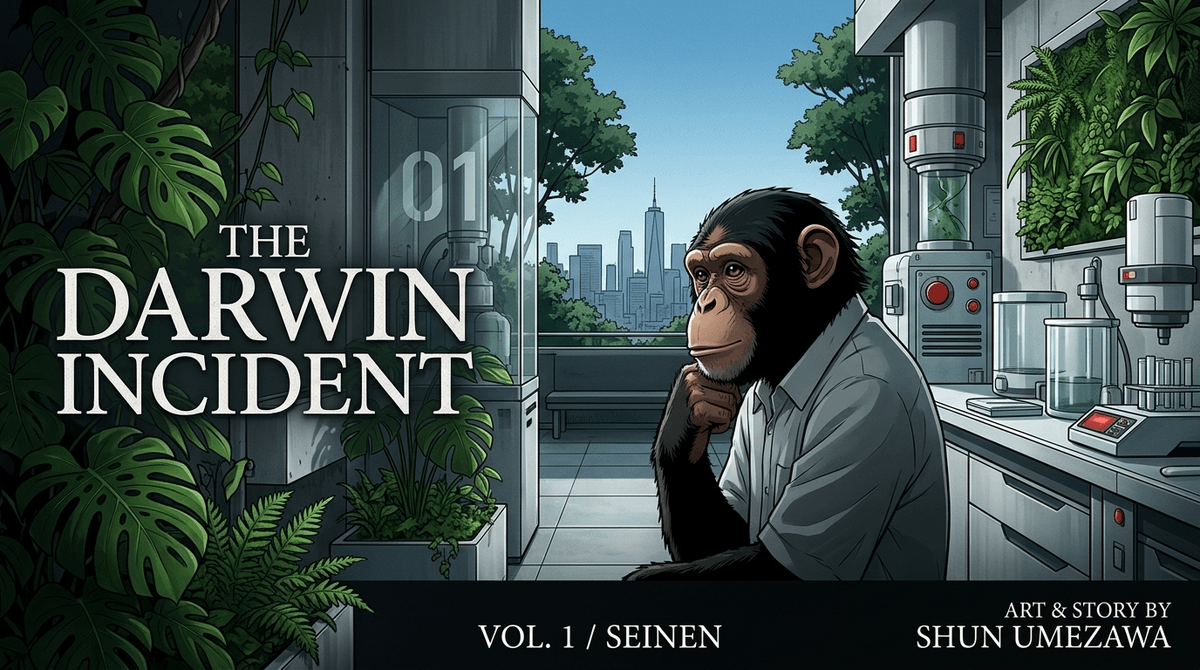
TL;DR: The Darwin Incident is a high-concept, award-winning manga that follows Charlie, a "humanzee" (half-human, half-chimpanzee) navigating high school while being hunted by animal rights extremists. It’s brilliant, philosophical, and visually stunning, but it is strictly for older teens (15+) due to graphic violence, depictions of terrorism, and complex ethical dilemmas.
If your teen is looking for something similar but perhaps a bit more "high school" and less "political thriller," check out [Beastars](https://screenwiseapp.com/media/beastars-show or the X-Men comics for similar themes of being an outsider.
Written and illustrated by Shun Umezawa, The Darwin Incident isn't your typical "battle manga" where kids scream their attack names. It’s a "Seinen" manga—which is the industry term for manga marketed toward young adult men—meaning it handles its subject matter with a level of grit and intellectual depth you won't find in Pokémon.
The story centers on Charlie, the world’s first "humanzee." He was born in a biological research lab and raised by human foster parents. After fifteen years of living in relative isolation, Charlie starts attending a normal human high school. Predictably, he’s an outcast. He’s smarter, faster, and stronger than his peers, but he lacks a "human" soul in the way society defines it.
The conflict ramps up when a radical group called the Animal Liberation Alliance (ALA) decides that Charlie is the ultimate symbol for their cause. They want him to join them, and they aren't asking nicely. They use "eco-terrorism" to get their way, which sets the stage for a story that is part Planet of the Apes and part political thriller.
If your kid is reading The Darwin Incident, it’s likely because they’re over the "brain rot" of generic Shonen tropes and want something that actually challenges them.
- The Ultimate Outsider: Every teenager feels like a different species at some point. Charlie literally is a different species. His struggle to find where he fits—between the animal kingdom and human society—resonates deeply with anyone who feels like they don't belong.
- No Easy Answers: The manga doesn't give you a "good guy" and a "bad guy" in a traditional sense. While the ALA are clearly the antagonists (they blow things up), their arguments about animal rights and human hypocrisy are presented with enough logic to make a reader stop and think.
- Cinematic Art: The detail in the drawings is incredible. It feels like watching a high-budget HBO show rather than a cartoon.
I’m going to be straight with you: this is not a "middle school" manga. While some 13-year-olds might be mature enough to handle it, the content is generally geared toward ages 15 and up.
Violence and Gore
This is the biggest hurdle for parents. The Darwin Incident features visceral violence. When the ALA attacks, it’s messy. There are depictions of explosions, gun violence, and physical altercations that result in blood and injury. It’s not "senseless" violence—it serves the plot—but it is graphic.
Complex Political Themes
The story deals heavily with:
- Terrorism: The ALA uses bombs and kidnapping to achieve "animal liberation."
- Discrimination: Charlie faces "species-ism" and verbal abuse from classmates and the public.
- Ethics of Science: It asks hard questions about gene editing and animal testing.

We often worry about our kids consuming "mindless" media. The Darwin Incident is the opposite of mindless. It’s a deep dive into what it means to be human. Charlie often points out the logical fallacies in human behavior—like why we care about some animals but eat others, or why we claim to value life while constantly destroying it.
If your teen is reading this, they are engaging with philosophy, sociology, and ethics. It’s a great "gateway" book into more serious literature. In fact, if they like the vibe of this, they might actually enjoy Animal Farm by George Orwell or even Sweet Tooth on Netflix.
Beyond the "on-the-page" content, there aren't many "digital safety" concerns with a physical manga or a reading app like Shonen Jump or Manga Plus.
However, because the ALA in the book is a "radicalization" group, it’s worth keeping an eye on how your teen processes those themes. The book does a great job of showing that the ALA’s methods are destructive, but for a younger, more impressionable reader, the "us vs. them" mentality of extremist groups can sometimes be a bit much without a parent to help contextualize it.
Learn more about helping teens navigate radical themes in media
If you want to connect with your teen about this series without sounding like a narc, try these conversation starters:
- "Charlie is such a weird character because he’s so logical. Do you think he’s actually more 'human' than the people around him?"
- "The ALA says they’re fighting for animal rights, but they use violence. Do you think a 'good' cause ever justifies 'bad' actions?"
- "If a 'humanzee' actually existed today, how do you think social media would react to him?" (This is a great way to pivot to a conversation about TikTok and public perception).
The Darwin Incident is an A+ piece of storytelling. It won the Manga Taisho award for a reason—it’s smart, it’s provocative, and it’s beautifully made.
The Verdict:
- For 12 and under: No. It’s too heavy and too violent. Stick to something like Spy x Family.
- For 13-14: Maybe, if they are particularly mature and you’ve discussed themes of political violence with them before.
- For 15+: Absolutely. This is the kind of media that helps teens develop a critical eye for the world around them.
If your teen has finished all the available volumes of The Darwin Incident and is looking for more "thinking person's" manga or shows, here are a few Screenwise-approved recommendations:
Similar to Charlie, the protagonist has to coexist with an alien "parasite" that has replaced his hand. It’s a classic exploration of biological identity and survival. (Ages 16+)
Available on Netflix, this is a reimagining of Astro Boy but as a gritty murder mystery involving robots and humans. It tackles similar themes of "what makes a soul?" (Ages 14+)
A group of kids discovers their orphanage is actually a farm for demons. It’s high-stakes, intellectual, and deals with the ethics of consumption. (Ages 13+)
Check out our full guide on the best manga for high schoolers