

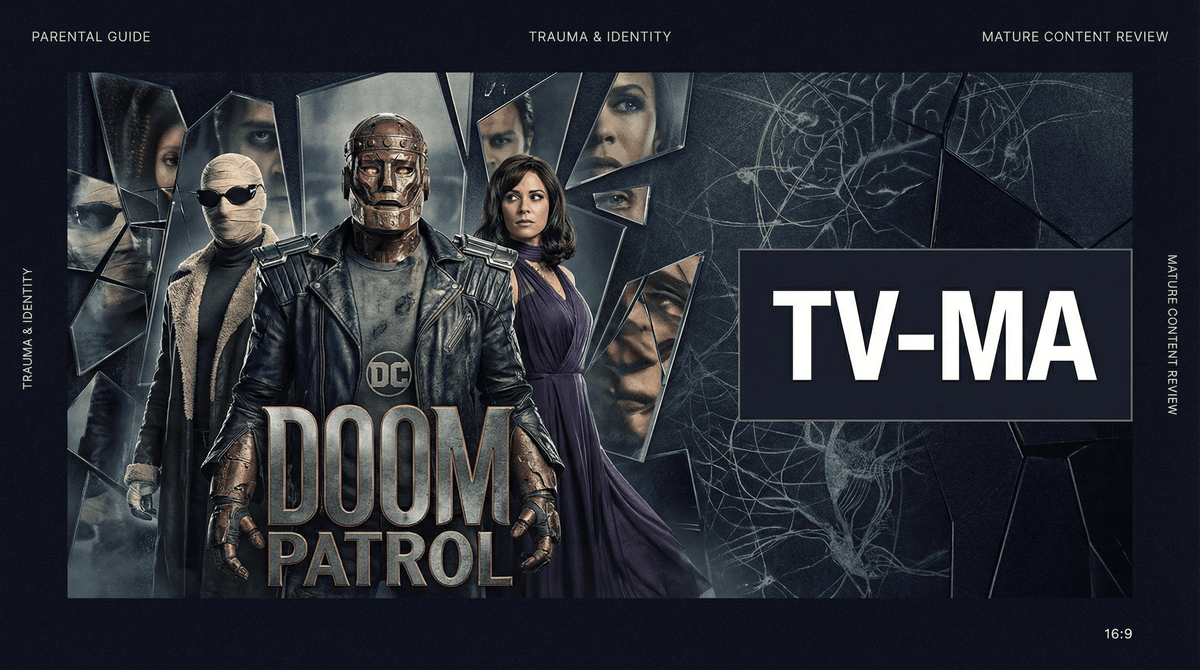
The Controversial Age Rating of Doom Patrol: What Parents Need to Know
Doom Patrol is rated TV-MA for extremely good reasons: graphic violence, explicit sexual content, frequent strong language, and mature themes including trauma, abuse, and mental health struggles. This is not a typical superhero show. While it's critically acclaimed for its weird, wonderful storytelling and representation, it's genuinely adult content—think The Boys meets therapy sessions, not The Avengers. For teens 16+ with mature sensibilities who can handle intense content, it might work with parental guidance. For everyone else, there are better options.
Looking for actual teen-friendly superhero content? Check out alternatives to mature superhero shows.
Doom Patrol is a DC Universe/HBO Max series (now on Max) that ran from 2019-2023. It follows a group of misfit superheroes—each dealing with traumatic origins and strange powers—led by the mysterious Dr. Niles Caulder (aka The Chief). The team includes Robotman (a man's consciousness in a robot body), Negative Man (a radioactive entity), Elasti-Woman (who can grow and shrink), Crazy Jane (who has 64 distinct personalities with different powers), and Cyborg.
Unlike most superhero shows, Doom Patrol leans heavily into psychological drama, body horror, and deeply weird storytelling. It's based on the Grant Morrison comic run, which means it gets very strange—talking donkeys, sentient streets, fourth-wall-breaking villains, and philosophical explorations of identity and trauma.
Let's be crystal clear: Doom Patrol earned its TV-MA rating, and it's not one of those "technically rated R but basically PG-13" situations. This show pushes boundaries consistently across all four seasons.
The Violence Is Graphic
We're talking explicit gore, not superhero punches. Characters are dismembered, exploded, and graphically injured—often shown in detail. Robotman's body is literally torn apart multiple times. There's a scene where a character's face is slowly peeled off. The show doesn't cut away from violence; it lingers on it.
The Sexual Content Is Explicit
This isn't innuendo or fade-to-black romance. Doom Patrol includes:
- Explicit sexual situations (some quite bizarre given the superpowers involved)
- Full nudity (both male and female)
- Sexual violence and trauma as plot points
- A sentient, teleporting street that's also a gateway to orgies (yes, really)
- Discussions and depictions of sex work
The show treats sexuality as a normal part of adult life, which means it shows up regularly and explicitly.
The Language Is Constant
Every episode includes frequent F-bombs and other strong language. It's not gratuitous—it's how these traumatized adults actually talk—but it's consistent throughout the series.
The Themes Are Heavy
Beyond the surface-level content issues, Doom Patrol tackles genuinely difficult material:
- Childhood trauma and abuse (physical, emotional, and sexual)
- Suicide and self-harm
- Body dysmorphia and disability
- Mental illness (the show's portrayal of Crazy Jane's dissociative identity disorder is both groundbreaking and intense)
- Addiction
- Gender identity and sexuality
These aren't background elements—they're central to character development and often explored in painful, unflinching detail.
Despite (or because of) all this mature content, Doom Patrol has a significant teen fanbase. Here's why:
The representation is exceptional. The show features LGBTQ+ characters in meaningful roles, explores neurodiversity, and centers characters with disabilities. For teens who feel like outsiders, the show's "misfit superhero" premise resonates deeply.
It's genuinely weird and creative. In an era of formulaic superhero content, Doom Patrol is refreshingly bizarre. The storytelling is unpredictable, the humor is dark and absurd, and it doesn't talk down to its audience.
The emotional depth is real. Unlike many superhero shows that treat trauma as backstory, Doom Patrol makes healing from trauma the actual plot. For teens dealing with mental health issues, seeing characters work through their damage can feel validating.
It's critically acclaimed. With a 96% Rotten Tomatoes score for Season 1, this isn't "trash TV." It's well-written, well-acted, and intellectually engaging.
This is where things get nuanced. Unlike something like Euphoria (which glorifies destructive behavior) or 13 Reasons Why (which was criticized for its handling of suicide), Doom Patrol doesn't glamorize its mature content. The violence has consequences. The trauma is portrayed as genuinely damaging. The sexual content exists in adult contexts.
For 16-17 year olds who:
- Have demonstrated maturity around difficult content
- Are already in therapy or have good emotional support systems
- Can distinguish between fiction and reality
- Have parents willing to discuss the themes
...Doom Patrol might be appropriate with co-viewing and conversation. The show actually has valuable things to say about healing, found family, and accepting yourself.
However, this is still a hard sell for most families. The explicit content isn't occasional—it's woven throughout every episode. You can't just skip "the bad parts."
If you're considering letting an older teen watch Doom Patrol, here's what you're signing up for:
-
Watch it yourself first. At least the pilot episode. You need to see what you're dealing with.
-
Be prepared for conversations about everything. If your teen can't talk to you about sex, violence, trauma, and mental health, they're not ready for this show.
-
Consider their mental health status. If your teen is currently struggling with depression, self-harm, or trauma, this might not be the right time. The show's unflinching portrayal of these issues can be triggering.
-
Set boundaries around binge-watching. The show's dark themes can be overwhelming in large doses. One episode at a time with processing breaks is smarter than a weekend binge.
-
Use parental controls to verify. If you're letting them watch on their own, make sure you can see viewing history. Trust, but verify.
If your teen wants superhero content with depth and weirdness but isn't quite ready for TV-MA territory, try:
- The Umbrella Academy (TV-14) - Dysfunctional superhero family with similar misfit energy, less explicit content
- Runaways (TV-14) - Teen superheroes dealing with real issues, Marvel's most grounded series
- Legends of Tomorrow (TV-14) - Weird, time-traveling superhero team that doesn't take itself seriously
- Spider-Man: Into the Spider-Verse (PG) - Visually innovative, emotionally mature, genuinely great storytelling
- Invincible (TV-MA) - Wait, also TV-MA, but the violence is more comic-book style and less psychological
For more options, check out superhero shows for teens.
Doom Patrol's TV-MA rating isn't controversial because it's wrong—it's controversial because it's a superhero show, and we're used to those being family-friendly. This one absolutely is not.
The show is brilliant, weird, heartfelt, and genuinely important in terms of representation and mental health storytelling. It's also explicitly violent, sexual, and emotionally intense in ways that most teens (and many adults) aren't ready for.
If your 16-17 year old is begging to watch it: Consider it carefully, watch it yourself first, and make it a co-viewing experience with ongoing conversations. This isn't a "set it and forget it" permission.
If your teen is under 16: The answer is probably no, regardless of how mature they seem. There are too many better options that don't require you to explain sentient sex streets.
If you're unsure: Trust your gut. You know your kid better than any rating system. When in doubt, Get answers to specific questions about content or check out Common Sense Media's parent reviews.
The good news? Doom Patrol isn't going anywhere. If your teen isn't ready now, it'll still be there in a couple years when they are. Sometimes the most important parenting decision is knowing when to say "not yet."