

Geostorm: A Parent's Guide to the Disaster Movie's Scares and Intensity
Geostorm is a 2017 disaster thriller about a weather-controlling satellite system that malfunctions and threatens to destroy Earth. It's rated PG-13 and features intense disaster sequences, mass casualties (shown from a distance), some language, and genuinely frightening moments of people freezing to death, burning alive, or being swept away by tsunamis.
Ages 13+ can probably handle it if they're okay with disaster movies, but younger kids (under 11-12) will likely find it too scary. The destruction is relentless, the stakes feel real, and there's enough death to make it heavy viewing.
If you're looking for less intense disaster movies, check out The Day After Tomorrow (slightly gentler), Twister (more adventure, less apocalypse), or even San Andreas (also PG-13 but with more heroic rescue focus).
Geostorm follows Jake Lawson (Gerard Butler), a brilliant scientist who designed "Dutch Boy," a satellite network that controls Earth's weather and prevents natural disasters. When the system starts malfunctioning—freezing people in Afghanistan, creating sinkholes in Hong Kong, superheating Rio de Janeiro—Jake has to go into space to fix it before a global catastrophe (the titular "geostorm") wipes out humanity.
It's got a conspiracy plot, some brother drama, a race-against-time structure, and a whole lot of CGI destruction. Think 2012 meets a space thriller, with slightly less camp and slightly more Gerard Butler growling at computers.
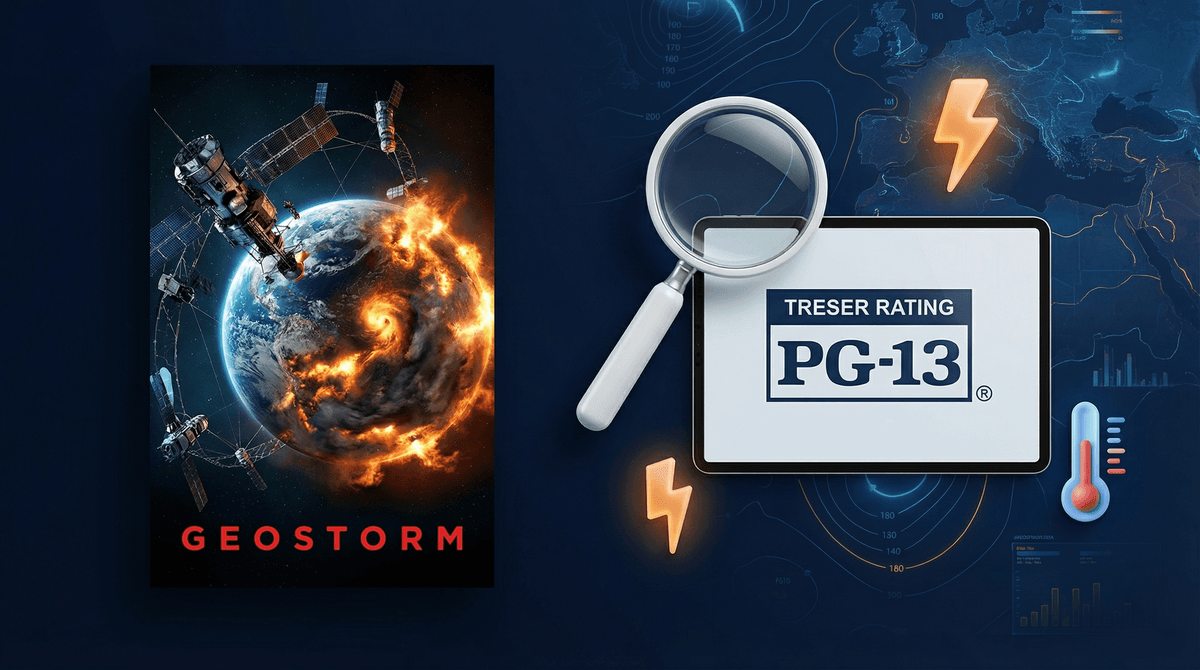
The movie flopped critically (it has a 15% on Rotten Tomatoes) but found an audience on streaming. Kids discover it on Netflix or HBO Max, see the cool poster with Earth in flames, and think "this looks awesome." Then parents walk in during the scene where an entire village freezes solid in seconds and wonder if they should intervene.
Mass Destruction and Death
The movie opens with a montage of climate disasters—floods, droughts, tornadoes—that killed millions of people. It's quick but sets a grim tone.
Then the malfunctions start, and they're genuinely disturbing:
- People freeze to death instantly in Afghanistan (you see them turn to ice and shatter)
- A massive sinkhole swallows buildings in Hong Kong (people fall screaming into the earth)
- Lightning storms incinerate a beach in Rio (bodies on fire, chaos, panic)
- A tsunami floods a stadium in Dubai during a soccer match (mass casualties implied)
- Tokyo gets hit with giant hailstones that crush cars and buildings
The camera doesn't linger on individual deaths, but the scale of destruction is constant and overwhelming. If your kid gets anxious about natural disasters or climate change, this movie will not help.
Peril in Space
There are multiple scenes of astronauts in mortal danger:
- Explosive decompression (people getting sucked into space)
- Fires on the space station
- Characters floating helplessly as oxygen runs out
- A ticking countdown to catastrophe
These scenes are tense and claustrophobic. If your kid loved Gravity or The Martian, they might be fine. If they found those stressful, skip Geostorm.
Language and Intensity
The language is mild for PG-13—a few "damns" and "hells," one or two stronger words. Nothing shocking.
The real intensity comes from the relentless pacing. There's barely a moment to breathe. It's disaster after disaster, crisis after crisis, with a conspiracy plot layered on top. Some kids find that thrilling. Others find it exhausting and anxiety-inducing.
What It Doesn't Have
- No gore: Deaths happen at a distance or through quick cuts
- No sexual content: A brief kiss, that's it
- No jump scares: It's not a horror movie—just intense action
Honestly? The concept is cool. A satellite that controls weather? A conspiracy to weaponize it? A race to save the world? That's catnip for kids who love science fiction and disaster scenarios.
Plus, Gerard Butler has that gruff, heroic dad energy that appeals to tweens and teens. And the special effects—while not groundbreaking—are big and loud and satisfying if you're in the mood for spectacle.
Kids who love Minecraft redstone engineering or Kerbal Space Program might be drawn to the satellite tech. Kids who watch Veritasium or Mark Rober on YouTube and love engineering challenges will find the premise intriguing.
But here's the thing: the movie doesn't really deliver on the science. It's mostly just explosions and conspiracy. If your kid wants actual climate science or engineering, point them toward An Inconvenient Truth (more educational, less entertaining) or books about climate change for kids.
Ages 8 and under: Nope. Too scary, too intense, too much death. They won't understand the plot and will just be terrified by the disasters.
Ages 9-11: Probably still too much. Sensitive kids will have nightmares. If your kid is a disaster movie veteran and specifically asks for it, you could try it—but be ready to turn it off. Consider Twister or Dante's Peak instead (still intense but less apocalyptic).
Ages 12-14: This is the sweet spot. Kids in this range who like action movies and aren't overly anxious about climate disasters will probably enjoy it. Watch together the first time so you can gauge their reaction and talk through the scarier moments.
Ages 15+: They can handle it. At this point, it's more about whether they'll find it cheesy (they might) than whether it's too scary (it's not).
The Climate Anxiety Factor
If your kid is already worried about climate change—and many are—this movie might amplify that anxiety. The premise is literally "the planet is trying to kill us and technology is our only hope (but also it's failing)."
That said, some kids find disaster movies cathartic. Watching humanity come together to solve a crisis can be reassuring. It depends on your kid.
If you want to have a conversation about climate change after watching, great. If you'd rather avoid the topic, maybe skip this one.
The Science Is... Not Great
The movie treats weather control like magic. The technology makes no sense. The physics are laughable. If your kid is a budding scientist, they might spend the whole movie yelling at the screen (which, honestly, could be fun).
If you want actual science-based disaster content, try Storm Chasers (documentary series), The Day After Tomorrow (still fictional but slightly more grounded), or books about extreme weather.
It's Not a "Good" Movie
Let's be real: Geostorm is not winning any awards. The dialogue is clunky, the acting is wooden, the plot is predictable. It's a B-movie with a big budget.
But sometimes that's exactly what you want on a Friday night. If your family enjoys so-bad-it's-good movies, this could be a fun watch. Just set expectations accordingly.
If you're looking for disaster movies that are less intense but still exciting:
- Twister (PG-13): Storm chasers, tornadoes, adventure. Less death, more fun.
- The Day After Tomorrow (PG-13): Climate disaster but with more heart and less conspiracy.
- Journey to the Center of the Earth (PG): Adventure, not apocalypse. Great for younger kids.
If your kid wants space adventure without the terror:
- The Martian (PG-13): Problem-solving in space, humor, hope.
- Apollo 13 (PG): Real-life space crisis, inspiring and tense but not overwhelming.
- WALL-E (G): Post-apocalyptic Earth, but gentle and hopeful.
If they're into engineering and problem-solving:
- October Sky (PG): Rocket-building kids, inspiring true story.
- Hidden Figures (PG): NASA, math, and heroism.
Geostorm is a loud, intense, disaster-heavy thriller that's appropriate for ages 13+ who aren't overly anxious about climate catastrophes. Younger kids (under 12) will likely find it too scary, and sensitive kids of any age might struggle with the relentless destruction.
It's not a great movie, but it's a decent popcorn watch if your family is in the mood for spectacle over substance. Watch it together, talk through the scary parts, and maybe follow it up with something lighter.
And if your kid starts asking about weather satellites and climate engineering? That's actually a great conversation to have. Just maybe steer them toward real science content afterward so they don't think we can just hack the weather with a laptop.
- Check the PG-13 rating guide to see if your kid is ready for this level of intensity
- Browse disaster movies for families for alternatives
- Explore space movies for kids if your kid loved the satellite setting
- Talk about climate anxiety with kids if this movie sparks concerns