

High-Energy Kids, Calm Stories: The Best Low-Stimulation Shows for Kindergarteners
You know that feeling when your kindergartener is literally bouncing off the walls at 6pm, and you think "maybe some TV will help them wind down" — but then 20 minutes later they're somehow MORE amped up? That's the high-stimulation trap.
Low-stimulation shows are specifically designed with slower pacing, gentler music, minimal jump cuts, and calmer color palettes. They're not boring (your kid won't watch boring), but they work with a child's nervous system instead of against it. Think of it like the difference between a dance party and a nature walk — both can be engaging, but only one helps regulate that pre-bedtime energy.
Here's the thing: about 92% of families in our community use TV as part of their routine, and the average kindergartener is getting around 4 hours of screen time on weekdays. The question isn't really whether your kid watches — it's what they're watching and when.
Kindergarten is this wild developmental moment. Their bodies have SO much energy (seriously, where does it come from?), but their nervous systems are still learning how to regulate. They're experiencing bigger emotions, longer days away from home, and more social complexity than ever before.
High-stimulation content — fast cuts, loud music, intense conflict, bright flashing colors — can actually trigger a stress response. Their little nervous systems interpret all that rapid-fire input as something they need to be alert for. Which is the opposite of what you want at 5:30pm on a Tuesday.
The research on this is pretty clear: screen time quality matters more than quantity , especially for kids under 8. A kindergartener watching a thoughtfully-paced show about nature is having a fundamentally different neurological experience than one watching a show with 15 scene changes per minute.
This is the gold standard. Yes, Bluey has energy and conflict and humor, but the pacing is measured, the music is gentle, and every episode models emotional regulation. The 7-minute episodes are perfect for kindergarten attention spans. About 50% of families in our community watch Disney+ together, and Bluey is usually the reason why.
Why it works: Real family dynamics, problems get solved calmly, and the show literally teaches kids (and parents) how to process big feelings.
If you haven't revisited this since your kid was a toddler, give it another shot. The songs are genuinely helpful for emotional regulation ("When you feel so mad that you want to roar..."), and the pacing is deliberately slow. Some parents find it too slow, but that's actually the point for nervous system regulation.
Why it works: Explicit emotional learning, predictable structure, no sudden surprises or scares.
This gorgeous stop-motion show on Amazon Prime Video is basically meditation disguised as entertainment. The main character explores nature and science concepts through gentle experimentation. The music is soothing, the colors are soft, and there's genuine space for kids to think.
Why it works: Slow pacing, nature-based, encourages curiosity without overstimulation.
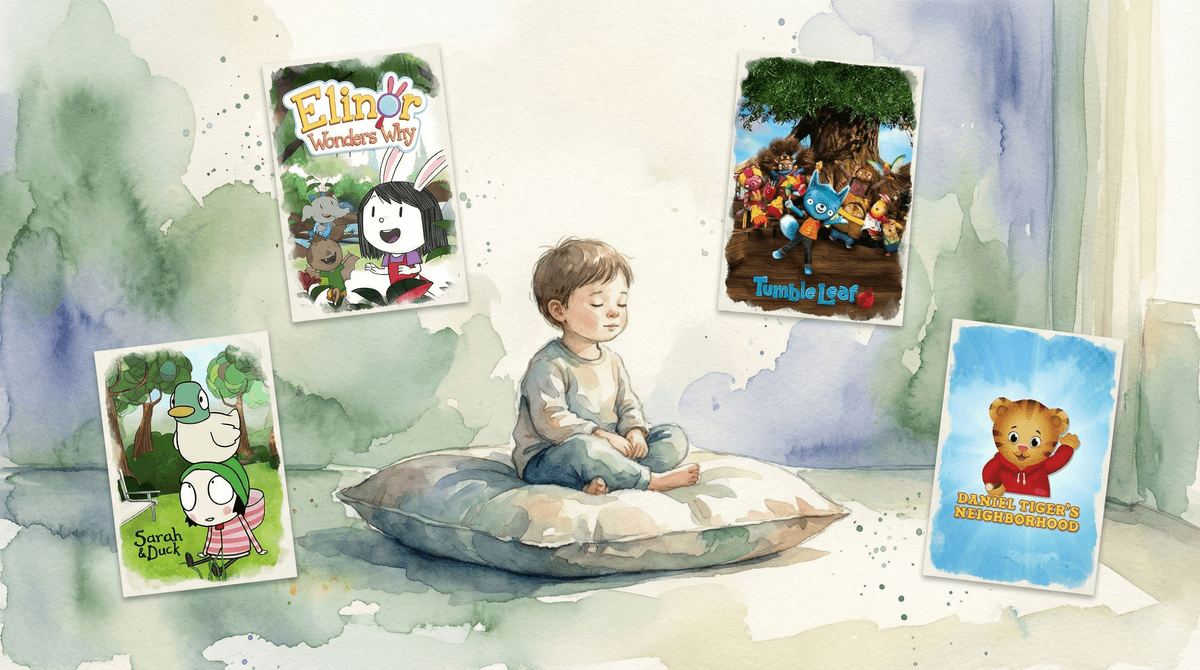
PBS's answer to science education for the kindergarten set. Elinor and her friends observe nature, ask questions, and figure things out together. The conflicts are mild, the resolutions are thoughtful, and the whole vibe is "let's be curious" rather than "let's be chaotic."
Why it works: Science-based, calm problem-solving, beautiful animation without being overwhelming.
This British import is delightfully weird in the gentlest possible way. A girl and her duck friend have small adventures with a very calm narrator guiding the story. It's quirky enough to hold attention but soothing enough for wind-down time.
Why it works: Minimal conflict, soft colors, genuinely funny without being frenetic.
Look, about 40% of families let their kindergarteners navigate Netflix independently, and that's where things can go sideways. The algorithm doesn't care about your kid's nervous system — it cares about engagement.
High-stimulation red flags:
- Shows with constant background music or sound effects
- More than 3-4 scene changes per minute
- Bright, flashing, or rapidly changing colors
- Characters who are always yelling or in crisis mode
- Shows that end on cliffhangers (hello, bedtime battles)
Common culprits that kindergarteners love but might be too stimulating: Cocomelon (controversial, I know), Teen Titans Go, The Loud House, and honestly most content on YouTube or YouTube Kids (only 20% of families in our community use YouTube Kids, and there's a reason — the content is wildly variable).
For wind-down time (after school, before bed): Stick with the low-stimulation options. This is when you need their nervous system to shift gears.
For weekend mornings when they're already calm: You have more flexibility. A slightly higher-energy show won't derail their whole day.
The transition matters: Give a 5-minute warning before screen time ends. The show might be calming, but the transition away from screens can be rough if not handled well.
Co-viewing is your friend: Even with great content, watching together and talking about what you're seeing helps with comprehension and emotional processing. Those 50% of families watching Disney+ together? They're onto something.
Your high-energy kindergartener doesn't need boring content — they need content that matches their developmental needs. Low-stimulation doesn't mean low-quality or low-engagement. It means programming that respects how their nervous system actually works.
The goal isn't perfect screen habits (that doesn't exist). It's making intentional choices about what they watch and when, so screen time supports your family life instead of sabotaging it.
This week: Try swapping one high-stimulation show for a low-stimulation alternative and see if you notice a difference in your kid's energy afterward. The difference might surprise you.
Need help evaluating a specific show? See whether a show is low-stimulation for your kindergartener — it can analyze pacing, content, and age-appropriateness for your specific kid.
Want to see how your family's screen habits compare? Screenwise can help you understand your family's digital life in context with your community, so you can make decisions that actually work for your household, not some theoretical perfect family that doesn't exist.