

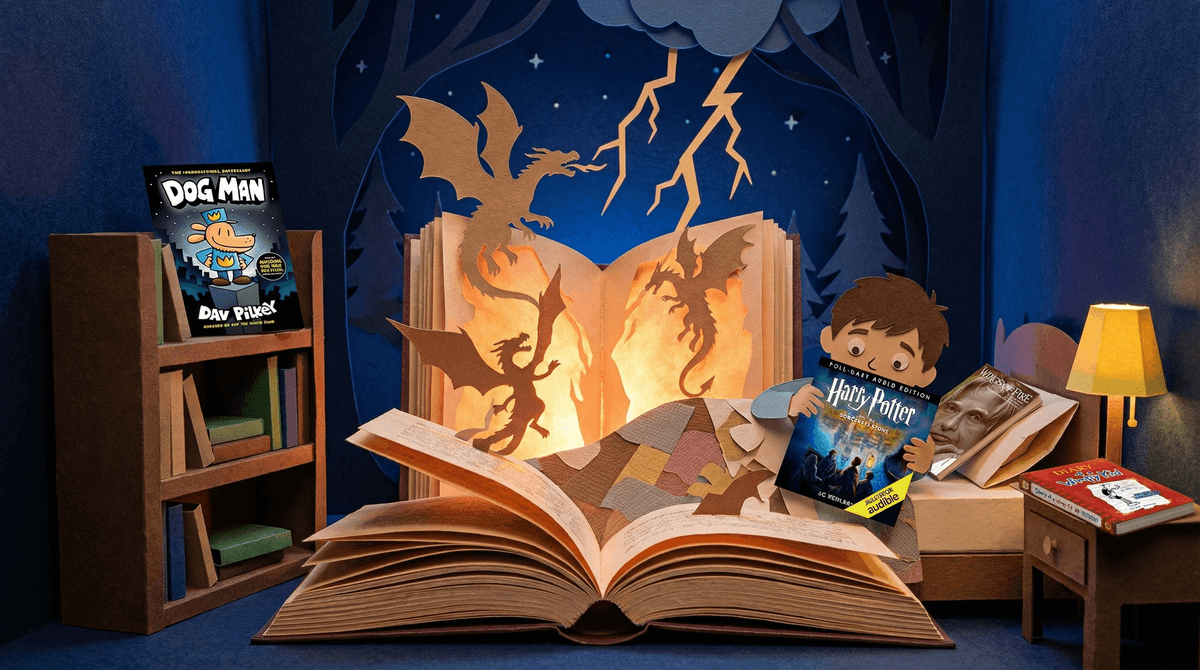
Fourth grade is this magical reading sweet spot. Kids are finally fluent enough that reading isn't work anymore, but they haven't yet developed the teenage eye-roll about "assigned reading" vibes. They're reading for pleasure, staying up with flashlights under covers, and—if you're lucky—choosing books over screens.
But here's the thing: the gap between "can read" and "wants to read" is massive at this age. You've got kids devouring 400-page fantasy novels and others who claim every book is "boring" after three pages. The books that work are the ones that hook them in the first chapter and don't let go.
So what actually keeps 4th graders turning pages? Fast pacing, relatable characters dealing with real (or fantastical) problems, humor that doesn't feel like it's trying too hard, and stories that respect their intelligence. They're 9-10 years old—old enough to handle complex plots but young enough to still love a good fart joke.
For Kids Who Think They Don't Like Reading
Diary of a Wimpy Kid - Yeah, it's the obvious choice, but it's obvious because it works. The cartoon format makes it feel less intimidating, and Greg Heffley's middle school disasters are genuinely funny. This is the gateway drug for reluctant readers.
Dog Man series by Dav Pilkey - Technically aimed younger, but 4th graders who struggle with reading or just prefer graphic novels will devour these. The flip-o-rama pages and ridiculous humor make reading feel like play, not work.
The Bad Guys series - Fast-paced, illustrated, and genuinely hilarious. It's about villains trying to be heroes, which is a surprisingly compelling premise when you're 9 and figuring out that people aren't just "good" or "bad."
For Kids Ready for "Real" Chapter Books
Percy Jackson and the Lightning Thief - This is the book that turned a generation of kids into readers. Rick Riordan somehow made Greek mythology feel like the most exciting action movie ever, with a protagonist who has ADHD and dyslexia and is still the hero. If your kid likes this, there are approximately 47 other series in the same universe to keep them going.
Wonder by R.J. Palacio - Fair warning: you'll both cry. This book about a kid with facial differences starting mainstream school is heavy but so well-written that kids can't stop reading. It builds serious empathy while telling a genuinely gripping story.
Holes by Louis Sachar - This book is a masterclass in plotting. It's about a kid sent to a desert detention camp where they dig holes all day, and somehow it all connects in the most satisfying way. Even kids who don't usually like reading will get sucked into this mystery.
For the Fantasy Lovers
Harry Potter and the Sorcerer's Stone - Look, the discourse around J.K. Rowling is real and valid, but this book still casts a spell (sorry) on 4th graders. Whether you want to introduce it is a family decision, but it remains one of the most effective "I can read a REAL book" confidence builders out there.
Wings of Fire series by Tui T. Sutherland - Dragons with distinct personalities and political intrigue. It's like Game of Thrones for the elementary set (minus the, you know, everything inappropriate). Kids who love this series become obsessed.
Keeper of the Lost Cities by Shannon Messenger - A girl discovers she's an elf and gets whisked away to a magical world. It's got mystery, friendship drama, and enough plot twists to keep even distracted readers engaged.
For Kids Who Want Real-World Stories
New Kid by Jerry Craft - A graphic novel about a Black kid navigating a predominantly white private school. It's funny, honest, and deals with code-switching and microaggressions in a way that sparks great conversations. Won the Newbery for good reason.
Fish in a Tree by Lynda Mullaly Hunt - About a girl who's been hiding that she can't read. It's perfect for kids who struggle academically or feel "different," and the ending is genuinely triumphant without being cheesy.
Restart by Gordon Korman - A middle school bully gets amnesia and has to figure out who he was and who he wants to be. It's about second chances and how we're not stuck being whoever we were yesterday.
Here's something teachers won't always tell you: series books are amazing for building reading stamina. Once a kid is invested in characters, they'll power through book after book. Don't stress if your kid wants to read the same type of book over and over—they're building skills and confidence.
Some series that hook 4th graders hard:
- The Last Kids on Earth - Zombies, monsters, and middle school friendship
- Dork Diaries - Like Wimpy Kid but for girls (though honestly, any kid will enjoy it)
- I Survived series - Historical disasters told through kid protagonists—surprisingly gripping
- Who Was? biography series - For kids who prefer nonfiction but still want page-turners
The reading level listed on a book is just a guideline, not a law. If your 4th grader wants to read a "3rd grade" book, let them. If they want to tackle something marked for 6th grade, that's fine too—as long as the content is age-appropriate (more on that in a sec).
Reading for pleasure is the goal. A kid reading "easy" books by choice is building fluency and a love of reading. A kid struggling through a too-hard book because it's "at their level" is learning that reading sucks.
That said, if your kid is only reading books significantly below their grade level, it might be worth a conversation with their teacher—not because they're doing something wrong, but to make sure there's not a reading challenge that needs support.
Fourth grade is where content ratings start getting tricky. Some 4th graders are ready for books dealing with death, divorce, or social justice. Others need lighter fare. You know your kid.
Red flags to watch for:
- Detailed violence or gore (some middle grade books get surprisingly dark)
- Romance that goes beyond hand-holding and first crushes
- Scary content that might cause nightmares (looking at you, Scary Stories to Tell in the Dark)
Green lights:
- Characters dealing with real problems (friendship drama, family changes, school stress)
- Age-appropriate humor (yes, even the potty jokes)
- Diverse characters and experiences
- Books that spark questions and conversations
Most books marketed to 4th graders (ages 9-10) are pretty safe, but if you're unsure, Common Sense Media has detailed reviews, or just... read the first chapter yourself. It takes 10 minutes and you'll know immediately if it's right for your kid.
The best way to get kids reading: let them see you reading. Not scrolling your phone, not watching TV—actually reading a book. Kids model what they see.
Also:
- Library visits are free and low-pressure. Let them check out 10 books even if they only read 2.
- Audiobooks count as reading. The goal is story engagement, not just eyeballs on pages.
- Bedtime reading still works at this age. Even if they can read independently, reading together is bonding time.
- Let them read "junk." Captain Underpants isn't going to win literary awards, but it might win over a reluctant reader.
The "best" book for your 4th grader is whichever one they'll actually finish. This is the age where we're building readers for life—kids who choose books over screens sometimes, who get lost in stories, who develop empathy and imagination through reading.
Don't stress about whether they're reading the "right" books or enough books or challenging enough books. If they're reading something and enjoying it, you're winning.
Next steps: Hit up your library or bookstore with your kid and let them choose. Even if they pick something you think looks terrible, let them try it. The worst that happens is they don't finish it and you're out $0 (library) or can return it (bookstore). The best that happens is you find that magic book they can't put down.
And when you find that book? Stock up on flashlight batteries, because they're going to be reading way past bedtime. Which is honestly the best problem to have.