

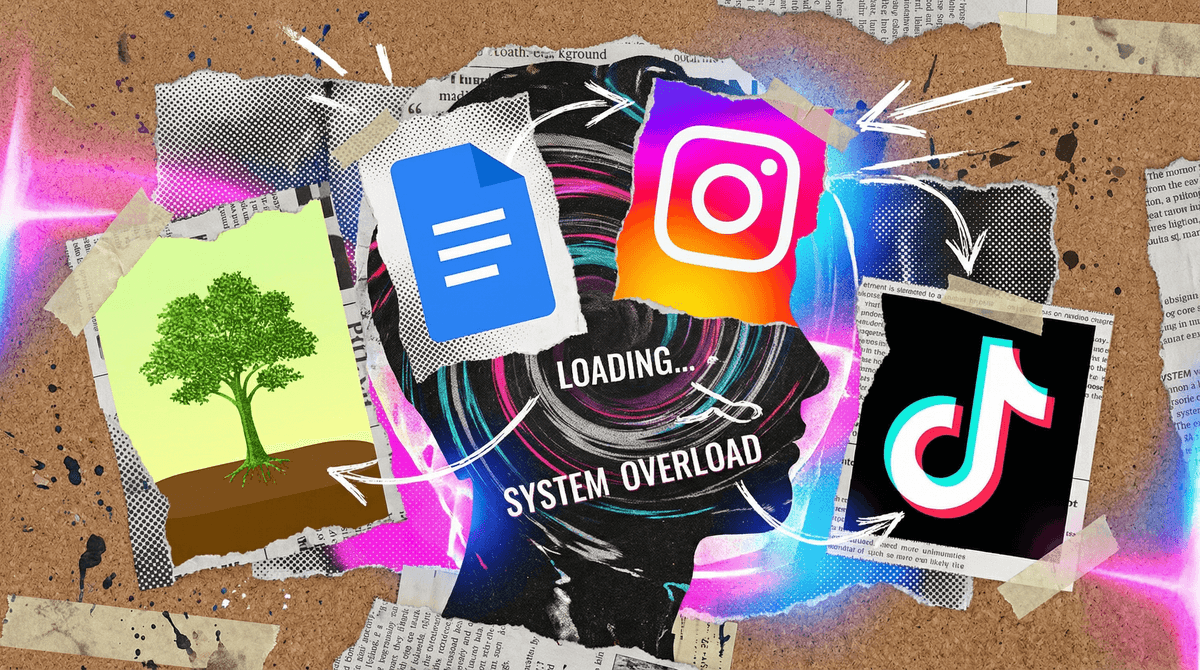
Picture this: Your teen is at their desk, laptop open with three Google Docs tabs, phone face-up on the desk buzzing with notifications, AirPods in with a Spotify playlist going, and they're actively responding to a group chat while "writing an essay." When you ask how homework is going, they insist they're "almost done" and that they "work better this way."
This is homework multitasking, and it's basically the default mode for most teens today. It's not just having their phone nearby—it's the constant switching between homework tasks, social media, texts, videos, music, and whatever else is competing for their attention. And here's the thing: they genuinely believe they're being productive.
The reality? What they're doing isn't actually multitasking. It's rapid task-switching, and it's fundamentally changing how they learn, retain information, and build the skills they'll need for literally everything else in life.
Let's get real about what the research shows, because it's not pretty. When teens switch between homework and other activities:
Working memory takes a hit. Every time your teen switches from their essay to check a text, their brain has to reload the context of what they were working on. That "reload time" isn't instant—it can take up to 23 minutes to fully get back into deep focus after an interruption. So that "quick check" of Instagram? It just cost them 20+ minutes of productive work time.
Information doesn't stick. When teens study while distracted, the information gets processed differently in the brain. It's more likely to be stored in the striatum (the part of the brain used for rote skills) rather than the hippocampus (where facts and concepts live). Translation: They might be able to regurgitate facts for tomorrow's test, but they won't actually learn the material in a way that builds lasting knowledge.
Quality drops dramatically. Studies show that students who multitask while doing homework make more errors, produce lower-quality work, and take significantly longer to complete assignments. Your teen might spend three hours "doing homework," but if they're constantly switching tasks, they're probably only getting about 90 minutes of actual productive work done.
It's training their brain wrong. This is the part that keeps me up at night. The teenage brain is still developing, particularly the prefrontal cortex that handles executive function, impulse control, and focus. When teens consistently practice distracted work, they're literally training their brains to expect constant stimulation and to struggle with sustained attention. This has implications way beyond homework .
.
Your teen probably insists they're "better at multitasking" or that they "need the stimulation to focus." Here's why they believe that:
FOMO is real. The fear of missing out on social interactions isn't just anxiety—it's developmentally appropriate for teens to prioritize peer connection. When they hear their phone buzz during homework, their brain is screaming "THAT COULD BE IMPORTANT SOCIAL INFORMATION." Ignoring it takes genuine willpower.
The dopamine hit feels like productivity. Every notification, every new message, every scroll through TikTok gives a little dopamine reward. That feels good in the moment, and teens (with still-developing impulse control) interpret that good feeling as "this is helping me work." Spoiler: it's not.
They've never known anything different. If your teen has had a smartphone since middle school, they literally don't have a reference point for what deep, uninterrupted focus feels like. They're not being stubborn when they say they work better with distractions—they genuinely don't know what it's like to work without them.
Homework is often genuinely boring. Let's be honest: a lot of homework is tedious busywork. When faced with something boring, the teen brain seeks stimulation elsewhere. The problem is, even when the work IS engaging, they've trained themselves to seek that constant stimulation anyway.
Before we get into solutions, let's talk about what's actually realistic here:
Some background noise is fine (maybe even helpful). If your teen wants to listen to instrumental music or lo-fi beats while working, that's probably not the problem. The issue is the interactive distractions—things that require cognitive engagement like texts, videos with words, or social media.
Not all homework is created equal. Reviewing flashcards while half-watching a show? Probably fine. Writing an essay or learning new math concepts while texting? Definitely not fine. Help your teen understand the difference between low-cognitive-load tasks (where some distraction is manageable) and high-cognitive-load tasks (where they need actual focus).
The phone is the main culprit. Studies consistently show that just having a phone visible—even face-down and silent—reduces cognitive capacity. The brain is using resources to actively NOT check it. Understanding how phone proximity affects focus can help you have this conversation without it feeling like you're being controlling.
This isn't about willpower. Your teen isn't weak or lazy if they struggle with this. Tech companies employ hundreds of engineers whose entire job is to make their apps as irresistible as possible. Your teen is up against billions of dollars of behavioral psychology designed to hijack their attention.
Middle School (11-14): This is when homework multitasking habits really start to form. Kids this age are often getting their first phones and experiencing their first real homework load simultaneously.
Start with structured focus blocks: 25 minutes of focused work (phone in another room), followed by a 5-minute break where they CAN check their phone. Use a timer. Make it a challenge, not a punishment. Many kids this age actually find relief in having permission to fully focus without FOMO, because they know the break is coming.
High School (14-18): Teens this age need more autonomy, but they also need real talk about the stakes. Their GPA matters for college, their study habits are forming for life, and they're old enough to understand the neuroscience.
Try collaborative problem-solving: "I've been reading about how multitasking affects learning, and I'm worried about how it might be impacting your grades and stress levels. Can we look at your homework routine together and see if there are some changes that might help?" Then actually listen to what they say. Maybe they need a better workspace. Maybe they need help managing their time so homework doesn't stretch all evening. Maybe they need apps blocked during homework time.
1. Start with data, not rules. Have your teen track their homework time for a week—both total time spent and actual productive time. Use an app like Forest (which gamifies focus time) or just a simple timer. The goal is awareness, not shame. When they see that their "2-hour homework session" included 45 minutes of scrolling, the conversation shifts.
2. Create a phone-free homework zone. The phone needs to be physically out of reach—in another room, in a kitchen drawer, wherever. If they "need it for homework," get specific about when and why. Most homework doesn't actually require a phone. If they need to look something up, they can use a laptop with website blockers installed.
3. Use website blockers strategically. Apps like Freedom or browser extensions like StayFocusd can block distracting websites during homework time. The key is setting these up WITH your teen, not imposing them. Let them choose which sites to block and when.
4. Teach them to batch communication. Instead of responding to every text immediately, teens can check and respond to messages during designated breaks. This isn't being rude—it's being intentional. They can even set auto-responses: "Doing homework, will respond in 30 min!"
5. Model the behavior. If you're checking your phone every five minutes while cooking dinner or answering work emails during family movie night, your teen is learning that constant task-switching is normal adult behavior. Think about your own relationship with distraction.
Homework multitasking isn't a character flaw—it's a predictable response to a digital environment designed to fragment attention. But that doesn't mean it's harmless. The habits your teen builds now around focus, distraction, and deep work will follow them into college, careers, and basically every cognitively demanding task they'll face as adults.
The good news? This is totally fixable. Teens can learn to focus deeply, and many of them actually feel relief when they experience what it's like to work without constant interruption. They get more done in less time, they retain information better, and they feel less stressed.
Your job isn't to police every homework session or eliminate all distractions forever. It's to help your teen understand what's happening in their brain, give them tools to manage their attention, and create an environment where focused work is actually possible.
Start small. Pick one change. See what happens. And remember: you're not trying to raise a teen who never gets distracted. You're trying to raise an adult who knows how to choose focus when it matters.
Ready to dig deeper? Explore strategies for helping teens build better focus habits or learn about the best apps and tools for managing digital distraction.