

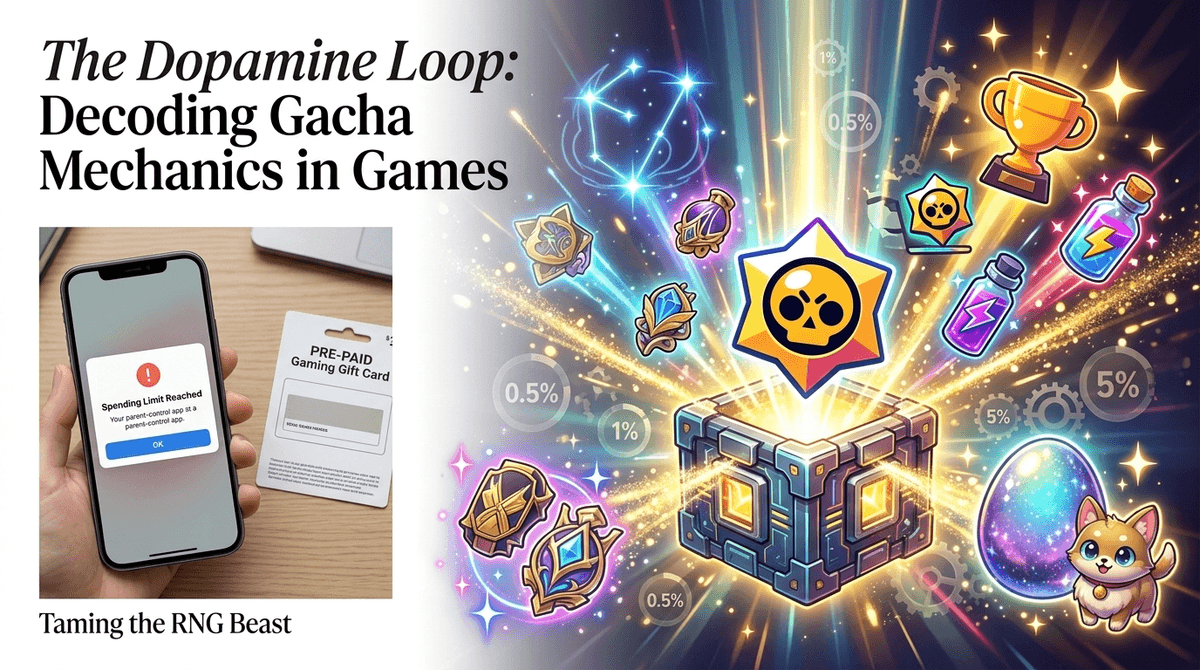
TL;DR: Loot boxes and "gacha" mechanics are essentially digital slot machines found in popular games. They use "variable ratio reinforcement" (the same psychology used in Vegas) to keep kids spending. While not legally classified as gambling in most places yet, the emotional and financial toll is real.
Quick Navigation:
- Genshin Impact - The king of high-quality gacha.
- Roblox - Home to "Pet Simulator 99" and other heavy spenders.
- Brawl Stars - Fast-paced action with "Starr Drops."
- Pokemon TCG Pocket - The newest way to "pull" digital cards.
- Guide: How to set up spending limits on iPhone
If you’ve heard your kid talk about "pulling" a 5-star character or complaining about their "pity" count, you’re looking at gacha mechanics.
A loot box is a virtual crate or pack that contains a randomized selection of items—skins, weapons, or power-ups. You pay (usually with in-game currency bought with real money), and you hope for the rare item.
Gacha is a specific sub-genre of this, named after Japanese "Gashapon" toy vending machines. In games like Honkai: Star Rail, you "pull" for characters. The catch? The odds of getting the best ones are often less than 1%.
It's the digital version of buying a pack of Pokemon cards and hoping for a Charizard, but with much flashier animations and 24/7 accessibility.
It’s not just that the characters are "cool" or "preppy" or whatever the current vibe is. These games are engineered by psychologists to trigger dopamine releases.
The Near-Miss Effect
When a kid opens a box and almost gets the legendary item, their brain reacts similarly to a win. It creates a "so close, I'll definitely get it next time" mentality.
The Pity System
This is the most "generous" yet insidious part of modern gacha. A "pity system" guarantees you a high-level item after a certain number of failed attempts (e.g., "You are guaranteed a 5-star character on your 90th pull"). It sounds fair, but it actually creates a "sunk cost" trap. If a kid is at 70 pulls, they feel like they have to spend money to reach 90, otherwise, those first 70 pulls were "wasted."

This is a legitimately beautiful, high-budget open-world game. That’s what makes it dangerous. It’s not "brain rot"; it’s a high-quality RPG that just happens to be built on a casino floor. The "banners" (limited-time events where certain characters are available) create massive FOMO (Fear Of Missing Out).
Inside the Roblox ecosystem, this is one of the biggest offenders. It’s all about hatching eggs to get "Huge" or "Titanic" pets. The odds are astronomical, and the social pressure to have a rare pet in the "Trading Plaza" is immense.
Supercell is the master of the "just one more" loop. While they’ve moved away from some of their more aggressive loot box styles in the past, the current "Starr Drops" still feed that same randomized reward hunger.
If your kid is into soccer, they’re likely playing Ultimate Team. This is arguably the most aggressive loot box system in mainstream gaming. To be competitive, players feel forced to buy "packs" to get top-tier players like Mbappé or Haaland. It’s basically a pay-to-win card game with a soccer simulation attached.
Ages 6-9: The "No-Go" Zone
At this age, kids don't have the impulse control or the mathematical literacy to understand odds. To them, it’s just magic.
- Recommendation: Stick to "Buy-to-Play" games like Super Mario Odyssey or Minecraft where the whole game is included in the price.
- Action: Disable in-app purchases entirely.
Ages 10-12: The Education Phase
They’re starting to see their friends with cool skins. This is the time to explain the "House Always Wins" rule.
- Recommendation: If they want to spend, make it an allowance-based decision. If they spend their $10 on a 1% chance and get nothing, don't bail them out. That "feel-bad" moment is a vital lesson.
- Action: Set up "Ask to Buy" on Apple or Google Play accounts.
Ages 13+: The Budgeting Phase
By now, they’re savvy. They know it’s a gamble, but they might think they can "beat the system."
- Recommendation: Discuss the concept of "Whaling" (people who spend thousands of dollars on these games) and how the game is designed to target those people, not the average player.
- Action: Transition them to a pre-paid gift card system for gaming. When the $25 card is gone, it’s gone.
Instead of saying "That game is a scam," try asking questions that lead them to the realization themselves.
- "What are the odds of getting that character?" (Help them find the "i" or info icon in the game that lists the percentages—it's often hidden in tiny text).
- "If you don't get it after $20, what's the plan?"
- "Do you like the actual gameplay, or do you just like the feeling of opening the boxes?"
If they say a game is "mid" or "trash" without certain items, that’s a red flag that the game design is coercive. A good game should be fun even if you don't spend a dime.
Look out for these specific tricks:
- Obfuscated Currency: Games rarely show prices in dollars. It’s always "Gems" or "Crystals" or "Robux." This disconnect makes it easier to overspend. $10 feels like a lot; 800 Robux feels like "points."
- Limited-Time Banners: The clock ticking down at the top of the screen is there to stop kids from thinking logically. It creates a "now or never" panic.
- Daily Login Bonuses: These are designed to make the game a habit. Once it's a habit, spending becomes a "natural" progression.
Loot boxes and gacha mechanics aren't going away because they are incredibly profitable. Genshin Impact makes billions, not millions.
As an intentional parent, your goal isn't necessarily to ban these games—though that's a valid choice for some families—but to strip away the "magic" and show your kids the machinery underneath. When they understand that the flashing lights and "pity systems" are just math designed to take their birthday money, they become much more resilient to the pull.
Next Steps
- Audit the Apps: Check your kid’s phone for Genshin Impact, Brawl Stars, or Roblox.
- Check the Statement: Look for small, recurring charges of $0.99, $1.99, or $4.99. These "micro" transactions add up fast.
- Play Together: Sit down and watch them "pull" or hatch an egg. Ask them how they feel when they get a "common" item for the 10th time in a row.
Check out our full guide on Roblox safety and spending Learn how to manage "Free to Play" games