

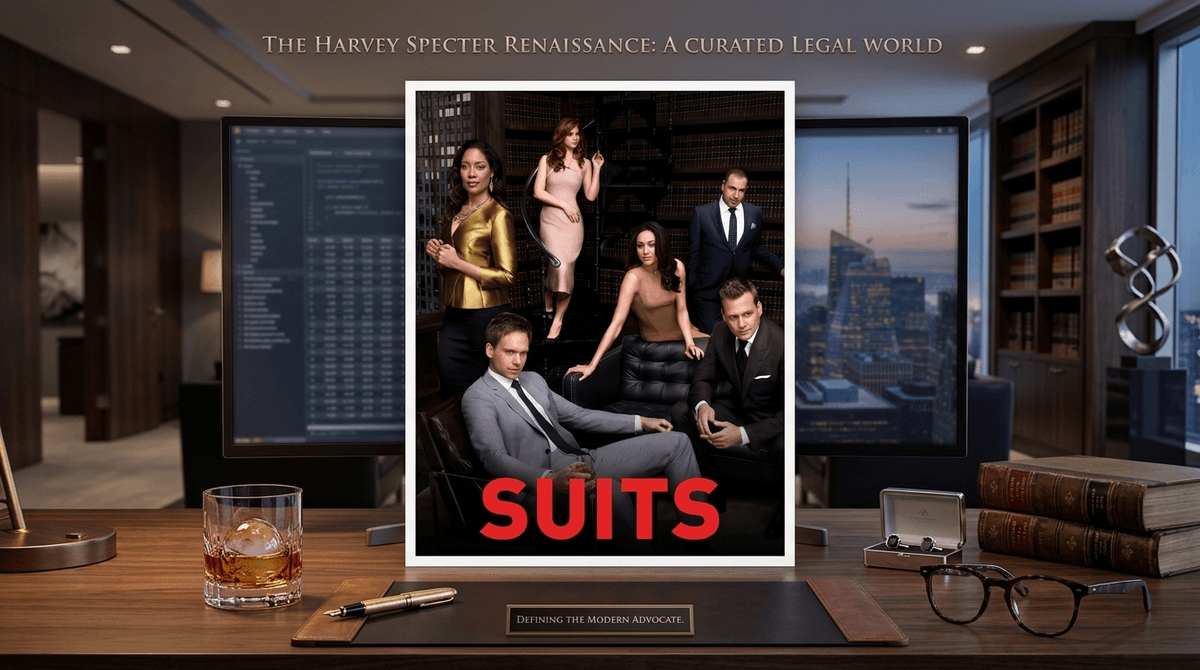
Suits is rated TV-14, and honestly, it’s the ultimate "competence porn" for teens who are tired of high school dramas and want to see what being a high-powered, sharp-tongued adult looks like—just be prepared for a record-breaking amount of the word "goddamn" and some office politics that definitely skirt the edge of legal ethics.
TL;DR: Suits is a slick, fast-paced legal drama about a brilliant college dropout who fakes his way into a top law firm. It’s a massive hit with teens because of its high-stakes "vibe," sharp fashion, and the mentor-protege dynamic between Harvey Specter and Mike Ross. While it features frequent mild profanity and some mature relationship themes, it’s a great jumping-off point for conversations about ambition, loyalty, and the consequences of "faking it."
If you haven't been on Netflix or TikTok lately, you might have missed that a show that ended in 2019 is currently the biggest thing on the internet. Suits follows Mike Ross, a guy with a photographic memory who accidentally stumbles into a job interview with Harvey Specter, the best "closer" in New York City. The catch? Mike doesn't have a law degree. Harvey hires him anyway because he’s bored of Ivy League clones and impressed by Mike’s raw talent.
The show is nine seasons of these two trying to win cases while keeping Mike’s secret from the rest of the firm—especially the suspicious and hilarious Louis Litt and the formidable managing partner Jessica Pearson. It’s less about the actual law and more about power moves, expensive tailoring, and snappy dialogue that sounds like a 40-minute Aaron Sorkin tribute act.
It’s April 2026, and we are still firmly in the grip of the Suits resurgence. You might wonder why your 15-year-old is suddenly interested in corporate litigation. It’s not because they want to study for the LSATs; it’s because of the "aesthetic."
- The "Old Money" and "Quiet Luxury" Vibe: On platforms like TikTok and Instagram, the Harvey Specter lifestyle is the gold standard for "aspirational" content. The suits, the penthouses, the scotch, and the unwavering confidence—it’s a mood that resonates with a generation that grew up on Roblox "tycoon" games and wants to see what the "final boss" of a career looks like.
- Competence is Cool: There is something deeply satisfying about watching people be incredibly good at their jobs. In a world of "brain rot" content, Suits offers characters who are articulate, strategic, and hyper-competent.
- The Underdog Story: Mike Ross is the ultimate "gifted kid" who took a wrong turn. Teens who feel the pressure of the college grind often relate to Mike—someone who is smarter than the system but has to hack it to get ahead.
Let’s be real: Suits isn't The Wire. It’s "prestige-lite." It’s entertaining, fast, and formulaic. But is it good for your teen’s brain?
Screenwise generally views Suits as a "level up" from standard teen fare. It requires following complex (if sometimes nonsensical) plot pivots and understanding character motivations that aren't always black and white. Harvey Specter is a "hero," but he’s also arrogant, occasionally cruel, and breaks the rules constantly. Mike is "good," but he’s living a massive lie that puts everyone he cares about at risk.
Check out our guide on how to spot "brain rot" vs. quality content
If you’re deciding whether to let your middle or high schooler binge all nine seasons, here’s the no-BS breakdown of what’s actually in the show:
Language
This is the biggest "parental advisory" for Suits. The characters use "goddamn" like it's punctuation. You’ll also hear "sh*t," "ass," and "hell" frequently. It’s "network cable" swearing—meaning no F-bombs (until the later seasons where they get a few per year), but the dialogue is definitely salty.
Sex & Romance
There’s plenty of office romance and "will-they-won't-they" tension. You’ll see characters in bed together, some passionate kissing, and lots of suggestive banter. However, it rarely crosses into explicit territory. It’s more about the drama of the relationship than the mechanics of the act.
Ethics and "Faking It"
The entire premise is built on a lie. Harvey and Mike regularly manipulate the truth, intimidate witnesses, and operate in a moral gray area. If your kid is the type to take things literally, they might walk away thinking that rules are just suggestions for smart people.
Substance Use
There is a lot of drinking. Harvey has a high-end whiskey bar in his office, and "grabbing a drink" is how every problem is solved. In the early seasons, there is also a plotline involving Mike and marijuana (he’s a former dealer/user), though it’s generally framed as a "past mistake" or a liability.
Instead of lecturing about the legal inaccuracies (of which there are many), use Suits to talk about the "soft skills" that the show actually gets right.
- Confidence vs. Arrogance: Harvey Specter is the king of confidence. Ask your teen: "When does Harvey’s confidence actually help him, and when does his arrogance make things worse for him?"
- The Cost of the Lie: Mike spends years looking over his shoulder. Suits is a great case study in how one "shortcut" (faking the degree) creates a domino effect of stress and compromised integrity.
- Loyalty: The bond between Harvey and Mike is the heart of the show. It’s a great way to discuss what it means to "have someone's back" even when they've messed up.
If your teen has finished their binge and is looking for more "smart people in rooms" content, here are some Screenwise-approved recommendations:
- The West Wing: If they liked the fast-paced walk-and-talk dialogue, this is the gold standard. It’s basically Suits but in the White House and with a higher IQ.
- The Good Wife: Another legal drama that deals with the intersection of law, politics, and personal scandal. It’s slightly more "grown-up" but very engaging for older teens.
- Sherlock (BBC): For the teen who loves Mike Ross’s photographic memory and "smartest person in the room" energy.
- Billions: (For older teens, 16+) This is like Suits on steroids. It’s more cynical and much more explicit, but it captures that same "high-stakes power move" vibe.
Q: Is Suits okay for a 12-year-old?
It depends on the 12-year-old, but generally, it’s a bit mature. While the violence is non-existent, the heavy focus on corporate law, sexual politics, and constant mild profanity might be either boring or over their head. It’s better suited for ages 14 and up.
Q: Why is everyone talking about Harvey Specter on TikTok?
Harvey has become the "alpha" icon for Gen Z. His "Harvey Specter Rules" (e.g., "Work until you no longer have to introduce yourself") are frequently used in "grindset" and "motivation" videos. It’s a mix of genuine admiration for his confidence and a bit of meme culture.
Q: Does Suits have a lot of "inappropriate" scenes?
By modern streaming standards, it’s pretty tame. There are no graphic sex scenes or "slasher" violence. The "inappropriateness" comes mostly from the language and the adult nature of the themes (infidelity, corporate backstabbing, etc.).
Q: Is Mike Ross a good role model?
Mike is a mixed bag. He’s brilliant, empathetic, and wants to help the "little guy," but he’s also a fraud who lies to everyone he loves. He’s a better "conversation starter" than a role model.
Suits is a rare "bridge" show—something you can actually sit down and watch with your teenager without wanting to scroll through your phone the whole time. It’s stylish, it’s snappy, and it’s a lot more fun than a real law firm. As long as you’re cool with some salty language and can handle your kid suddenly wanting to wear a $2,000 waistcoat to school, it’s a solid choice for the TV-14 crowd.