

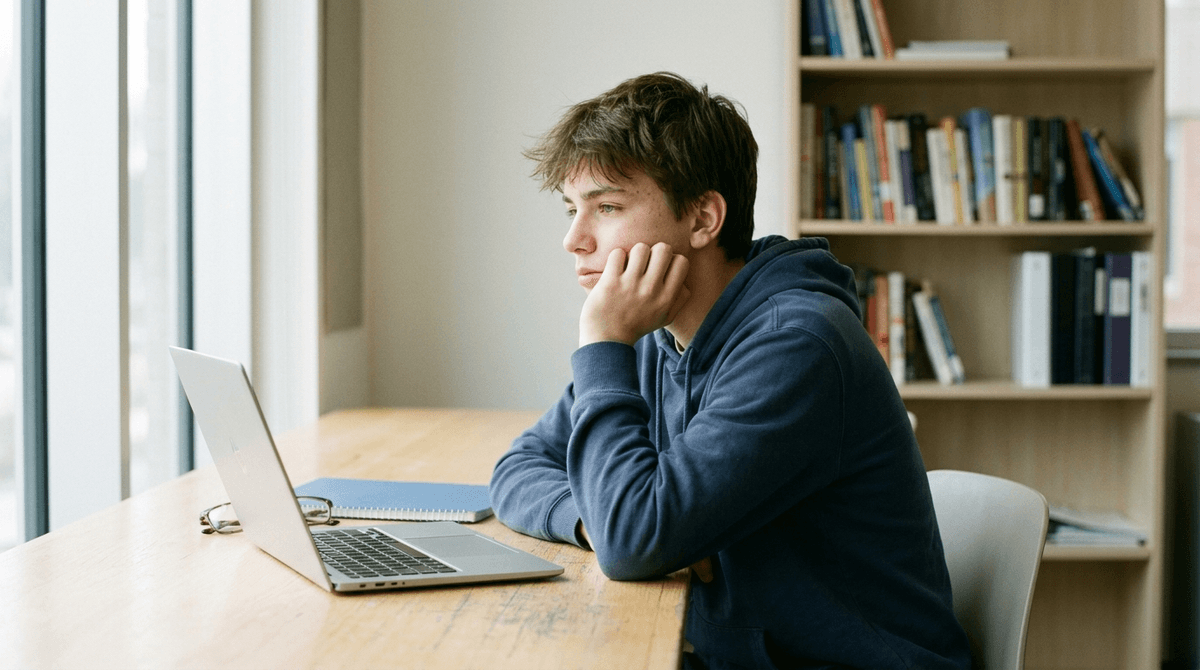

Automated cameras tracking students in real time reveal a steep drop in attention during the final stretch of a lecture, no matter the topic. When a student loses focus near the end of a study session or class period, their brain is hitting a predictable, measurable ceiling.
Student attention collapses during the final stretch of a lecture, confirming that the end-of-class slump is an unavoidable biological reality rather than bad attitude or poor discipline.
Expecting high-level focus at minute 50 of an hour-long study block works directly against human cognitive limits. Because mental fatigue compounds toward the tail end of structured sessions, saving hard math concepts, dense reading, or critical project planning for last practically guarantees frustration and low retention.
There is also an institutional development to track: the computer vision systems used to document this fatigue are moving quickly from university engineering labs into mainstream educational technology, creating a push toward automated surveillance of student engagement.
School administrators increasingly want automated data on classroom engagement without relying on subjective teacher evaluations or post-hoc test results. To solve this, researchers trained advanced computer vision models (specifically YOLOv11) on a new dataset of classroom video, programming the software to recognize nine distinct physical behaviors—ranging from writing and listening to head-down resting—to continuously score classroom focus.
Automated tracking logged a steady decline in student attention across lectures, confirming that the drop-off is systemic rather than an isolated reaction to a boring subject.
- The slump hits late: Student concentration levels fell sharply during the final portion of class across subjects and instructors.
- Cameras can track the decline accurately: The algorithm successfully categorized student behaviors in real time, giving institutions a plug-and-play way to audit student attentiveness.
- Early engagement does not protect against late fatigue: Even when sessions opened with high energy and broad participation, the late-session drop remained consistent.
Schools will face an increasing temptation to police physical posture as a proxy for actual learning. When automated systems score focus by measuring head angles, gaze direction, and body stillness, normal physical coping mechanisms—like stretching, shifting posture, or looking away from a board to process an idea—risk being cataloged as behavioral failures.
This paper is an unreviewed preprint from a single university in Vietnam, studying college-age students rather than younger children. The authors are computer scientists testing the classification accuracy of their camera algorithm, not developmental psychologists investigating why brains get tired. Treat the precise algorithmic performance metrics with skepticism, even if the underlying attention dip aligns with basic cognitive science.
- If your child tackles multi-part homework sessions after school: Put the most conceptually demanding assignments in the first 20 minutes and shift repetitive drill sheets to the final stretch.
- If your teenager sits through 60- or 90-minute block schedules: Teach them to take a deliberate, 30-second cognitive reset—closing their eyes or looking out a window—10 minutes before the bell so they retain homework assignments and closing instructions.
- If your school district discusses AI-assisted camera monitoring for classroom management: Push back on the assumption that physical stillness and forward-facing gazes directly correlate with comprehension or academic growth.
Focus operates on a physical timer, so stop treating late-session distractibility as a character flaw and redesign home study blocks around the brain's natural drop-off.
Sinh Vu Trong, Dung Nguyen Manh, Hieu Hoang Minh et al. (2026). Classroom Behavior Monitoring with YOLO An Empirical Study in Higher Education Settings. arXiv (preprint). — arxiv.org