

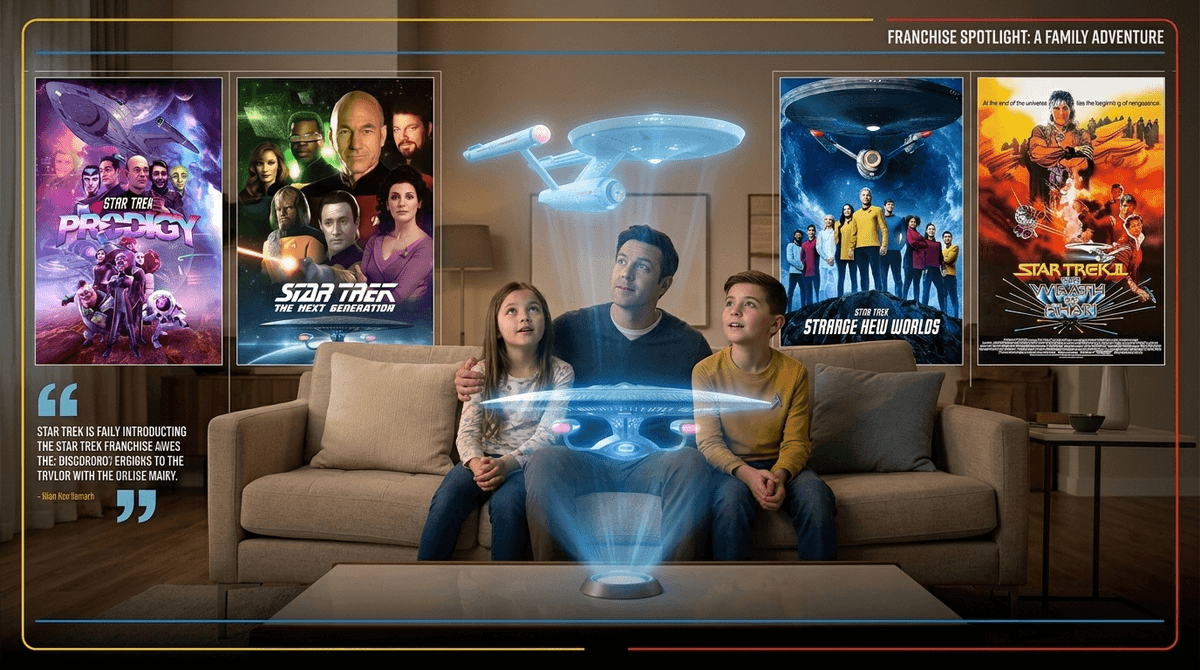
TL;DR: If you want to introduce your kids to the final frontier, start with Star Trek: Prodigy for the younger crowd (ages 7+) or Star Trek: Strange New Worlds for tweens and up. Avoid Star Trek: Discovery and Star Trek: Picard until they’re older—those get dark, violent, and surprisingly sweary.
Star Trek has been around since 1966, which means there are currently over 900 episodes and 13 movies floating around. For an intentional parent, that’s a lot of "homework" to do before you decide if Captain Kirk is a good role model or if the Borg are going to give your seven-year-old nightmares for a month.
The good news? Star Trek is basically "competence porn" for families. It’s a franchise built on the idea that smart people can solve problems by talking, using science, and working together. In a digital world full of "brain rot" content and chaotic YouTubers, Star Trek is the ultimate palate cleanser.
At its core, Star Trek is a vision of a future where humanity has moved past money, poverty, and prejudice. We’ve teamed up with aliens to explore the galaxy in giant "ships of state" that are basically floating universities with phasers.
Unlike Star Wars (which is more of a space fantasy about wizards and destiny), Star Trek is "harder" sci-fi. It deals with ethics, diplomacy, and the consequences of technology. It’s the show where the "good guys" often win not by shooting the loudest gun, but by recalibrating a sensor array or negotiating a peace treaty.
Kids are often drawn to the gadgets and the aliens, but the real hook is the agency. In the Star Trek universe, every character has a specific job they are very good at. Whether it’s the navigator, the engineer, or the captain, kids see a blueprint for how to be a useful, respected member of a community.
For parents, it’s a goldmine for "What would you do?" conversations. Almost every episode presents a moral dilemma:
- Do you break the rules to save a friend?
- How do you treat a culture that is completely different from yours?
- Is AI (like Data or the Doctor) a person with rights?
You can’t just turn on a random episode and hope for the best. Some of this stuff is 60 years old and moves at the speed of a snail; some of it is modern and features people getting their eyeballs ripped out. Here is how to navigate the different eras.
Ages 7+ This is the absolute best place to start. It was literally designed for kids who have never seen Star Trek. It follows a group of alien kids who find an abandoned Starfleet ship and have to learn how to use it. It explains the "big ideas" of the franchise (like the Federation and the Prime Directive) without being boring. Plus, it features a hologram version of Captain Janeway, who is basically the space-mom we all need.
Ages 9+ This is the "classic" experience. Captain Picard is the gold standard for calm, intellectual leadership. While the first season is... honestly, pretty bad (feel free to skip to season 3), the show eventually becomes some of the best television ever made. It’s great for family viewing because it’s episodic—you don’t have to watch 100 episodes to understand what’s happening.
Ages 11+ This is the newest "hit" and it’s fantastic. It captures the fun, adventure, and bright colors of the 1960s show but with modern special effects and better writing. It’s mostly kid-friendly, though it does have some intense action and the occasional "body horror" episode (the Gorn are legitimately scary). It’s the perfect "bridge" show for parents and tweens to watch together.
Ages 8+ (with a caveat) The 1960s show is campy and fun, but it’s also a product of its time. You’re going to see some outdated gender roles and some very "theatrical" acting. However, for kids who love retro vibes or Minecraft-style simplicity, the bright primary colors and rubber-suit aliens can be a big hit.
Not all Trek is for all ages. The franchise has "grown up" in recent years, and that usually means more "prestige TV" tropes like gore and swearing.
- Star Trek: Discovery: It’s very serialized, very emotional, and features some pretty graphic violence (torture, stabbings, etc.). Save this for the 14+ crowd.
- Star Trek: Picard: This is a dark, nostalgic look at an aging hero. It’s great for us parents who grew up with Picard, but it’s often too slow and too violent for kids.
- Star Trek: Lower Decks: Don't let the animation fool you. This is a comedy for adults. It’s full of "bleeped" swearing, sexual innuendo, and deep-cut references that will go over kids' heads anyway. It’s more Rick and Morty than Bluey.
Violence and Intensity
Most Star Trek violence is "phaser fire"—people get hit by a beam of light and disappear or fall down. However, the modern shows (post-2017) have significantly higher "ick" factors. If your kid is sensitive to blood or "creepy" aliens, stick to the older series or Star Trek: Prodigy.
The "Boring" Factor
Let’s be real: Star Trek can be wordy. There are long scenes of people sitting in conference rooms discussing treaty violations. If your kid is used to the frantic pace of MrBeast or Roblox, they might find the older shows slow. Start with the movies if you need to hook them with action first.
The Movies
If you want a "movie night" entry point, Star Trek (2009) is essentially a high-octane action movie. It’s rated PG-13 and feels very "modern blockbuster." On the other hand, Star Trek II: The Wrath of Khan is widely considered the best film, but it has a scene with "ear eels" that has traumatized children for generations. You’ve been warned.
The best part of Star Trek is the "debrief" after the episode. Here are a few ways to engage your kids:
- The Prime Directive: This is the rule that Starfleet isn't allowed to interfere with other cultures. Ask your kids: "If you saw a playground fight, should you jump in and solve it, or let them figure it out? When is it okay to interfere?"
- Technology vs. Humanity: In many episodes, technology goes wrong. Talk about how we use our own tech. "Does the 'Holodeck' remind you of VR or Roblox? How do the characters know when they’ve spent too much time in there?"
- Diverse Perspectives: Star Trek is famous for having a crew from all over the world (and the galaxy). Discuss how having different types of people on the bridge helps them solve problems faster.
Check out our guide on using sci-fi to talk about digital ethics
Star Trek is one of the few franchises that actually respects its audience's intelligence. It assumes you can follow a complex argument and that you care about being a good person.
If you’re looking for a way to move your family’s "digital diet" away from mindless scrolling and toward something that sparks curiosity about science, space, and ethics, you can’t do much better than this.
Start with Star Trek: Prodigy this weekend. If they like it, you’ve just opened up a universe that can last them a lifetime.
Next Steps:
- Watch the first two episodes of Prodigy (they're usually a two-parter).
- If your kids are older, try the "Best of" episodes of The Next Generation like "Darmok" or "The Inner Light."
- Get a Star Trek watch list for your kid's age