

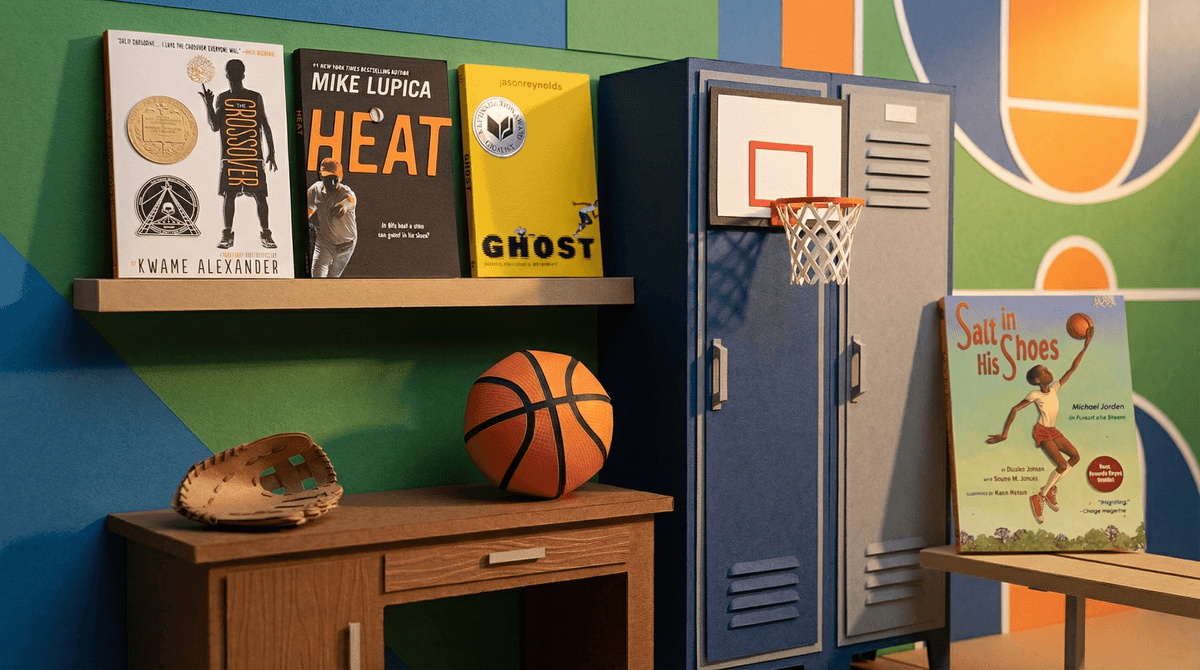
We're talking about the entire universe of sports-themed literature: chapter books about young athletes chasing their dreams, graphic novels featuring basketball-playing middle schoolers, biographies of legendary players, historical fiction set around iconic games, and even fantasy novels where the magic system involves competitive sports. From Mike Lupica's fast-paced basketball novels to Kwame Alexander's verse novels that make poetry feel like a slam dunk, sports books are having a serious moment in children's literature.
And here's the thing: if you've got a kid who would rather watch game highlights than crack open a book, sports literature might be your secret weapon.
Let's be real—getting some kids to read feels like negotiating a hostage situation. They'll spend three hours watching Minecraft YouTube tutorials but claim a 150-page book is "too long." Sound familiar?
Sports books work because they leverage existing passion. Your soccer-obsessed 9-year-old isn't reading about a random kid's problems—they're reading about a kid who lives and breathes soccer just like they do. The sport becomes the entry point, but what keeps them reading is the story: the underdog narrative, the team dynamics, the personal growth, the big game tension.
The vocabulary is often sport-specific, which means kids are learning terminology they're actually motivated to understand. They'll power through challenging words because they want to know if the protagonist makes the game-winning shot. It's stealth education at its finest.
Plus, many sports books are structured like games themselves—short chapters that feel like quarters or innings, fast pacing that mimics gameplay, and cliffhangers that make "just one more chapter" feel inevitable. For kids who struggle with sustained attention (hello, TikTok generation), this structure is surprisingly effective.
Ages 6-8: Picture Books and Early Readers
Start with books like The Boy Who Loved Math (okay, not technically sports, but stay with me—it's about Paul Erdős and has that same biographical passion-project energy) or Salt in His Shoes about young Michael Jordan. The Crossover by Kwame Alexander has a picture book version that's perfect for this age.
Ages 8-12: The Sweet Spot
This is where sports literature absolutely shines. The Crossover (the full novel in verse) is non-negotiable—it won the Newbery Medal and makes poetry accessible to kids who think poetry is boring. Mike Lupica's books (Heat, Travel Team, Million-Dollar Throw) are perfect for kids who want straightforward sports action without much fluff.
Ghost by Jason Reynolds is incredible—it's about track, but it's really about trauma, poverty, and finding your people. The whole Track series (Ghost, Patina, Sunny, Lu) is fantastic. For football fans, New Kid by Jerry Craft touches on sports while dealing with code-switching and microaggressions in a predominantly white private school.
Ages 12+: Leveling Up
The Hate U Give has basketball elements woven into a powerful story about police violence and activism. Running by Natalia Sylvester explores competitive running and body image. For baseball fans, The Only Game by Mike Lupica deals with grief and returning to the sport after tragedy.
Biographies become huge here too—kids this age are ready for the full stories of athletes like Muhammad Ali, Serena Williams, or LeBron James, complete with the complicated parts about race, activism, and controversy.
Not all sports books are created equal. Some are genuinely well-written literature that happens to feature sports. Others are basically paint-by-numbers plots with interchangeable sports equipment. Mike Lupica's books, while popular, can feel formulaic after you've read three of them. That's not necessarily bad—sometimes kids want comfort reads—but don't assume all sports books will stretch your kid's literary muscles.
The best sports books are about way more than sports. The Crossover is about brotherhood, first love, and family health crises. Ghost is about processing trauma. These books use sports as the framework for exploring identity, relationships, failure, and resilience. That's the good stuff.
Representation matters here. Sports literature has historically been very white and very male. That's changing—authors like Kwame Alexander, Jason Reynolds, and Kelly Yang are creating diverse characters whose experiences reflect actual youth sports culture. Seek these out intentionally, especially if your kid's team or league is diverse.
Graphic novels count. If your kid gravitates toward Dog Man or Diary of a Wimpy Kid, sports graphic novels like New Kid or the Hilo series (which has sports elements) are legitimate reading. The visual literacy skills they're building are real and valuable.
Start with their sport. Don't hand your basketball kid a soccer book because you heard it was good. Match their passion first, literacy goals second.
Read together, at least initially. Even with older kids, offering to read the same book creates conversation opportunities. "What did you think about when the coach benched him?" opens up discussions about fairness, authority, and handling disappointment.
Connect books to what they're watching. If they're obsessed with NBA highlights, grab a LeBron biography. If they're watching Ted Lasso (which, honestly, is pretty wholesome for teens), find soccer books that capture that team-dynamics energy.
Don't make it homework. The second you require a book report, you've killed the magic. Let them read for pleasure. They'll still get all the benefits—vocabulary, comprehension, empathy, sustained attention—without the resentment.
Embrace audiobooks. Some kids process stories better through listening, especially kids with dyslexia or ADHD. Audible and Libby (the free library app) have tons of sports books, many narrated by the authors themselves. Listening while shooting hoops in the driveway? That counts as reading.
Sports books aren't a compromise or a lesser form of reading—they're a legitimate genre that can build literacy skills while honoring your kid's interests. The kid who devours every Mike Lupica book is developing the same comprehension and vocabulary skills as the kid reading fantasy novels, just with more jump shots.
And here's the beautiful part: once they realize they can enjoy reading, they often branch out. The sports-obsessed kid who started with Heat might eventually pick up Hatchet or Percy Jackson because they've learned that books can be as engaging as screens.
Start with one book that matches their passion. See what happens. You might be surprised how quickly "I hate reading" turns into "Can we go to the bookstore?"
Ready to find the perfect sports book for your kid? Check out our complete guide to sports books by age and sport, or Get sports book recommendations based on what your kid's currently into.
And if you're dealing with a kid who's still resistant? Here's how to compete with screens without making reading feel like punishment.