

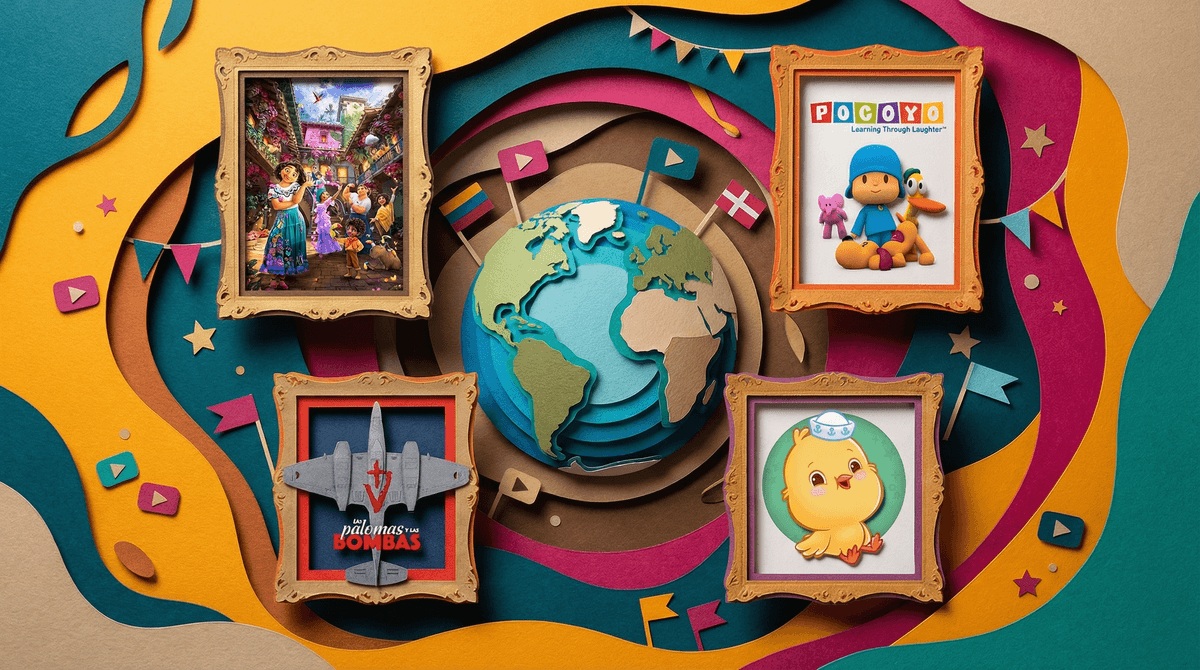
Look, we're not just talking about Dora the Explorer here—though honestly, respect to Dora for being many kids' first Spanish teacher. Spanish-language media encompasses everything from shows and movies produced in Spanish-speaking countries to bilingual content designed for language learners, to Spanish-language YouTube creators who are absolutely crushing it with Gen Alpha.
Whether your kid is growing up in a bilingual household, you're trying to maintain heritage language connections, or you just want them to actually retain something from those years of Spanish class, quality Spanish media can be a game-changer. And here's the thing: Spanish is the second most spoken language in the US, with over 41 million native speakers. Your kids are growing up in a bilingual world whether you're planning for it or not.
The challenge? Not all Spanish content is created equal, and the algorithm doesn't care about your family's language goals when it's serving up whatever keeps eyeballs glued to screens.
Let's be real: if you just switch the audio to Spanish on whatever they're already watching, you'll get eye rolls and "I can't understand anything!" protests. Kids need content that meets them where they are linguistically while still being, you know, actually entertaining.
What works:
- Bilingual shows that code-switch naturally (like real bilingual kids do)
- High-quality dubbed content where the voice acting doesn't sound like robots
- Spanish-language originals that feel culturally authentic, not like American shows with a Spanish paint job
- Creators they can relate to who happen to speak Spanish
What doesn't:
- Forcing advanced native-level content on beginners
- Educational shows that feel like homework
- Dubbed content where the timing is all off and nobody's mouth matches the words
- Treating Spanish media as punishment ("You have to watch this to practice")
Ages 3-7: Building the Foundation
At this age, repetition and context clues are your friends. Kids are language sponges, but they need content designed for their cognitive level.
Top picks:
Apps worth the download:
- Gus on the Go (language learning that's actually game-like)
- Studycat Spanish (formerly Fun Spanish, solid for beginners)
Ages 8-12: Building Fluency and Cultural Connection
This is where you can start introducing content that's made for Spanish-speaking kids, not just about learning Spanish. The goal is cultural fluency alongside language skills.
Shows that hit:
YouTube channels that don't suck:
- Kimberly Loaiza (massive following, music and vlogs, age-appropriate)
- Luisito Comunica (travel vlogs, genuinely educational)
- ExpCaseros (science experiments, Spanish Mr. Beast vibes)
Gaming options:
Ages 13+: Authentic Content and Cultural Identity
Teens can handle—and often prefer—content made for native speakers. This is where Spanish media gets really good, because you're tapping into the actual Spanish-language entertainment industry, which is vast and sophisticated.
Netflix wins:
- Elite (Spanish teen drama, but warning: mature themes)
- La Casa de Papel (Money Heist, if they haven't seen it already)
- Club de Cuervos (now age-appropriate, sports comedy)
- Siempre Bruja (Colombian fantasy series)
Music and creators:
- Bad Bunny, Rosalía, Peso Pluma (they're probably already listening)
- Ibai Llanos on Twitch (Spanish streamer, huge in gaming)
- Luisito Comunica still works here
- Ter (Spanish comedy sketches, very Gen Z humor)
The Dialect Question
Not all Spanish is the same, and that's okay. Mexican Spanish, Puerto Rican Spanish, Argentine Spanish, and Castilian Spanish all have different vocabulary, accents, and even grammar quirks. Don't stress about this. Exposure to different dialects is actually beneficial—it's like the difference between British and American English. Your kid will adapt.
That said, if you're trying to maintain a specific heritage language, prioritize content from that region when possible. But don't skip great content just because it's the "wrong" Spanish.
The Subtitle Debate
Spanish audio + English subtitles = they're reading English and ignoring the Spanish.
Spanish audio + Spanish subtitles = actually helpful for literacy and comprehension.
Spanish audio + no subtitles = ideal for fluency, but frustrating for beginners.
The move: Start with Spanish audio + Spanish subtitles for new content, then remove subtitles on rewatches. Kids pick up way more on the second viewing when they know the plot.
Quality vs. Quantity
Thirty minutes of engaged watching in Spanish beats two hours of background noise. If your kid is genuinely following the plot, laughing at jokes, and asking questions, that's active language learning. If it's just on while they scroll their phone, it's not doing anything.
The Heritage Language Challenge
If you're trying to maintain Spanish in a bilingual household, media can't do it alone. Kids need to use the language, not just consume it. But here's where Spanish media helps: it normalizes the language, shows them that Spanish isn't just "the language we speak at grandma's house," and connects them to a broader cultural world.
Want to dig deeper into heritage language maintenance strategies?
YouTube rabbit holes: Spanish-language YouTube has the same algorithm problems as English content. Kids can start with Luisito Comunica and end up watching conspiracy theories or worse. Set up supervised accounts and check watch history regularly.
Regional content ratings: A show rated for kids in Spain might have content that surprises American parents (more relaxed about language, different cultural norms). Don't just trust the age rating—preview first.
Comment sections: Spanish-language content has Spanish-language comment sections, which means you might not catch inappropriate stuff if you don't speak the language. Turn off comments for younger kids.
Influencer culture: Spanish-language social media has its own drama, controversies, and problematic creators. Just because you don't recognize the name doesn't mean they're safe. Do your homework.
Spanish-language media isn't just educational—it's a doorway to culture, identity, and genuine bilingualism. But like everything digital, it requires intentionality. You can't just turn on Telemundo and call it language learning.
The winning formula:
- Start where they are linguistically, not where you wish they were
- Prioritize enjoyment over education—engaged beats boring every time
- Mix it up: Shows, music, games, creators, movies
- Make it social: Watch together, talk about it, connect it to real life
- Be patient: Language acquisition is slow, and that's normal
Your kid doesn't need perfect Spanish to benefit from Spanish media. They need exposure, context, and content that doesn't feel like homework. Find what they actually like, and build from there.
This week:
- Ask your kid to pick one Spanish-language show to try (their choice = more buy-in)
- Change the language settings on one game or app they already use
- Find one Spanish-language creator in a topic they already care about (gaming, music, sports, whatever)
This month:
- Check out alternatives to Duolingo if the app approach isn't working
- Preview three new shows/movies and let your kid rank them
- Connect with other bilingual families to swap recommendations
Long-term:
- Build a Spanish media routine that doesn't feel forced
- Balance heritage content with modern media your kid actually wants to watch
- Remember that some Spanish is better than no Spanish, and imperfect bilingualism is still bilingualism
Need personalized recommendations based on your kid's age and interests? The Screenwise chat can help you find exactly what works for your family.