

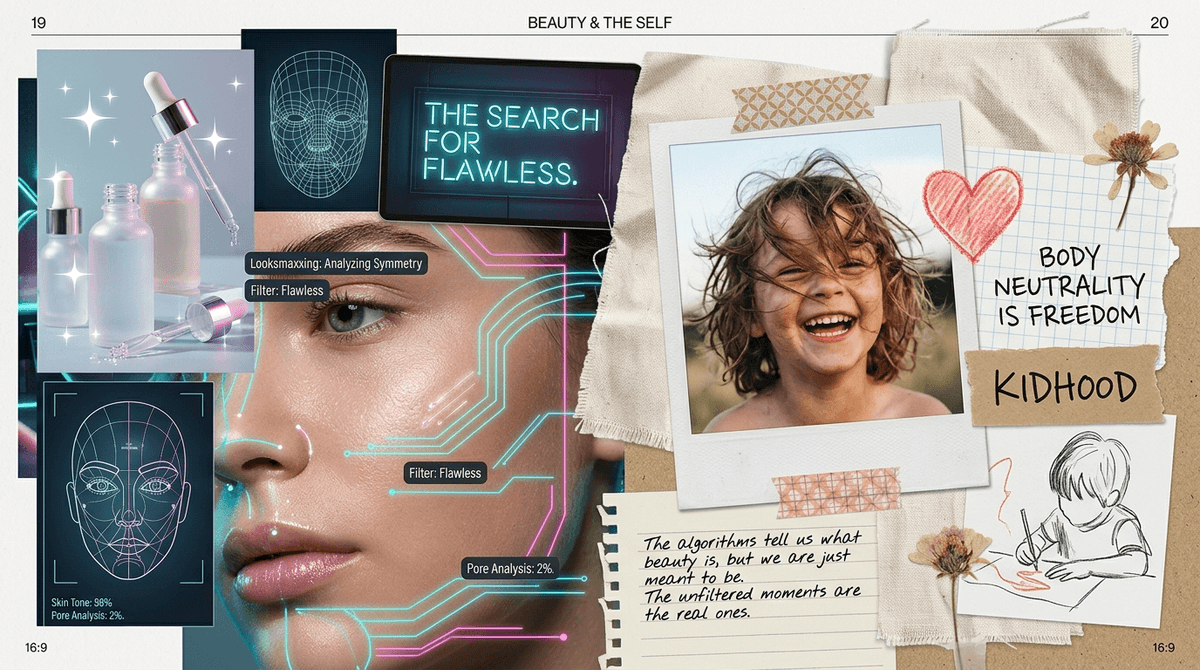
TL;DR: Your kid is likely being bombarded by "glow-up" tutorials and high-end skincare routines designed for 40-year-olds. Between the "Sephora Kids" craze and "looksmaxxing" trends, digital body image has moved way beyond simple filters into algorithmic perfection. To fight back, we recommend checking out BeReal for a dose of reality, the Dove Self-Esteem Project for actual science-backed resources, and Pinterest as a more "curated-for-joy" alternative to the TikTok firehose.
If you’ve walked into a Sephora lately and seen a pack of 10-year-olds hovering over the Drunk Elephant testers like they’re discovering the Fountain of Youth, you’ve witnessed the "Sephora Kids" phenomenon.
It’s easy to laugh at a fourth-grader wanting a $70 polypeptide cream, but there’s a deeper, slightly more exhausting current underneath. We’re navigating an era where "looksmaxxing"—the obsessive optimization of one’s physical appearance—has moved from niche internet forums straight into the middle school cafeteria.
Originally a term from the darker corners of the internet, "looksmaxxing" has been sanitized and mainstreamed on TikTok and Instagram. It’s the idea that your face and body are a DIY project that can be "maximized" through specific routines.
You might hear your son talking about "mewing" (a tongue-placement technique to sharpen the jawline) or "hunter eyes" vs. "prey eyes." For girls, it often manifests as 12-step skincare routines or "everything showers." While taking care of yourself is great, the trend pushes the idea that if you don't look like an AI-generated model, you’re just not trying hard enough.
It’s not just about vanity; it’s about control and community.
- The Gamification of Beauty: Looksmaxxing turns physical appearance into a leveling-up system. It feels like a quest in Roblox, but the avatar is their own face.
- The Algorithm: TikTok doesn't just show you one beauty video; it shows you 500. If a kid expresses a slight insecurity, the algorithm "helps" by serving up "solutions" (products) for problems the kid didn't even know they had.
- Social Currency: Knowing the "right" products—like Sol de Janeiro or Glow Recipe—is the new version of having the "right" brand of sneakers. It’s a way to signal that they are "in the know."
If you're looking to balance the "filtered" scales, here are a few apps and resources that focus on reality over "maximization."
BeReal (Ages 13+)
While no social media is perfect, BeReal is the antithesis of the "looksmaxxing" aesthetic. You get one notification a day, you have two minutes to post, and there are no filters. It’s a great way for kids to see that their friends also spend 90% of their time sitting in messy rooms wearing oversized hoodies.
Pinterest (Ages 12+)
Unlike the "look at me" nature of Instagram, Pinterest is more "look at this cool thing I want to make/do." It’s generally a more positive space for kids to explore hobbies, art, and fashion without the constant pressure of "likes" and comments on their own faces.
The Social Dilemma (Ages 13+)
If you have a teen, watch this Netflix documentary together. It explains why the apps make them feel this way. When kids realize they’re being manipulated by an algorithm designed by 35-year-old engineers in Silicon Valley, they sometimes get a "rebellious" streak that makes them want to opt out of the beauty standard.
Dove Self-Esteem Project (All Ages)
This is one of the best websites for actual tools. They have specific guides for parents on how to talk about "digital distortion" and the impact of AI filters.

Elementary (Ages 6-10)
At this age, the "Sephora Kid" vibe is mostly about play and imitation. They see older siblings or creators doing "GRWM" (Get Ready With Me) videos and want to join in.
- The Move: Keep it focused on hygiene and "skin health" rather than "fixing" flaws. If they want a skincare routine, give them a gentle cleanser and a basic moisturizer. They do not need retinol, AHAs, or expensive anti-aging serums. Their skin is literally brand new.
Middle School (Ages 11-13)
This is the "danger zone" for body image. Puberty is hitting, and the digital world is offering a "perfect" alternative to their changing bodies.
- The Move: Talk about Digital Literacy. When you see a filtered photo or a "glow-up" video, point out the lighting, the angles, and the likely use of the "Bold Glamour" filter. Make it a game of "Spot the Edit."
High School (Ages 14-18)
By now, they know the filters aren't real, but the feeling of inadequacy can still be very real.
Here’s the thing: you can’t ban beauty standards. They’ve existed since humans started painting on cave walls. But you can point out that TikTok is a business, and its business model relies on your child feeling just insecure enough to keep scrolling for a solution.
When your kid says something is "low-key mid" or they’re worried about their "canthal tilt," don’t just roll your eyes. Ask them where they heard that. Ask them if they think the person in the video actually looks like that at 7:00 AM on a Tuesday.
Instead of a lecture, try these conversation starters:
- "I saw a video about 'Sephora Kids' today—do people at your school actually use that expensive stuff?"
- "That filter is wild. It literally changed your bone structure. How does it feel to see yourself like that?"
- "I noticed you've been watching a lot of those 'glow-up' tutorials. Do they make you feel excited to try new things, or kind of bummed out about yourself?"
We aren't going to win the war against the algorithm by being "anti-skincare" or "anti-fashion." We win by being pro-reality.
The goal isn't to make our kids never care about their looks—that's unrealistic. The goal is to make sure their self-worth isn't a "maximized" stat that can be toggled by a filter or a $70 serum.
Keep the conversation open, keep the "everything showers" within a reasonable time limit (for the sake of the water bill), and remind them that "Ohio" or not, their real-life, unfiltered self is the one that actually matters.