

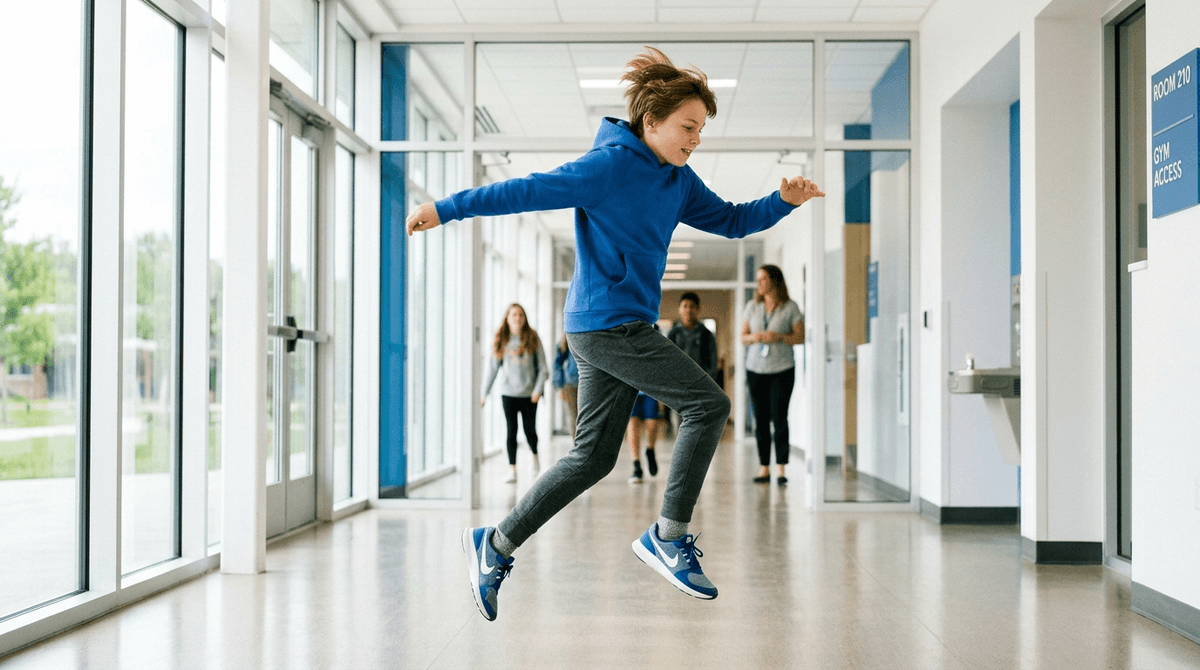

A low-cost, 16-week school program pairing teacher training with simple home movement challenges measurably lowered children's blood pressure and cut down daily sedentary time.
Simple, consistent shifts in elementary school routines and twice-monthly family challenges reduce child blood pressure and boost daily physical activity in just four months without requiring major school curriculum overhauls.
Cardiovascular health habits start far earlier than most parents realize, but adding heavy fitness regimens to packed family schedules rarely sticks. Small, light-touch interventions—like short classroom movement breaks and quick weekend physical activity prompts—yield real biological improvements in elementary-aged kids.
You do not need an expensive youth sports league to protect your child's metabolic health. Simple, regular disruptions to sitting time create measurable health gains quickly.
Sedentary time and screen use have soared among primary school children globally, while overall daily physical activity has plummeted. Researchers wanted to test whether an easy-to-adopt health intervention inside standard primary schools could improve daily movement behaviors and biological health markers without overwhelming teachers or parents.
Four months of teacher-led movement and light home challenges produced clear cardiovascular and behavioral shifts across 735 elementary students:
- Lower blood pressure: Children in the program saw a statistically significant drop in diastolic blood pressure compared to those in standard classrooms.
- More movement, less sitting: Kids reduced daily sedentary behavior and increased overall physical activity levels.
- Targeted benefits for girls: Girls in the intervention reduced body fat markers, while girls in the standard control group actually gained body mass index (BMI) over the same 16 weeks.
- The participation boost: Systolic blood pressure improved across both groups, suggesting that simply tracking health markers encourages healthier daily choices.
The power of this program lay in low barriers to entry and habit consistency rather than high-intensity workout routines. Empowering teachers to weave movement breaks into existing lessons while asking parents to complete simple, twice-a-month activity prompts at home created a continuous environment of movement across school and family life.
The study took place across 10 socioeconomically vulnerable primary schools in Northern Portugal. While the biological response to physical activity applies universally, structural support and free time vary by community, and it remains unclear whether kids maintain these blood pressure gains long after the 16-week intervention ends.
- If your child spends hours sitting at a school desk or in front of screens... advocate for micro-movement breaks during the school day or introduce 5-minute active breaks between homework subjects.
- If you struggle to fit structured workouts into family routines... aim for bi-monthly active family challenges—like a weekend walking scavenger hunt—rather than setting overwhelming daily exercise goals.
- If you have a young daughter who spends long stretches seated... prioritize short periods of daily physical play, as metabolic health gains from routine movement appeared especially protective for girls in this study.
You do not need to overhaul your family's lifestyle to improve your child's physical health; small, steady increases in daily movement drop blood pressure and build healthier habits in just a few months. Give yourself permission to skip complex fitness plans and focus on simple daily movement tweaks.
Leite N, Tadiotto MC, Tozo TAA et al. (2026). Positive changes in 24-hour movement behaviors and blood pressure in socioeconomically vulnerable schoolchildren after a 16-week health promotion intervention. Scientific reports. doi:10.1038/s41598-026-58919-8 — pubmed.ncbi.nlm.nih.gov